1.What is P110 casing and tubing?
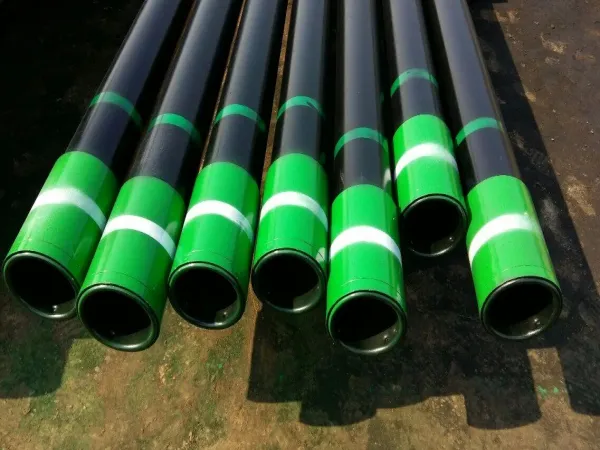
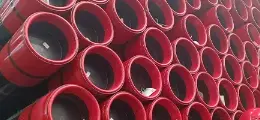
API 5CT P110 casing and tubing are steel pipes that meet the American Petroleum Institute (API) 5CT standard and are specifically used for drilling and completion operations in oil and gas wells. P110 grade casing and tubing have higher strength than other grades such as J55, K55, N80, L80 and T95, with a minimum tensile strength of 862 MPa and a yield strength range of 758 to 965 MPa, suitable for deep well environments with higher pressures and stresses. P110 material usually has a white band on the end to identify the material.
P110 casing and tubing are widely used in medium and deep oil wells, especially under high pressure and high stress conditions, helping to improve the stability and safety of drilling operations. Their material composition includes carbon, manganese, molybdenum, chromium, nickel, copper, phosphorus, sulfur and silicon, which give the pipes excellent mechanical properties and ensure long-term durability in harsh underground environments. P110 casing and tubing are widely used in industrial fields such as oil extraction and natural gas extraction.
2.API 5CT P110 CASING TUBING SPECIFICATIONS
Standards :
API 5CT
Model in Common Use : 2-3/8", 2-7/8", 3-1/2", 4", 4-1/2"
Length Range : R1(6.10-7.32m), R2(8.53-9.75m), R3(11.58-12.8m)
Steel Grade (Casing Grades, Tubing Grades) : J55, K55, N80-1, N80-Q, L80, P110
Thread : STC, LTC, BTC
Specialties :
Drifting (Full-length, or just ends)
Threading
Heat treating
External upset
Hydrostatic Testing
Couplings – EUE, AB Modified, turned down, special clearance couplings
Coating to customer specifications
Full third-party inspection capabilities (EMI, SEA, and Weld Line)
Pup Joints
3.Dimensions and weight of P110 casing
The dimensions and weight of P110 casing pipes can vary based on the specific requirements and standards set by the American Petroleum Institute (API). However, a common specification for P110 casing pipe is as follows:
(1)
Outer Diameter (OD): Ranges from 4 1/2 inches to 20 inches
(2)Wall Thickness: Typically specified in terms of pounds per foot or in millimeters for metric units
(3)Weight: Varies based on the outer diameter, wall thickness, and length of the casing pipe
4.API 5CT P110 Casing Tubing Features
API 5CT P110 Casing Tubing is offered with a free length range from 8 to 13m on basis of the SY/T6194-96 norm. However, it is also available no less than 6m length and its quantity should be no more than 20%.
Deformations which mentioned above are not allowed to appear on the outer surface of API 5CT P110 Casing Tubing coupling.
Any deformation such as crease, hairline, separation, crack or scab is not acceptable on both inner and outer surfaces of the product. All these defects should be completely removed, and the removed depth must not exceed 12.5% of nominal wall thickness.
The surface of thread of coupling and API 5CT P110 Casing Tubing should be smooth without any burr, tear or other defects that may have a negative impact on the strength and close connection.
5.API 5CT P110 Tubing Mechanical Properties
|
Standard
|
Type
|
Tensile Strength
|
Yield Strength
|
Hardness
|
|
MPa
|
MPa
|
Max.
|
|
API SPEC 5CT
|
J55
|
≥517
|
379 ~ 552
|
----
|
|
K55
|
≥517
|
≥655
|
---
|
|
N80
|
≥689
|
552 ~ 758
|
---
|
|
L80(13Cr)
|
≥655
|
552 ~ 655
|
≤241HB
|
|
P110
|
≥862
|
758 ~ 965
|
----
|
API 5CT P110 Casing Tubing Tensile & Hardness Requirement
|
Group
|
Grade
|
Type
|
Total elongation under load %
|
Yield strength MPa
|
Tensile strength min. MPa
|
Hardness a max.
|
Specified wall thickness mm
|
Allowable hardness variation b HRC
|
|
min.
|
max .
|
|
HRC
|
HBW
|
|
1
|
2
|
3
|
4
|
5
|
6
|
7
|
8
|
9
|
10
|
11
|
|
1
|
H40
|
-
|
0.5
|
276
|
552
|
414
|
-
|
-
|
-
|
-
|
|
J55
|
-
|
0.5
|
379
|
552
|
517
|
-
|
-
|
-
|
-
|
|
K55
|
-
|
0.5
|
379
|
552
|
655
|
-
|
-
|
-
|
-
|
|
N80
|
1
|
0.5
|
552
|
758
|
689
|
-
|
-
|
-
|
-
|
|
N80
|
Q
|
0.5
|
552
|
758
|
689
|
-
|
-
|
-
|
-
|
|
R95
|
-
|
0.5
|
655
|
758
|
724
|
-
|
-
|
-
|
-
|
|
2
|
M65
|
-
|
0.5
|
448
|
586
|
586
|
22
|
235
|
-
|
-
|
|
L80
|
1
|
0.5
|
552
|
655
|
655
|
23
|
241
|
-
|
-
|
|
L80
|
9Cr
|
0.5
|
552
|
655
|
655
|
23
|
241
|
-
|
-
|
|
L80
|
13Cr
|
0.5
|
552
|
655
|
655
|
23
|
241
|
-
|
-
|
|
C90
|
1
|
0.5
|
621
|
724
|
689
|
25.4
|
255
|
≤ 12.70 12.71 to 19.04 19.05 to 25.39 ≥ 25.40
|
3.0 4.0 5.0 6.0
|
|
T95
|
1
|
0.5
|
655
|
758
|
724
|
25.4
|
255
|
≤ 12.70 12.71 to 19.04 19.05 to 25.39 ≥ 25.40
|
3.0 4.0 5.0 6.0
|
|
C110
|
-
|
0.7
|
758
|
828
|
793
|
30
|
286
|
≤ 12.70 12.71 to 19.04 19.05 to 25.39. ≥ 25.40
|
3.0 4.0 5.0 6.0
|
|
3
|
P110
|
-
|
0.6
|
758
|
965
|
862
|
-
|
-
|
-
|
-
|
|
4
|
Q125
|
1
|
0.65
|
862
|
1034
|
931
|
b
|
-
|
≤ 12.70 12.71 to 19.04 ≥ 19.05
|
3.0 4.0 5.0
|
|
a In case of dispute, laboratory Rockwell C hardness testing shall be used as the referee method.
|
|
b No hardness limits are specified, but the maximum variation is restricted in accordance with 7.8 and 7.9 of API Spec. 5CT.
|
6.Reference Inspection for P110 Casing and Tubing
Visual inspection for pipe surface
Dimension check
NDT test including Magnetic particle, Ultrasonic Test, Hydrostatic Test
Drift test
Chemical analysis
Mechanical test on tensile strength, yield strength and elongation
Charpy impact test
Flattening tests
Hardness test
Thread ends check with thread gauge and coupling check
API 5CT P110 Casing Pipe:
P110 Casing is installed downhole to provide structural integrity to the wellbore and must withstand external-collapse pressure from rock formations and internal-yield pressure from fluid and gas. It needs to bear its own weight and withstand the torque and transaxial pressure placed on it while running downhole. Casing is considered as a pipe pile that will stabilize the oil well.
API 5CT P110 Tubing Pipe:
P110 Tubing is installed inside the casing. It is used to transport (pump) crude oil or natural gas from the source rock to the ground wellhead. Inside tubing is sucker rods, where used for pumping oil and gas.
7.Application of P110 casing pipe
P110
casing pipes are commonly used in oil and gas well operations for various applications, including:
(1)Wellbore Support
P110 casing is employed to line the wellbore, providing structural integrity and support to prevent collapse while drilling and completing the well.
(2)Fluid Containment
These pipes help contain and control the flow of fluids such as oil, natural gas, and drilling mud within the wellbore.
(3)Corrosion Protection
P110 casing offers resistance to corrosion, helping to maintain the integrity of the well in corrosive environments.
(4)Pressure Containment
The high strength of P110 casing allows it to withstand the pressure differentials encountered during production, preventing well failures and ensuring safety.
(5)Zonal Isolation
P110 casing is used to isolate specific zones in the well, facilitating efficient production and reservoir management.
Frequently Asked Questions
1. What does P110 mean in API 5CT?
P110 is an API 5CT steel grade with a minimum specified yield strength of 110,000 psi (758 MPa). It is used for high-strength casing and tubing applications in oil and gas wells.
2. What is the yield strength of P110 casing?
P110 has a specified yield strength range of 758–965 MPa (110,000–140,000 psi), with a minimum tensile strength of 862 MPa (125,000 psi).
3. What is the difference between P110 and N80 casing?
The main difference is their mechanical strength. P110 has a minimum yield strength of 758 MPa, while N80 has a minimum yield strength of 552 MPa. P110 is generally selected when higher yield strength is required.
4. Is P110 casing suitable for deep wells?
P110 can be used in deep wells where higher mechanical strength is required. However, the final selection depends on well depth, pressure, temperature, corrosion conditions and casing design calculations.
5. Is P110 casing corrosion-resistant?
P110 is a high-strength carbon or alloy steel grade, not a dedicated corrosion-resistant alloy. Its suitability for corrosive or sour-service environments must be evaluated separately.
6. What connections are available for P110 casing and tubing?
Common API casing connections include STC, LTC and BTC. Tubing commonly uses NU and EU connections. Premium connections may also be specified according to the well design and purchase requirements.
7. What is the minimum tensile strength of P110?
The minimum tensile strength of API 5CT P110 is 862 MPa (125,000 psi).
Conclusion
API 5CT P110 casing and tubing are high-strength steel products designed for demanding oil and gas well applications. With a minimum yield strength of 758 MPa, P110 provides higher mechanical strength than conventional grades such as J55, K55 and N80.
When selecting P110 products, buyers should consider not only steel grade but also pipe dimensions, wall thickness, connections, pressure requirements and inspection standards. Correct specification and quality verification are essential for reliable well operations.
BAOWI Steel supplies oil and gas casing and tubing in various API 5CT grades, sizes and connection configurations. Contact our team to discuss your project specifications and product requirements.
More related content
Steel Casing Pipe Size Chart

 English
 Español
 بالعربية
 Phone :
 Whatsapp :
 Email :