API standards are developed to ensure that products and processes in the oil and gas industry meet legal and environmental requirements. These standards provide a reference framework for various products in the industry, including OCTG (Oil Country Tubular Goods) products. API 5L and API 5CT are two of the most important standards. Although they both involve steel pipes, their uses and requirements are different. This article will compare the main differences between API 5L and API 5CT in detail, covering different aspects.
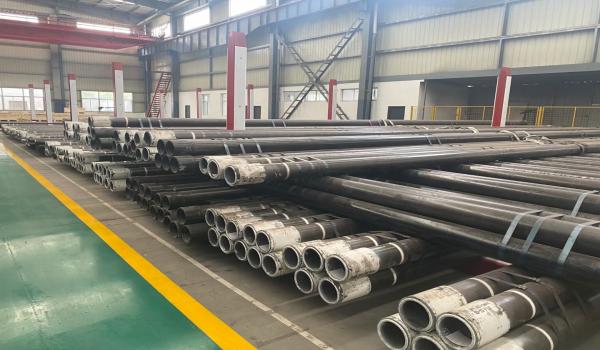
Overview of API 5L and API 5CT Standards
API 5L Standard
The API 5L standard was developed by the American Petroleum Institute (API) and is mainly used for pipeline systems in the oil and gas industry. The API 5L standard specifies the minimum size, material quality, compressive strength, ductility and impact resistance of pipelines. In addition, the standard also specifies the welding process, pressure testing, marking and packaging requirements for pipelines, as well as safety requirements for construction. Pipeline products that have passed API 5L certification can legally use the API 5L logo. The API 5L standard covers
seamless steel pipe and welded pipes and is suitable for pipelines that transport gas, water and oil. Its product grades include A25, A, B and "X" series grades (such as X42, X46, X52, X56, X60, X65, X70, X80), where the number after "X" represents the minimum yield strength of the steel pipe (unit: 000 psi, for example, X70 means the minimum yield strength is 70,000 psi).
API 5CT standard
API 5CT standard is for oil casing pipeand oilfield drilling steel pipe. Oil casing pipe is used in oil wells to stabilize the well wall and prevent the well wall from collapsing. Drilling pipe is used to transport oil and gas from the well to the ground. API 5CT specifies the size, weight, technical requirements, test methods, inspection rules, marking, packaging, transportation and storage of these pipes. The standard is designed to ensure that oil casing and drilling pipe can withstand high pressure, corrosive liquids and extreme temperatures in harsh downhole environments. API 5CT steel pipe materials include J55, K55, N80, L80, C90, T95, P110, Q125, etc. Each material is designed for different downhole conditions.
Main differences between API 5L and API 5CT
1. Definition and application areas of the standard
API 5CT: This standard focuses on oil casing and is applicable to pipes used in oil wells, such as casing and production pipes. It ensures that the pipe maintains its structural integrity under extreme conditions inside the oil well.
API 5L: API 5L: This standard is specifically for pipeline steel pipes, which are mainly used in long-distance pipeline systems for transporting fluids such as oil and natural gas. It covers two types of steel pipes: seamless steel pipes and welded steel pipes. The API 5L standard is applicable to both ground and underground pipelines, covering application scenarios from medium pressure to high pressure.
2. Manufacturing process and testing requirements
API 5CT: API 5CT pipes are usually made of high-strength materials such as J55, K55 and N80. These pipes need to undergo rigorous testing during the production process, including flattening test, tensile test, impact test and tensile strength test to ensure that they have sufficient strength and durability in harsh downhole environments.
API 5L: API 5L pipes are manufactured using a microalloying heat treatment process to improve their compressive strength and ductility. Especially in the production of X80 and above grade steel pipes, there are strict restrictions on carbon equivalent to ensure the welding performance and durability of the pipes. In addition, the API 5L standard also requires pressure testing and welding process evaluation to ensure the safety of the pipeline system.
3. Main uses and application environments
API 5CT: API 5CT standard pipes are mainly used in downhole environments of oil and gas, such as oil casing and production pipelines. They need to withstand extreme pressure and temperature downhole, as well as erosion by corrosive liquids. The main function of these pipes is to ensure the stability of the well wall and prevent well collapse, while protecting the flow of drilling fluids and oil and gas.
API 5L: API 5L pipes are mainly used for surface and underground pipelines, responsible for transporting oil and gas from production sites to refineries or other processing facilities. Its application environment is relatively simple, mainly involving long-distance transportation of gas and liquids, and the working pressure and temperature are manually controlled.
4. Working conditions and contact media
API 5CT: Since oil casings are inside oil wells, they need to withstand complex downhole conditions such as drilling fluids, sand, oil and gas, and acidic liquids. The casing must also prevent corrosion from harmful gases such as hydrogen sulfide.
API 5L: The working environment of API 5L pipes is relatively mild. The transport medium has been initially purified and no longer contains impurities such as drilling fluids and sand. Therefore, the pipeline is mainly in contact with pure media such as oil, gas and water, and the working pressure and temperature are also manually adjusted and controlled.
Conclusion
API 5L and API 5CT are indispensable standards in the oil and gas industry, and they each have strict quality requirements for different application scenarios. The API 5L standard focuses on the transport capacity of long-distance pipelines, ensuring the safe and efficient transmission of oil, gas and water in surface and underground environments.
API 5CT focuses on the safety and durability in oil wells, requiring pipes to operate stably under extreme conditions. Understanding the differences between these standards is crucial to selecting appropriate materials and processes to ensure the safety, efficiency and sustainable development of the oil and gas industry.

 English
 Español
 بالعربية
 Phone :
 Whatsapp :
 Email :