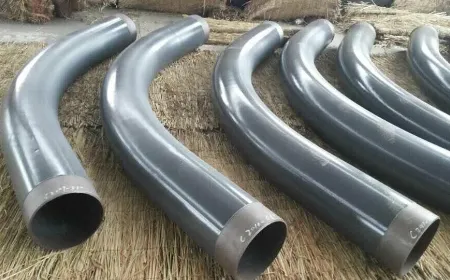
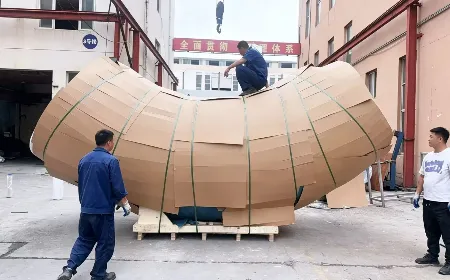
Elbows in pipe fittings are important components used to change the direction of a piping system. Elbows are designed to provide a smooth transition between two sections of pipe, allowing fluid flow to follow different routes while minimizing resistance and pressure loss. Here are some key aspects of using elbows in pipe fittings:
1. Directional change: The main function of an elbow is to change the direction of fluid flowing through a pipe system. Depending on the installation requirements, this can be a horizontal, vertical, or any angle of directional change.
2. Connection type: Elbows can connect pipes of various sizes and materials. Elbows come in a variety of types, such as male or female threads, butt welds, socket welds, and flanges to meet different installation needs and preferences.
3. Angularity: Elbows come in a variety of angles, with the most common being 45-degree and 90-degree elbows. However, for more specific directional changes, elbows of different angles are available, such as 22.5 degrees, 60 degrees, and even custom angles.
4. Reduced pressure loss: A well-designed elbow minimizes pressure loss in the system. The smooth and curved design of an elbow allows fluids to flow efficiently and with less friction than when the piping system uses sharp-angle fittings.
5. Versatile: Elbows are used in a wide range of applications, from domestic plumbing systems to large industrial facilities. Elbows are essential in any system where pipes need to pass through obstacles, enter mechanical equipment, change elevation, or simply change flow.
6. Diverse materials: Elbows are made from a variety of materials depending on the fluid type, temperature, and pressure. Common materials include PVC for low pressure and corrosive environments, stainless steel for high pressure and high temperature systems, brass for durability and corrosion resistance, and carbon steel for high pressure systems that do not contain corrosive elements.
7. Space saving: By enabling a change in direction, elbows help design compact piping systems that make efficient use of available space, especially in confined or confined areas.


 English
 Español
 بالعربية









 Phone :
  Whatsapp :
  Email :


