Copper Pipe

Copper Pipe

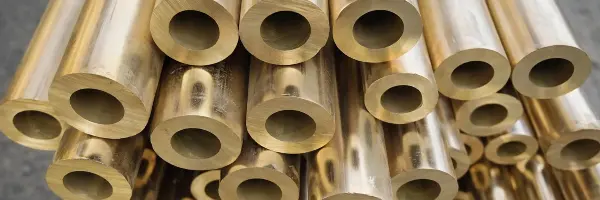
Copper pipes are made from high-purity copper or copper alloys through an integral forming process, belonging to the category of seamless pipes. They possess excellent thermal conductivity, electrical conductivity, corrosion resistance, and good ductility and malleability.  Widely used in water transportation and refrigerant transmission, they are found in piping and heat dissipation components across various industries, including construction, HVAC, and electronics.  Thanks to their reliability, safety, durability, and ease of shaping, copper pipes have become one of the most commonly used and preferred materials in modern water supply and HVAC systems.

Copper Pipe Dimensions

Common size range for copper pipes: 6–108 mm
Small diameters are commonly used in air conditioning, refrigeration, and gas systems: 6, 8, 10, 12, 15 mm
Medium diameters are commonly found in plumbing and HVAC systems: 22, 28, 32 mm
Large diameters are mostly used in industrial and heat exchange equipment: 54 mm and above

In the refrigeration industry, imperial sizes are also widely used, such as 1/4″ (6.35 mm), 3/8″ (9.52 mm), 1/2″ (12.7 mm), 5/8″ (15.88 mm), and the wall thickness generally ranges from 0.6 to 4.0 mm depending on the application.


Types and Grades of Copper Pipe

1.White copper pipe

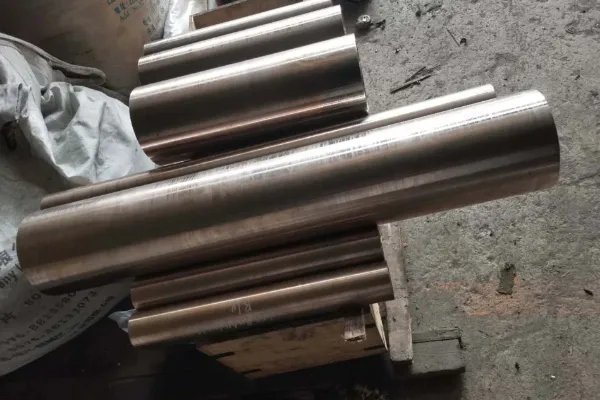
White copper pipe is an alloy tubing primarily composed of a copper-nickel (Cu-Ni) alloy. It gets its name from its silvery-white appearance, but it is not made of real silver.

External license plate number comparison table

China GB Grade USA (ASTM) U.K. (BS) Germany (DIN) Japan (JIS H)
BFe10-1-1 C70600 CN102 CuNi10Fe1Mn C7060
BFe30-1 C71500 CN107 CuNi30Mn1Fe C7150
BFe30-2-2 C71640 CN108 CuNi30Fe2Mn2 C7164
BFe5-1.5-0.5 C70400
B7

White copper pipe


2.Brass tubing

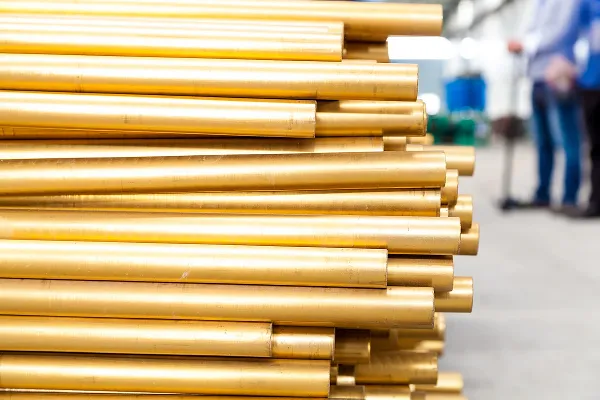
Brass tubing is a type of copper alloy tubing primarily composed of copper (Cu) and zinc (Zn), named for its golden-yellow appearance. Compared to pure copper tubing, brass tubing has higher strength and hardness, as well as good machinability.

External license plate number comparison table

China BG ASTM (USA) BS (U.K.) DIN (Germany) JIS H (Japan)
HAL77-2 C68700 CZ110 CuZn20Al2 C6870
HSn70-1 C44300 CZ111 CuZn28Sn1 C4430
HSn70-1B
HSn70-1AB
H68A CZ126
H65 / H63 C28000 / C27200 CZ108 CuZn36 / CuZn37 C2800 / C2700

Brass tubing


3.Copper tube

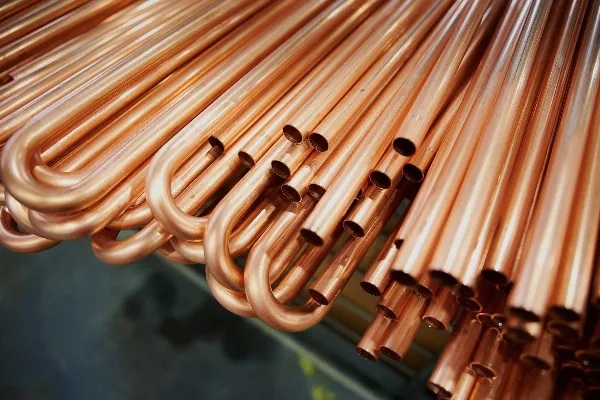
Copper tubes are made primarily of over 99% pure copper, also known as pure copper pipes. They are named for their reddish or purplish-red surface. These tubes feature excellent thermal conductivity, electrical conductivity, and corrosion resistance.

External license plate number comparison table

Grade USA (ASTM) U.K. (BS) Germany (DIN) Japan (JIS H)
China BG
T2 C11000 C101 / C102 E-Cu58 C1100
TP2 C12200 C106 SF-Cu C1220
Copper tube


Methods for manufacturing copper pipes

Common Copper Tube Manufacturing Methods and Performance Comparison
1. Manufacturing Method: Drawing
Production Process: Melting - Continuous Casting - Cutting - Heating - Extrusion - Cold Rolling/Drawing - Annealing - Straightening - Cutting Ends
Performance: Dense and uniform structure, high dimensional accuracy, smooth surface.
Main Uses: Parts requiring relatively high strength and appearance, processing of air conditioning copper tubes, generally used only for machined parts with large cutting amounts (mostly large diameter, thick-walled copper tubes).

2. Manufacturing Method: Extrusion
Production Process: Melting - Continuous Casting - Cutting - Heating - Extrusion - Cutting Ends - Straightening
Performance: Dense and uniform structure, relatively high dimensional accuracy, smooth surface.
Main Uses: Parts requiring high appearance and strength, can be used for parts requiring simultaneous cold bending, cold pressing (mostly smaller wall thickness copper tubes) and machining.

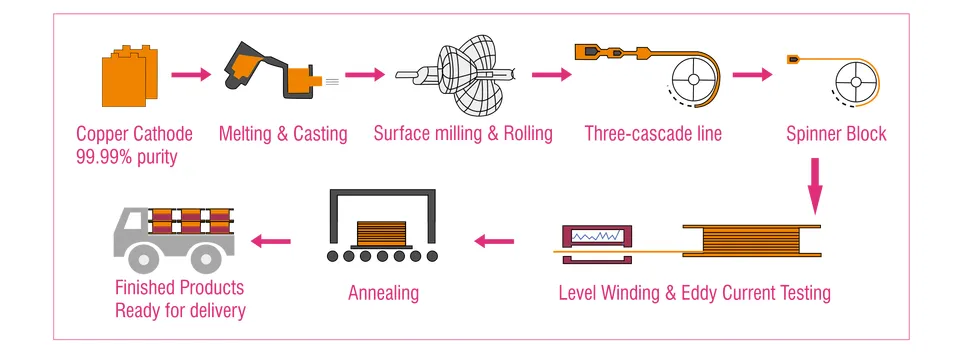
Copper pipe production process flow chart

Recommended Products

We use cookies to offer a better browsing experience, analyze site traffic, and personalize content. By using this site, you agree to our use of cookies.

Accept
Decline