Centralizer

Centralizer

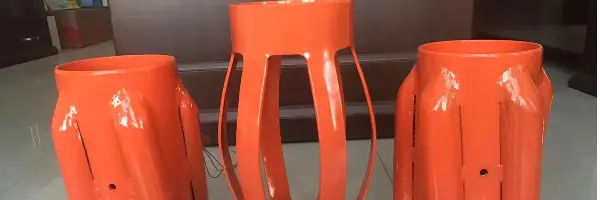
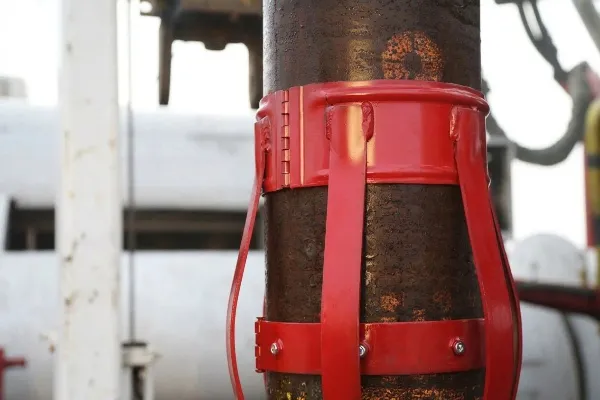
A casing centralizer is a downhole tool installed on the outside of a casing string during oil and gas and geothermal well construction. It helps keep the casing centered in the wellbore, reduce casing eccentricity, and maintain a more uniform annular space between the casing and wellbore wall. By improving casing centralization, it promotes more uniform cement slurry distribution and supports the formation of a continuous cement sheath, while also helping reduce resistance during casing running. Casing centralizers are available in bow spring, rigid, and semi-rigid designs for different well conditions and cementing

Centralizer Types and Specifications

No. Type Code English Description Casing Size Range (OD) Key Construction / Feature Standard Materials
1 Bow-Spring Centralizer (Single-Bow) BS-S Forged / stamped bow-spring casing centralizer, single-layer bow springs. Non-welded hinged or slip-on one-piece design. Low starting force, high restoring force for vertical & moderate deviated wells, meets API-10D restoring force requirements. 4-1/2" ~ 20" (114.3 mm – 508 mm) Hinged type / Slip-on integral type; single bow stack Spring steel 65Mn, SAE-1070, alloy spring steel; end collars: carbon steel A106/A283
2 Bow-Spring Centralizer (Double-Bow) BS-D Double-layer bow-spring centralizer. Higher restoring force than single-bow, for high-angle deviated & horizontal wells, improves casing stand-off ratio. 4-1/2" ~ 20" (114.3 mm – 508 mm) Hinged non-welded preferred; double bow stacks Spring steel 65Mn, SAE-1070; end collar carbon steel
3 One-Piece Integral Bow-Spring Centralizer BS-OP Slip-on one-piece stamped centralizer, no hinge pins, no welding. Heat-treated monolithic structure, anti-fatigue, easy to slip over casing coupling-free pipe. 2-7/8" ~ 20" (73.0 mm – 508 mm) Integral stamped body, slip-on installation Spring steel 65Mn, alloy spring steel
4 Semi-Rigid Centralizer SR Semi-rigid compressible vane-type centralizer. Combines partial spring deflection & high structural strength; allows slight compression when passing tight hole sections, suitable for rotating casing operations during cementing. 4-1/2" ~ 13-3/8" (114.3 mm – 339.7 mm) Cast / stamped vanes, limited elastic deformation Cast carbon steel, low-alloy cast steel
5 Solid Rigid Centralizer (Straight-Vane) RG-ST Rigid non-spring integral centralizer with straight vanes. Fixed outer diameter, no spring deflection; positioned by stop collars / set screws, high impact resistance for heavy-load deviated wells. 4-1/2" ~ 20" (114.3 mm – 508 mm) Solid cast / forged body, straight vanes Cast carbon steel, cast aluminum alloy, A694 series
6 Solid Rigid Centralizer (Spiral-Vane) RG-SP Rigid spiral-vane centralizer. Helical vanes improve mud circulation & cement displacement; widely used for deviated / horizontal wells, reduce hole wall scraping. 4-1/2" ~ 20" (114.3 mm – 508 mm) Spiral helical vanes, solid monolithic body Cast carbon steel, cast aluminum alloy, A694 F42-F70
7 Roller Centralizer (Low-Torque) RL Rigid-body centralizer fitted with heat-treated rollers. Convert sliding friction to rolling friction, drastically reduce drag & torque; permit casing rotation & reciprocation in horizontal / high-angle wells. 4-1/2" ~ 13-3/8" (114.3 mm – 339.7 mm) Spiral / straight vanes with alloy rollers; roller pins & bearings Body: cast/alloy steel; Rollers: heat-treated alloy steel; NACE MR0175 optional for sour-service wells
8 Hinged Non-Welded Bow-Spring Centralizer BS-HN Hinged segmented bow-spring centralizer, zero welding on bow-to-collar joints, assembled by hinge pins & locking tabs. Convenient field mounting around casing couplings without sliding over casing end. 4-1/2" ~ 20" (114.3 mm – 508 mm) Hinge pin construction, can clamp onto casing at any position Bow: spring steel 65Mn / SAE-1070; Collar: carbon steel

Centralizer Materials

Centralizers are commonly manufactured from carbon steel or other suitable steel materials selected according to the operating environment and mechanical requirements.
Typical material considerations include:

Material Group Grade Description Application
Spring Steel 65Mn, SAE-1070 Bow-spring centralizer bows, heat-treated for high restoring force
Carbon Cast / Forged Steel Cast carbon steel, A106, A283, A694 F42-F70 Rigid body, semi-rigid body, end collars
Cast Aluminum Alloy Al-Si cast alloy Light-weight rigid spiral-vane centralizers, low-impact wells
Alloy Steel for Rollers Heat-treated low-alloy steel Roller components for roller centralizer
Sour-Service Grade NACE MR0175 compliant steel H2S corrosive downhole environment

Note: Custom special sizes available upon request for liner, tubing and non-standard casing.

Applications of Centralizer

1. Primary Cementing
Centralizers are widely used during primary cementing. They help maintain a more uniform annular space between the casing and wellbore wall, allowing cement slurry to flow more evenly around the casing.

2. Surface Casing
Centralizers can be installed on surface casing to help maintain casing position while running the casing string and placing cement around it.

3. Intermediate Casing
For intermediate casing, centralizers help maintain casing standoff through different wellbore sections and support more consistent cement placement.

4. Production Casing
Production casing often requires effective centralization to support cementing and zonal isolation. Centralizers are positioned according to the casing and cementing program.

5. Deviated Wells
In deviated wells, gravity can cause the casing to move toward the low side of the wellbore. Centralizers help reduce this eccentricity and maintain the required casing standoff.

6. Horizontal Wells
Horizontal wells typically require careful casing centralization because the casing can rest along the lower side of the wellbore. Properly selected centralizers can help maintain an adequate flow path for cement.

7. Deep Wells
Deep wells may involve long casing strings and complex wellbore conditions. Centralizers help maintain casing position during casing running and cementing operations.

8. Liner Installation

Centralizers can also be used with liners to help position the liner within the open hole or previous casing and support more uniform cement placement.

Applications of Centralizer

Centralizer Standards

Standard Scope
API Spec 10D Specification for Casing Centralizers (main international standard)
GB/T 19831.1 / GB/T 19831.3 Chinese national standard for casing centralizers
NACE MR0175 Sour-service requirement for H2S containing wells (optional)

Bow Spring Centralizer Size Chart

Casing × Hole Size (inch) Bow Quantity Outside Diameter (mm) Inner Diameter (mm) Overall Length (mm)
4-1/2" × 6" 4 160 116 450 / 575
4-1/2" × 6-1/4" 4 167 116 450 / 575
4-1/2" × 7-7/8" 4 210 116 450 / 575
4-1/2" × 8-1/2" 4 230 116 450 / 575
5" × 6" 4 160 128 450 / 540
5" × 7-7/8" 4 210 128 450 / 575
6" × 6-3/4" 4 180 128 450 / 575
5-1/2" × 7-7/8" 5 210 140 450 / 575
5-1/2" × 8-1/2" 5 216 / 245 140 450 / 575
5-1/2" × 8-3/4" 5 222 / 250 140 450 / 575
5-1/2" × 9-1/2" 5 242 / 264 140 450 / 575
5-1/2" × 9-7/8" 5 251 / 264 140 450 / 575
7" × 8-1/2" 6 216 / 230 179 450 / 575
7" × 8-3/4" 6 222 / 233 179 450 / 575
7" × 9-1/2" 6 242 / 264 179 450 / 575
7" × 9-7/8" 6 251 / 264 179 550 / 650
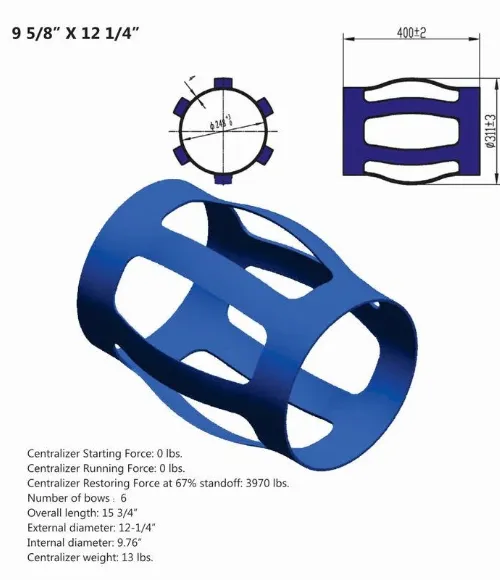
9-5/8" × 12-1/4" 8 346 245 550 / 650
9-5/8" × 12-13/16" 8 378 245 550 / 650
9-5/8" × 13-3/8" 8 346 / 352 245 550 / 650
10-3/4" × 14-3/4" 9 405 275 550 / 650
10-3/4" × 15-1/2" 9 374 275 550 / 650
13-3/8" × 17-1/2" 10 440 / 466 342 550 / 650
13-5/8" × 17-1/2" 12 440 / 466 342 550 / 650
20" × 26" 12 696 510 550 / 610 / 650


Recommended Products

We use cookies to offer a better browsing experience, analyze site traffic, and personalize content. By using this site, you agree to our use of cookies.

Accept
Decline