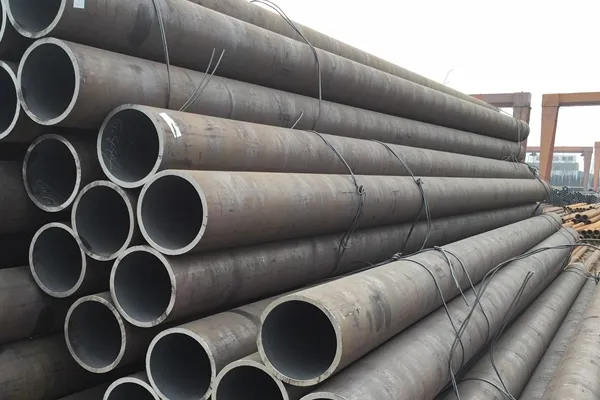
ASME B36.10M is the dimensional standard widely used for carbon steel and alloy steel pipes. It defines key pipe dimensions, including nominal pipe size (NPS), outside diameter (OD), wall thickness, pipe schedule, and theoretical weight.
In industrial piping projects, specifications such as NPS 4 SCH 40 or NPS 8 SCH 80 are commonly based on ASME B36.10 dimensions. Understanding this standard helps engineers and buyers select the correct pipe size, ensure fitting compatibility, and avoid specification errors during procurement and installation.
This guide explains ASME B36.10 steel pipe dimensions, schedule classifications, and practical selection considerations for carbon steel piping systems.
What Is ASME B36.10M Steel Pipe Standard?
ASME B36.10M, titled Welded and Seamless Wrought Steel Pipe, is the dimensional standard widely used for carbon steel and alloy steel pipes in industrial piping systems.Unlike ASTM A106, ASTM A53, or API 5L, which define pipe materials and performance requirements, ASME B36.10 focuses mainly on pipe dimensions.
The standard specifies:
Nominal Pipe Size (NPS)
Outside Diameter (OD)
Wall Thickness
Inside Diameter (ID)
Pipe Schedule (SCH)
Theoretical Weight
These dimensions allow pipes, fittings, flanges, and valves from different manufacturers to maintain dimensional compatibility during fabrication and installation.
In international steel pipe trading and engineering projects, ASME B36.10 is often combined with material specifications. For example:
ASTM A106 Grade B seamless pipe + ASME B36.10 dimensions
API 5L Grade B line pipe + ASME B36.10 dimensions
ASTM A53 welded pipe + ASME B36.10 dimensions
Understanding NPS in ASME B36.10 Pipe Dimensions
One of the most common misunderstandings in steel pipe selection is assuming that the NPS number represents the actual pipe diameter.
NPS (Nominal Pipe Size) is a standardized designation used to identify pipe sizes. The actual outside diameter is fixed according to ASME B36.10.
|
Nominal Pipe Size
|
Actual Outside Diameter
|
|
NPS 2
|
60.3 mm (2.375 in)
|
|
NPS 4
|
114.3 mm (4.500 in)
|
|
NPS 6
|
168.3 mm (6.625 in)
|
|
NPS 8
|
219.1 mm (8.625 in)
|
This means a buyer ordering a 4-inch carbon steel pipe is actually purchasing a pipe with an outside diameter of 114.3 mm, not 4 inches.
This difference is important during:
Pipeline design
Valve and flange matching
Equipment connection
Fabrication planning
In our experience working with industrial pipe orders, incorrect understanding of NPS dimensions is one of the most common reasons for specification confirmation before production.
How ASME B36.10 Defines Pipe Dimensions
The key rule of ASME B36.10 is:
For the same NPS size, the outside diameter remains unchanged, while wall thickness varies according to the pipe schedule.
This design principle allows different pressure classes of pipes to use the same fittings and connection systems.
|
Pipe Specification
|
Outside Diameter
|
Wall Thickness
|
|
NPS 4 SCH 40
|
114.3 mm
|
6.02 mm
|
|
NPS 4 SCH 80
|
114.3 mm
|
8.56 mm
|
ASME B36.10 Core Dimensional Rules
The fundamental design rule of ASME B36.10—and a key feature distinguishing it from national standards—is that for steel pipes of the same Nominal Pipe Size (NPS), the outside diameter (OD) remains constant regardless of changes in the wall thickness schedule (SCH); only the inside diameter and wall thickness vary (decreasing and increasing, respectively) as the SCH rating rises. This rule ensures uniform external installation dimensions for pipes of the same nominal size, making them compatible with all standard fittings and eliminating the need to adjust installation configurations due to differences in wall thickness.
The standard also defines the specific relationship between NPS and outside diameter: for pipes ranging from NPS 1/8 to NPS 12, the actual outside diameter is larger than the nominal size; for large-diameter pipes of NPS 14 and above, the actual outside diameter matches the numerical value of the NPS.
The complete range of SCH wall thickness ratings covered by the standard includes: SCH 5, SCH 10, SCH 20, SCH 30, SCH 40, SCH 60, SCH 80, SCH 100, SCH 120, SCH 140, SCH 160, and XXS (Double Extra Strong). Among these, SCH 40 (standard wall) and SCH 80 (extra strong/heavy wall) are the two ratings most widely used in industrial applications.
ASME B36.10 Steel Pipe Dimensions Chart (Common Sizes)
ASME B36.10 defines the standard dimensions of carbon and alloy steel pipes, including NPS, DN, outside diameter, wall thickness, and pipe schedule. These dimensions ensure compatibility between pipes, fittings, and valves from different manufacturers. For example, NPS 8 SCH 40 and SCH 80 pipes have the same outside diameter but different wall thicknesses and pressure capabilities. The table below lists common ASME B36.10 pipe dimensions for SCH 40, SCH 80, and SCH 160, widely used in industrial piping applications.
|
NPS
|
DN
|
Outside Diameter (OD) mm
|
SCH 40 Wall Thickness mm
|
SCH 80 Wall Thickness mm
|
SCH 160 Wall Thickness mm
|
|
1/8"
|
6
|
10.3
|
1.73
|
2.41
|
—
|
|
1/4"
|
8
|
13.7
|
2.24
|
3.02
|
—
|
|
3/8"
|
10
|
17.1
|
2.31
|
3.2
|
—
|
|
1/2"
|
15
|
21.3
|
2.77
|
3.73
|
4.78
|
|
3/4"
|
20
|
26.7
|
2.87
|
3.91
|
5.56
|
|
1"
|
25
|
33.4
|
3.38
|
4.55
|
6.35
|
|
1-1/4"
|
32
|
42.2
|
3.56
|
4.85
|
6.35
|
|
1-1/2"
|
40
|
48.3
|
3.68
|
5.08
|
7.14
|
|
2"
|
50
|
60.3
|
3.91
|
5.54
|
8.74
|
|
2-1/2"
|
65
|
73
|
5.16
|
7.01
|
9.53
|
|
3"
|
80
|
88.9
|
5.49
|
7.62
|
11.13
|
|
3-1/2"
|
90
|
101.6
|
5.74
|
8.08
|
—
|
|
4"
|
100
|
114.3
|
6.02
|
8.56
|
13.49
|
|
5"
|
125
|
141.3
|
6.55
|
9.53
|
15.88
|
|
6"
|
150
|
168.3
|
7.11
|
10.97
|
18.26
|
|
8"
|
200
|
219.1
|
8.18
|
12.7
|
23.01
|
|
10"
|
250
|
273
|
9.27
|
15.09
|
28.58
|
|
12"
|
300
|
323.9
|
10.31
|
17.48
|
33.32
|
|
14"
|
350
|
355.6
|
11.13
|
19.05
|
35.71
|
|
16"
|
400
|
406.4
|
12.7
|
21.44
|
40.49
|
|
18"
|
450
|
457.2
|
14.27
|
23.83
|
45.24
|
|
20"
|
500
|
508
|
15.09
|
26.19
|
50.01
|
|
22"
|
550
|
559
|
15.88
|
28.58
|
53.98
|
|
24"
|
600
|
610
|
17.48
|
30.96
|
59.54
|
|
26"
|
650
|
660
|
—
|
30.96
|
—
|
|
28"
|
700
|
711
|
—
|
30.96
|
—
|
|
30"
|
750
|
762
|
—
|
30.96
|
—
|
|
32"
|
800
|
813
|
17.48
|
30.96
|
—
|
|
34"
|
850
|
864
|
—
|
30.96
|
—
|
|
36"
|
900
|
914
|
19.05
|
30.96
|
—
|
Note: The above values are typical ASME B36.10 dimensions. Actual production tolerances and final requirements should be confirmed according to the applicable pipe specification and project standard.
For a complete size-by-size reference, including outside diameter, inside diameter, wall thickness, and weight, engineers normally refer to a dedicated ASME B36.10 dimension chart or Schedule pipe dimension table.
ASME B36.10 vs ASME B36.19
ASME B36.10 and ASME B36.19 are often mentioned together because both are dimensional standards for steel pipes. However, they apply to different material systems.
|
Comparison
|
ASME B36.10
|
ASME B36.19
|
|
Application
|
Carbon steel and alloy steel pipe
|
Stainless steel pipe
|
|
Standard Name
|
Welded and Seamless Wrought Steel Pipe
|
Stainless Steel Pipe
|
|
Typical Materials
|
Carbon steel, low alloy steel
|
304, 316 and other stainless steels
|
|
Schedule Example
|
SCH 40, SCH 80, SCH 160
|
SCH 10S, SCH 40S, SCH 80S
|
|
Main Industries
|
Oil & gas, power, chemical, fire protection
|
Food, pharmaceutical, chemical, clean systems
|
The biggest difference is material application.
ASME B36.10 is mainly used for carbon steel and alloy steel piping, while ASME B36.19 is designed for stainless steel piping systems.
One important engineering consideration is that stainless steel pipe dimensions are not always identical to carbon steel pipe dimensions. Therefore, replacing a B36.10 pipe with a B36.19 pipe requires dimensional verification before fabrication.
How Does ASME B36.10 Schedule 80 Differ from Other Carbon Steel Pipe Schedules?
ASME B36.10 Schedule 80 Carbon Steel Pipe stands out from other schedules primarily due to its thicker wall compared to lower schedules like Schedule 40 or Schedule 20. This increased wall thickness translates into several key benefits.
First and foremost, Schedule 80 pipes provide superior pressure containment capabilities. The thicker walls enable the pipe to withstand higher internal and external pressures, making it ideal for demanding applications involving high-pressure systems. This characteristic is especially crucial in industries such as oil and gas, where pipelines frequently encounter significant pressure variations.
Additionally, the robust wall thickness enhances the pipe’s overall durability and resistance to external stresses, improving its performance and longevity in challenging environments.
Conclusion
ASME B36.10 provides the foundation for carbon steel pipe dimensional standardization. By defining NPS, outside diameter, wall thickness, and schedule classification, it allows engineers and manufacturers to maintain compatibility across different piping components and suppliers.
In practical applications, choosing the correct pipe dimension requires more than selecting a larger schedule number. Pressure, temperature, material grade, corrosion allowance, and project requirements must all be considered together.
For carbon steel pipe buyers and engineers, understanding ASME B36.10 dimensions is the first step toward selecting the right pipe specification for safe, reliable, and cost-effective piping systems.

 English
 Español
 بالعربية




 Phone :
  Whatsapp :
  Email :