API 5L SSAW steel pipes are designed for long-distance transportation of media such as oil and gas. They are formed through the spiral process and welded using techniques like submerged arc welding (SAW), combining advantages of large diameters, long-distance capabilities, and cost-effectiveness. The API 5L standards are categorized into PSL1 and PSL2 based on product specification levels: PSL1 covers general-purpose applications, while PSL2 imposes stricter requirements on chemical composition, toughness, non-destructive testing, and uniformity control, making it suitable for higher-demand operating conditions. The steel grade system ranges from GR.B/L245 to X100, with commonly used grades in engineering including X42, X52, X60, X65, X70, and X80. Notably, designations like L245M indicate thermomechanical controlled processing (TMCP) steel, which offers superior low-temperature toughness and weldability. Engineering specifications often reference both domestic and international standards such as GB/T 9711 and SY/T 5037 to facilitate alignment with international projects
What is API standard SSAW steel pipe?
API standard spiral steel pipe is a welded steel pipe manufactured in accordance with the API 5L standard, with main materials including X42, X46, X52, X56, X60 to X80/X100 steel grades. The product specifications include a diameter of 219-3200mm, a wall thickness of 6-26mm, and a surface treatment using anti-corrosion coating or black paint. It is divided into two quality levels: PSL1 and PSL2. The connection methods include end welding, clamp connection, and socket connection
API-5L standard SSAW steel pipe is mainly used for oil and gas transmission pipelines, and its specifications are expressed as outer diameter * wall thickness. Spiral pipes can be single-sided welded or double-sided welded. Welded pipes should undergo hydrostatic testing, and the tensile strength and cold bending performance of the weld seam should comply with regulations.
Standards: Implement SY/T5037, GB/T9711, API-5L and other standards to ensure product compatibility with domestic and international project requirements.
Material: including Q235B, Q355B, L245, L360, X42, X60, X70, X80, etc., suitable for ordinary fluid transportation and high-pressure oil and gas pipelines.
Specifications: Diameter 219-3200mm, wall thickness 6-26mm, length 6-12m (customizable 18m, 24m).
Process advantages: Double sided submerged arc welding technology, high weld quality, 100% ultrasonic testing, excellent mechanical performance.
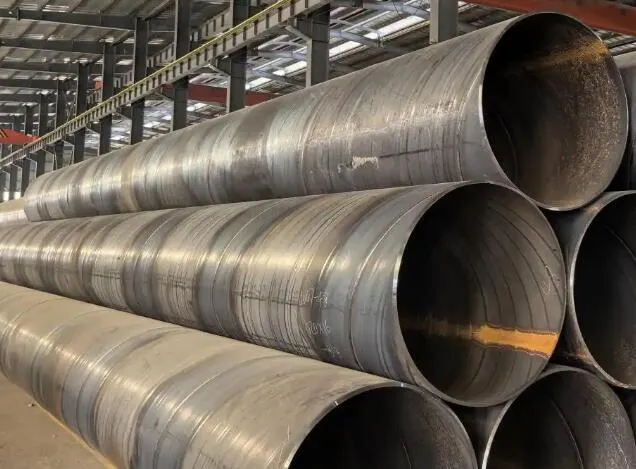
Selection and procurement points of SSAW steel pipes according to API 5L standard
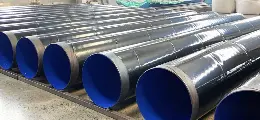
The selection should be determined comprehensively based on the medium (including corrosiveness), design pressure/temperature, laying environment, and construction conditions: PSL2 and higher steel grades (such as X65, X70, X80) are preferred for medium with strong corrosiveness or low-temperature environments, and PSL1 and GR.B/L245, X42, X52, etc. can be selected for general working conditions; Optimize outer diameter and wall thickness by combining flow rate, pressure drop, and welding workload in terms of size; The anti-corrosion system is determined based on the soil/water medium and cathodic protection scheme (such as external 3PE, internal IPN8710); Quality documents need to verify API 5L compliance identification, MTC material certificate, third-party non-destructive testing and hydrostatic test reports, and if necessary, organize factory witnessing and third-party sampling inspection

 English
 Español
 بالعربية
 Phone :
  Whatsapp :
  Email :


