A precision steel pipe is a type of seamless steel pipe that undergoes additional machining processes to achieve extremely tight dimensional tolerances and improved surface finish. These pipes are usually produced using cold rolling or cold drawing, followed by processes such as grinding, polishing, or honing to enhance accuracy.
Precision seamless steel pipe is a kind of high-precision steel pipe after cold rolling or cold drawing; full name: cold-rolled precision seamless steel pipe. Because the inner and outer walls of precision seamless steel pipe have no oxide layer, high pressure without leakage, high precision, high finish, no deformation after cold bending, no cracks after expansion and flattening, etc., it is mainly used to produce pneumatic or hydraulic components, such as cylinders or oil cylinders, which are all made of seamless pipes. The chemical composition of precision seamless steel pipes is carbon C, silicon Si, manganese Mn, sulfur S, phosphorus P, chromium Cr.
Precision steel pipe material standard
The international standard for precision pipes is DIN 2391, which adopts European standards.
In fact, precision pipes can apply more steel pipe standards. Including DIN2445, EN10305, DIN1630, DIN1629,
ASTM A106, ASTM A179, JIS G3445
Available materials include 10#, 20#, 35, 45, 40Cr, 25Mn, 37Mn5, St35(E235), St37.4, St45(E255), St52(E355), etc.
Difference between precision steel pipe and seamless steel pipe
1. The obvious difference between precision steel pipe and seamless steel pipe is: high dimensional accuracy, which can reach 0.05mm.
2. The surface finish of the inner and outer diameters of precision steel pipes is high, and customers can use them directly without processing; while ordinary seamless steel pipes require customers to lathe, polish, etc.
|
Feature
|
Precision Steel Pipe
|
Seamless Steel Pipe
|
|
Manufacturing Process
|
Cold drawn, honed, polished
|
Hot rolled, cold drawn
|
|
Tolerance & Accuracy
|
High precision, tight tolerances
|
Less precise than precision pipes
|
|
Surface Finish
|
Smooth, polished
|
Standard finish
|
|
Strength & Durability
|
Enhanced by cold working
|
Strong but less precise
|
|
Pressure & Temperature Resistance
|
Lower than seamless pipes
|
High pressure and temperature resistance
|
|
Cost
|
Higher due to precision machining
|
More cost-effective for general applications
|
|
Common Applications
|
Hydraulic cylinders, automotive parts, aerospace
|
Oil and gas, power plants, heavy industry
|
The difference between cold-drawn precision seamless pipes and ordinary seamless pipes:
The main feature of ordinary seamless steel pipes is that they have no welding seams and can withstand greater pressure. The products can be very rough cast or cold-drawn parts.
Cold-drawn precision seamless pipes are products that have appeared in recent years. They mainly have strict tolerances and roughness for the inner hole and outer wall dimensions.
1. Cold-drawn precision seamless pipes have a smaller outer diameter;
2. High precision and can be produced in small batches;
3. Cold-drawn precision seamless pipes have high precision and good surface quality;
4. The cross-sectional area of the steel pipe is more complex;
5. The steel pipe has better performance, the metal is denser, and the engine load conditions and the requirements of economy and emission can flexibly adjust the oil pressure in the common rail cavity, especially optimizing the low-speed performance of the engine.
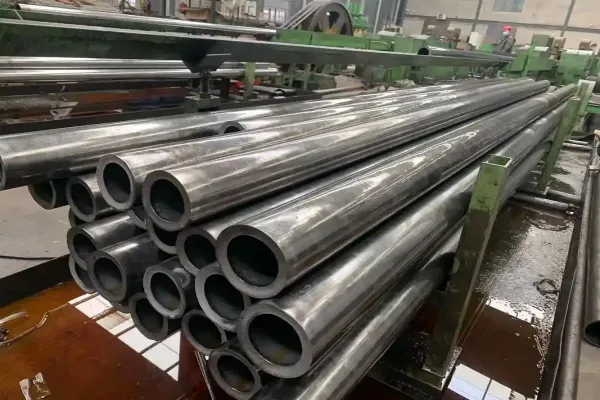
Size Tolerances
For hot rolling precision steel pipe, tolerance of OD is +/- 0.1%.
For cold drawn precision pipe, tolerance allowed in below conditions:
Diameters 6mm to 10mm, normal tolerance condition +/- 0.2%, premium tolerance condition +/- 0.15%.
10mm to 30mm, normal tolerance condition +/- 0.4%, premium tolerance condition +/- 0.2%.
30mm to 50mm, normal tolerance condition +/- 0.45%, premium tolerance condition +/-0.3%.
For outer diameters above 50mm, normal tolerance condition +/- 0.1%, premium tolerance condition +/- 0.8%.
Conclusion
Both precision steel pipes and seamless steel pipes have their own advantages and are suited for different industrial needs. Seamless pipes offer superior strength and pressure resistance, while precision steel pipes provide high dimensional accuracy and surface quality. When selecting between the two, consider your specific application requirements, budget, and performance expectations.
By understanding these differences, businesses can optimize their material selection for better efficiency, cost savings, and long-term reliability.
For expert guidance on choosing the right steel pipe for your needs, feel free to contact
BAOWI Steel, a trusted supplier of high-quality seamless and precision steel pipes.

 English
 Español
 بالعربية
 Phone :
 Whatsapp :
 Email :