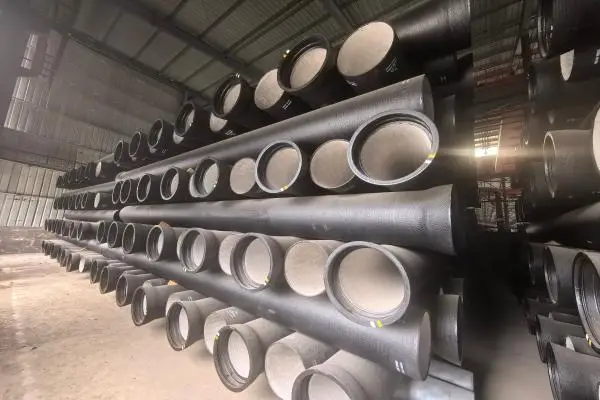
Ductile iron pipe (DIP) is a pressure pipe widely used in municipal water, wastewater, fire protection, irrigation, and industrial pipeline systems. Its combination of high strength, ductility, pressure resistance, and durable joints makes it suitable for buried and demanding pipeline applications.
The most common DI pipe applications are potable water transmission and distribution, wastewater collection, fire protection, reclaimed water, and irrigation. Ductile iron pipe can also serve specialized applications such as mining, industrial water systems, trenchless installations, and underwater crossings when the pipe, lining, joint, and corrosion protection system are properly specified.
The right application depends on more than pipe diameter. Engineers should consider operating pressure, surge pressure, external loads, soil conditions, transported fluid, corrosion exposure, joint requirements, and applicable standards before selecting ductile iron pipe.
What Is Ductile Iron Pipe Used For?
Ductile iron pipe is primarily used where a pipeline needs to withstand internal pressure and external loads while providing long-term structural reliability.
Common ductile iron pipe applications include:
Potable water transmission and distribution
Raw water pipelines
Sewer and wastewater systems
Fire protection systems
Reclaimed water pipelines
Irrigation systems
Industrial water and process pipelines
Mining and slurry applications
Trenchless pipeline installations
Subaqueous and river crossings
AWWA C151 covers centrifugally cast ductile iron pipe for potable water, raw water, wastewater, and reclaimed water systems. It includes push-on and mechanical-joint configurations.
Main Applications of Ductile Iron Pipes
As the excellent performance of ductile iron becomes more widely recognized, these pipes are gradually replacing traditional gray cast iron pipes. Currently, ductile iron pipes are widely used in the following areas:
1. Potable Water Transmission and Distribution
Potable water is one of the most common applications for ductile iron pipe.Municipal water systems require pipe that can handle internal pressure, underground loads, installation stresses, and long-term service conditions. Ductile iron pipe is widely used for transmission mains, distribution mains, water treatment plant connections, and other pressure water systems.
Ductile iron pipe also offers a range of
pup joint and fitting options. This allows engineers to design pipelines around valves, bends, tees, hydrants, and changes in alignment.
For drinking water projects, material selection should also consider local regulatory requirements and product certifications. NSF notes that ductile iron pipe and fittings have been certified for drinking water distribution, with NSF/ANSI/CAN 61 addressing health effects from materials that contact drinking water.
2. Sewer and Wastewater Systems
Ductile iron pipe is widely used in both gravity sewer and pressure sewer applications.Wastewater pipelines can experience internal pressure, external soil loads, hydraulic surges, corrosive environments, and infiltration or exfiltration risks. Tight joints and appropriate corrosion protection are therefore important.Force mains are particularly demanding because pumps can create hydraulic transients when flow changes rapidly. DIPRA notes that ductile iron pipe is well suited to pressure sewer applications because its pressure classes provide resistance to operating pressure and surge conditions.
3. Fire Protection Systems
Fire protection is another important ductile iron pipe application.Underground fire mains must remain reliable when needed and must withstand the pressure and mechanical loads associated with firefighting systems.
The pipe system should be designed as a complete pressure network. Pipe, fittings, joints, valves, hydrants, thrust restraint, and pressure requirements all need to be considered together.
4. Reclaimed Water Systems
Reclaimed water systems transport treated wastewater for beneficial reuse.
Typical applications include:
Landscape irrigation
Industrial process water
Cooling water
Municipal non-potable water systems
Reuse water distribution
AWWA standards cover ductile iron pipe and fittings used in reclaimed water systems. AWWA C151 includes reclaimed water within its scope, while AWWA C104 covers cement-mortar linings for potable water, raw water, wastewater, and reclaimed water applications.
5. Irrigation and Agricultural Water Systems
Ductile iron pipe is also used for pressurized irrigation and agricultural water systems.Irrigation projects often involve long underground pipelines with varying elevations, external loads, and pressure changes. Ductile iron pipe can provide the structural strength needed for these conditions.
For large irrigation projects, hydraulic calculations should determine the required pipe diameter and operating pressure. The pipe wall design should then account for both internal pressure and external loading.
6.Mining and Slurry Applications
Mining operations can require pipelines for water, tailings, slurry, and other abrasive materials.Ductile iron pipe can be considered for selected mining applications because of its high strength and resistance to mechanical damage. Its suitability depends heavily on the transported material and the pipe's internal lining.
Abrasive slurry requires special attention. Engineers should evaluate particle size, concentration, velocity, pH, and chemical composition before choosing the pipe and lining system.
Why Is Ductile Iron Pipe Suitable for These Applications?
Ductile iron pipe is used across many infrastructure applications because several properties work together.
1.High Strength
Ductile iron has significantly higher strength and ductility than traditional gray cast iron. This gives the pipe the structural capacity required for pressure service and demanding underground conditions.
2.Pressure Resistance
Ductile iron pipe is designed to withstand internal pressure and external loads. AWWA's current standards framework includes separate requirements for pipe thickness, joints, fittings, linings, and installation.
3.Durable Joints
Push-on, mechanical, flanged, and other joint configurations allow engineers to select a connection method that matches the application.A pressure-tight joint helps reduce the risk of leakage and protects the pipeline from unwanted infiltration or exfiltration.
Ductile Iron Pipe Applications by Service
|
Application
|
Typical Service
|
Main Selection Considerations
|
|
Potable water
|
Drinking water, transmission mains
|
Pressure, lining, certification, joints
|
|
Raw water
|
Rivers, reservoirs, treatment plants
|
Pressure, water chemistry, external loads
|
|
Wastewater
|
Gravity sewer, force mains
|
Corrosion, pressure, surge, joints
|
|
Fire protection
|
Fire mains, hydrant systems
|
Pressure, reliability, fittings
|
|
Reclaimed water
|
Irrigation, industrial reuse
|
Water chemistry, lining, regulations
|
|
Irrigation
|
Agricultural and landscape systems
|
Flow, pressure, elevation
|
|
Industrial water
|
Process and cooling water
|
Fluid compatibility, pressure, temperature
|
|
Mining
|
Mine water and selected slurry service
|
Abrasion, chemistry, lining
|
|
Trenchless installation
|
Road and rail crossings
|
Installation loads, joints, soil
|
|
Subaqueous crossing
|
Rivers, canals, lakes
|
Buoyancy, external pressure, corrosion
|
Ductile Iron Pipe Suppliers and Ductile Iron Pipe Manufacturers
At
BAOWI STEEL, we provide top-tier
ductile iron products supported by a comprehensive global service network. From expert pre-sales advice to seamless after-sales installation support, our end-to-end solutions deliver reliability and efficiency at every stage.
Trust BAOWI STEEL for robust, eco-friendly, and cost-efficient piping systems relied upon by industry professionals around the globe.
Ductile Iron Pipe Applications FAQ
What is ductile iron pipe mainly used for?
Ductile iron pipe is mainly used for potable water transmission and distribution. It is also widely used in wastewater, fire protection, reclaimed water, irrigation, and selected industrial pipeline systems.
Is ductile iron pipe suitable for drinking water?
Yes. Ductile iron pipe is widely used in potable water systems. The pipe, lining, fittings, and other components must meet the applicable drinking water requirements and project specifications. NSF/ANSI/CAN 61 is one relevant certification standard for products that contact drinking water.
Can ductile iron pipe be used for wastewater?
Yes. Ductile iron pipe can be used for both gravity sewer and pressure sewer systems. The wastewater chemistry should be evaluated when selecting the internal lining and corrosion-control system.
Is ductile iron pipe suitable for fire protection?
Yes. Ductile iron pipe is used for underground fire mains and other pressurized fire protection systems. The complete system must meet the applicable fire protection, pressure, and local code requirements.
Can ductile iron pipe be used for irrigation?
Yes. Ductile iron pipe can be used for municipal, agricultural, and landscape irrigation systems, especially where high structural strength and pressure capability are required.
Can ductile iron pipe be used for industrial applications?
Yes, but suitability depends on the fluid. Engineers should evaluate pressure, temperature, chemical compatibility, abrasion, lining, and gasket requirements before selecting ductile iron pipe for industrial service.
Conclusion
Ductile iron pipe is widely used because it combines structural strength, ductility, pressure resistance, and reliable joint performance. Its most established applications include potable water, raw water, wastewater, fire protection, reclaimed water, and irrigation.
It can also serve demanding industrial, mining, trenchless, and subaqueous applications when the pipe system is properly designed for the service conditions.
The key to successful ductile iron pipe selection is not simply choosing a pipe with a larger wall thickness or higher pressure rating. Engineers should evaluate the entire system, including the transported fluid, hydraulic conditions, external loads, soil environment, lining, coating, joints, fittings, and applicable standards.For project-specific requirements, review the
ductile iron pipe size chart and pressure requirements before placing an order.

 English
 Español
 بالعربية
 Phone :
  Whatsapp :
  Email :


