Oil well casing damage has always been one of the most serious problems plaguing oil field development. Oil well casing plays a very important role in oil field production. It is responsible for supporting the oil well wall and ensuring the stability of the oil well structure. However, due to long-term exposure to harsh environments such as high pressure and high temperature, oil well casings may be damaged.
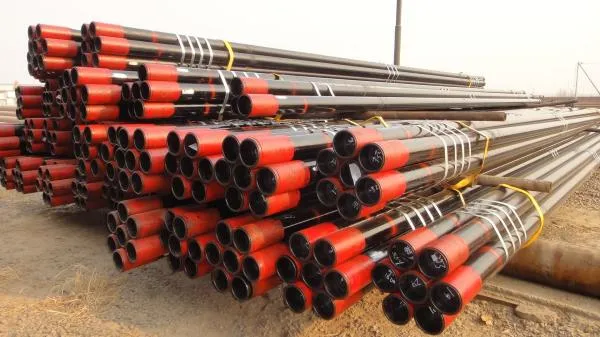
Causes of oil well casing damage
As the degree of damage to the oil pipe increases and is affected by certain high-pressure and high-temperature factors, it will also cause deformation and failure to a certain extent. The main failure forms of the casing are: diameter reduction deformation, collapse, fracture, misalignment, sticking, Tripping, corrosion perforation, wear, seal failure, etc. The reasons are roughly as follows:
1.Formation stress: The deformation, creeping, slipping, etc. of the formation will cause uneven external extrusion force, thus causing damage to the casing.
2.Sand production from the formation: After sand production from the oil layer, a cavity is formed on the outer wall of the casing, resulting in uneven pressure distribution around the casing. In particular, the perforation section and adjacent casing are prone to damage.
3.Corrosion: Long-term contact of oil well casing with salt water, chemical substances, etc. in the formation will lead to corrosion, especially in high temperature, high pressure, and acidic environments.
4.Mechanical damage: During the construction and maintenance of oil wells, the casing may be damaged by mechanical impact, scratches, etc., such as scratches, dents, cracks, etc.
5.Unreasonable perforation: Perforation weakens the anti-extrusion strength of the casing, especially when the hole density is unreasonable during repair hole construction.
6.Unreasonable water injection: Under high-pressure water injection conditions, water immersion causes changes in the physical properties of the rock formation, and the pressure difference causes slippage, causing damage to the casing.
7.Unreasonable fracturing process: Hydraulic fracturing and high-energy gas fracturing can also cause damage to the casing if they are not constructed properly.
8.Thermal recovery of heavy oil: Under the action of continuous high temperature, the yield strength of casing is reduced and thermal expansion deformation occurs, resulting in casing damage.
9.Wear: Drill pipe operation, cable lifting, etc. will cause wear on the inner wall of the casing and reduce the collapse resistance of the casing.
10.Leakage of casing threads: Under the influence of factors such as temperature, corrosive media, tension, compression, internal and external pressure, and bending composite loads, the threaded connection parts may slip, deform, and have holes, causing the casing threads to stick or detach. corrosion.
Preventing casing damage requires starting from many aspects, including reasonable design of construction plans, strict construction quality control, strengthening environmental monitoring and control, regular inspection and maintenance of casing, optimization of process flow and other measures to reduce the damage to casing caused by various failure forms. Impact, improve the service life and safety of the casing.

 English
 Español
 بالعربية
 Phone :
  Whatsapp :
  Email :


