API 5L SSAW pipe is a spiral welded line pipe manufactured according to the requirements of the American Petroleum Institute (API) 5L standard. It is mainly used for oil and gas transmission pipelines, water transportation systems, and large-scale infrastructure projects where large-diameter pipes are required.
Unlike general SSAW steel pipes, API 5L SSAW pipes must meet strict requirements for steel grades, chemical composition, mechanical properties, welding quality, and inspection procedures. The standard classifies pipeline products into two specification levels: PSL1 and PSL2, with PSL2 requiring stricter control of material performance, testing, and manufacturing quality.
Because of its flexible diameter range, efficient production process, and reliable weld performance, API 5L SSAW pipe is widely selected for long-distance pipeline projects, especially where large-diameter and cost-effective transportation solutions are needed.
What Is API 5L SSAW Pipe?
API 5L SSAW pipe is a spiral welded steel line pipe produced by forming steel strips into a spiral shape and joining the seam through submerged arc welding (SAW). The spiral welding process allows manufacturers to produce large-diameter pipes with high production efficiency, making it suitable for transmission pipeline applications.
The main difference between ordinary SSAW pipes and API 5L SSAW pipes is the certification requirements. API 5L focuses on pipeline safety and reliability by controlling:
Steel chemical composition
Tensile and yield strength
Weld quality
Hydrostatic testing
Non-destructive testing (NDT)
Material traceability
Product documentation
API 5L SSAW pipes are commonly supplied in grades such as B, X42, X52, X60, X65, X70, and X80, depending on pipeline pressure requirements, transportation medium, and operating conditions.
API 5L SSAW Pipe Grades
API 5L uses a grade designation system based on the minimum yield strength of the pipe material. The higher the grade number, the higher the required strength level.
Common API 5L SSAW pipe grades include:
|
Grade
|
Minimum Yield Strength
|
Typical Applications
|
|
Grade B (L245)
|
245 MPa
|
General oil, gas and water pipelines
|
|
X42 (L290)
|
290 MPa
|
Medium-pressure transmission pipelines
|
|
X52 (L360)
|
360 MPa
|
Oil and gas transportation systems
|
|
X60 (L415)
|
415 MPa
|
Long-distance pipeline projects
|
|
X65 (L450)
|
450 MPa
|
High-pressure oil and gas pipelines
|
|
X70 (L485)
|
485 MPa
|
Large transmission pipeline systems
|
|
X80 (L555)
|
555 MPa
|
High-strength pipeline applications
|
Among these grades, X52, X60, X65, and X70 are commonly used for modern oil and gas pipeline projects because they provide a balance between strength, weldability, and cost efficiency.
For example, API 5L X65 SSAW pipe is often selected for high-pressure and long-distance pipelines due to its high yield strength and good performance under demanding operating conditions.
API 5L SSAW Pipe Specification and PSL Grades
|
Standard
|
Grade
|
Chemical Composition(%)
|
Tensile STrength(min)
|
Yield Strength(min)
|
|
cMnPS
|
Mpa
|
Mpa
|
|
API 5L PSL1
|
A
|
0.22
|
0.90
|
0.030
|
0.030
|
335
|
210
|
|
B
|
0.28
|
1.20
|
0.030
|
0.030
|
415
|
245
|
|
X42
|
0.28
|
1.30
|
0.030
|
0.030
|
415
|
290
|
|
X46
|
0.28
|
1.40
|
0.030
|
0.030
|
435
|
320
|
|
X52
|
0.28
|
1. 40
|
0.030
|
0.030
|
460
|
360
|
|
X56
|
0.28
|
1.40
|
0.030
|
0.030
|
490
|
390
|
|
X60
|
0.28
|
1.40
|
0.030
|
0.030
|
520
|
415
|
|
X65
|
0.28
|
1.40
|
0.030
|
0.030
|
535
|
450
|
|
X70
|
0.28
|
1.40
|
0.030
|
0.030
|
570
|
485
|
|
Standard
|
Grade
|
Chemical Composition(%)
|
Tensile STrength
|
Yield Strength
|
|
cMnPS
|
Mpa
|
Mpa
|
|
API 5L PSL2
|
B
|
0.24
|
1.20
|
0.025
|
0.015
|
415-655
|
245-450
|
|
X42
|
0.24
|
1.30
|
0.025
|
0.015
|
415-655
|
290-495
|
|
X46
|
0.24
|
1.40
|
0.025
|
0.015
|
435-655
|
320-525
|
|
X52
|
0.24
|
1. 40
|
0.025
|
0.015
|
460-760
|
360-530
|
|
X56
|
0.24
|
1. 40
|
0.025
|
0.015
|
490-760
|
390-545
|
|
X60
|
0.24
|
1. 40
|
0.025
|
0.015
|
520-760
|
415-565
|
|
X65
|
0.24
|
1.40
|
0.025
|
0.015
|
535-760
|
450-600
|
|
X70
|
0.24
|
1.40
|
0.025
|
0.015
|
570-760
|
485-635
|
|
X80
|
0.24
|
1. 40
|
0.025
|
0.015
|
625-825
|
555-705
|
API 5L PSL1 vs PSL2 Differences
PSL1 is the basic API 5L level for general use like water and low-pressure oil, with standard requirements and lower cost, while PSL2 has stricter chemical limits, mandatory impact testing, and higher inspection standards for high-pressure, offshore, and critical pipeline applications.
PSL1 vs PSL2 Comparison Table
|
Item
|
PSL1
|
PSL2
|
|
Chemical Composition
|
Standard limits
|
Stricter limits (lower S & P)
|
|
Impact Testing
|
Not required
|
Mandatory
|
|
NDT (Inspection)
|
Basic
|
Enhanced and more detailed
|
|
Mechanical Properties
|
Standard
|
More strictly controlled
|
|
Application
|
Water, low-pressure oil
|
Gas, offshore, high-pressure pipelines
|
|
Cost
|
Lower
|
Higher
|
|
Safety Level
|
General service
|
High reliability service
|
Advantages of API 5L SSAW Pipes
1.Wide Diameter Range
SSAW pipes can be manufactured in diameters exceeding 3000 mm, which is difficult with other pipe types.
2.Cost Efficiency
Lower production costs compared to seamless or LSAW pipes, especially in large sizes.
3.Good Weld Strength
Double-sided submerged arc welding ensures consistent, high-strength welds.
4.Custom Length and Coating Options
Easily adapted to project-specific needs with custom lengths, beveling, and anti-corrosion coatings.
5.High Throughput and Productivity
Spiral welding allows continuous production, increasing efficiency in large-scale projects.
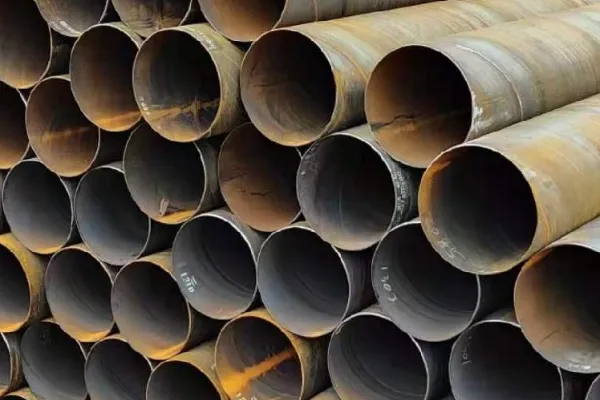
API 5L SSAW Steel Pipe Manufacturers and Suppliers
Choose Baowi Steel as your reliable supplier of API 5L SSAW steel pipes. We are fully certified with the API Monogram and ISO standards and bring years of experience in manufacturing and exporting high-quality pipeline products. Our factory is equipped with complete in-house testing facilities including ultrasonic testing hydrostatic testing and full chemical and mechanical analysis. We offer custom services such as pipe coating beveling and length cutting to meet your exact project requirements. With strong production capacity and global shipping support Baowi Steel ensures consistent quality and on time delivery for every order.
API 5L SSAW Pipe Chemical Composition Requirements
The chemical composition of API 5L SSAW pipe is strictly controlled to ensure sufficient strength, weldability, and long-term reliability during pipeline operation.
Compared with PSL1, API 5L PSL2 imposes stricter limits on carbon, sulfur, phosphorus, and other elements. These requirements help improve toughness, corrosion resistance, and welding performance, especially for high-pressure and critical pipeline applications.
Typical chemical elements controlled by API 5L include:
|
Element
|
Function in Pipeline Steel
|
|
Carbon (C)
|
Controls strength and hardness
|
|
Manganese (Mn)
|
Improves tensile strength and toughness
|
|
Phosphorus (P)
|
Limited to improve toughness and weldability
|
|
Sulfur (S)
|
Controlled to reduce brittleness
|
|
Silicon (Si)
|
Improves deoxidation and strength
|
For PSL2 pipes, lower sulfur and phosphorus content is required compared with PSL1 products. This provides better resistance to brittle fracture and improves performance under severe operating conditions.
Conclusion
API 5L SSAW pipes provide an economical and efficient solution for oil and gas transportation, water transmission, and large-scale infrastructure projects. Their wide diameter range, reliable welding performance, and flexible coating options make them one of the most commonly used pipeline products in modern industrial applications.
Understanding PSL1 and PSL2 requirements, coating systems, and manufacturing standards is essential when selecting the correct pipeline material for long-term operational reliability and project safety.
Frequently Asked Questions About API 5L SSAW Pipe
What is API 5L SSAW pipe used for?
API 5L SSAW pipes are mainly used for oil, gas, and water transmission pipelines. They are especially suitable for large-diameter and long-distance pipeline systems.
What is the difference between API 5L PSL1 and PSL2?
The main difference is the quality control level. PSL2 has stricter chemical requirements, mandatory impact testing, and enhanced inspection compared with PSL1.
Which API 5L grade is commonly used for SSAW pipe?
Common grades include B, X42, X52, X60,
X65, and X70. X52 and X65 are widely used in oil and gas transmission projects.
Is API 5L SSAW pipe suitable for high-pressure pipelines?
Yes. Properly selected API 5L SSAW pipes, especially PSL2 grades such as X60, X65, and X70, can be used for high-pressure pipeline applications.
What tests are required for API 5L SSAW pipes?
Typical tests include hydrostatic testing, ultrasonic testing, dimensional inspection, chemical analysis, and mechanical property testing.
More related articles
API 5L vs ASTM A106 Seamless Pipe
API 5L VS API 5CT

 English
 Español
 بالعربية
 Phone :
  Whatsapp :
  Email :