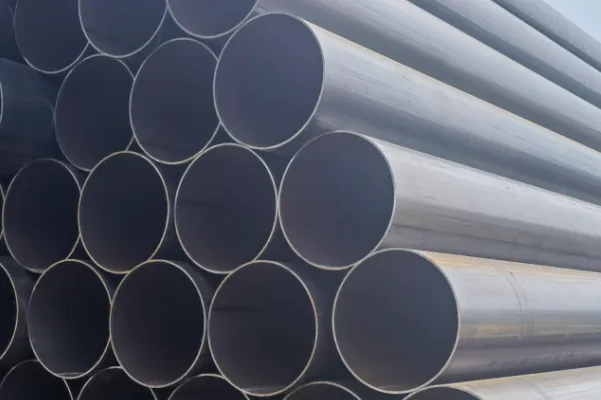
In oil and gas transportation, urban pipeline construction, and large steel structures, ERW steel pipes are unsung heroes. They occupy a significant market share due to their high production efficiency, accurate dimensions, good pressure resistance, and low cost.
However, the market is flooded with ERW steel pipes, with prices varying wildly. Choosing the wrong type can lead to frequent repairs and leaks, or even serious safety accidents or project rework. So how do you navigate the market and select truly high-quality ERW pipes? Don't worry, we've compiled a practical "Pitfall Avoidance and Selection Guide"!
1. Define Application Needs and International Standards
The first step in selecting pipes is not to look at the price, but to clarify "where" the pipe will be used and "whose standards" need to be followed. Different application scenarios correspond to vastly different international standards:
General Low Pressure and Building Structures:For general municipal water supply, construction scaffolding, or non-critical low-pressure fluids, refer to ASTM A53 or EN 10219 standards. These standards specify basic material requirements and offer high cost-effectiveness.
Energy and High-Pressure Pipelines:For long-distance transportation of oil and natural gas, the API 5L standard (divided into PSL1 and PSL2 levels) must be strictly adhered to. These operating conditions involve high pressure and high risk, requiring extremely stringent requirements for weld quality and pipe strength.Domestic Specific Projects:Don't forget about national standards (GB/T). For example, low-pressure fluid pipes correspond to GB/T 3091, and oil and gas industry pipes correspond to GB/T 9711.
|
Application
|
Standard
|
Typical Use
|
|
Low-pressure & structural projects
|
ASTM A53 / EN 10219
|
Water supply, scaffolding, fluid pipes
|
|
Oil & gas pipelines
|
API 5L (PSL1/PSL2)
|
High-pressure oil and gas transport
|
|
Domestic engineering projects
|
GB/T 3091 / GB/T 9711
|
Construction and pipeline systems
|
2. Rigorous Inspection of Processes and Quality Inspection Reports
If standards are the threshold, then manufacturing processes and quality inspections are the "internal strength" of the pipe. High-quality ERW pipe production lines and quality control are not just formalities:
The "Rebirth" of the Weld Area: After high-frequency resistance welding, the metal grains in the weld area become coarse, leading to localized hardening and brittleness. Excellent manufacturers will always have online induction annealing (normalizing) equipment to make the weld area tough again. Without this process, the pipe is extremely prone to cracking during subsequent cold bending or impact.
Non-destructive Testing (NDT): Defects inside the weld are not visible to the naked eye. Reliable manufacturers will perform ultrasonic testing (UT) or eddy current testing (ET) on 100% of the welds. For higher-grade line pipes, they may even add radiographic testing (RT) or phased array ultrasonic testing (PAUT). These test reports are crucial evidence for accountability and risk mitigation.
Hydrostatic Test: Both API and ASTM standards typically require hydrostatic pressure testing. Fill the pipe with water and pressurize it to 1.25 to 1.5 times the working pressure. Hold the pressure for a certain period of time to ensure there is no deformation or leakage.
3. Choosing the Right Dimensional Tolerances and Appearance
A major advantage of the ERW process is its high dimensional accuracy. While it's not necessary to measure every single pipe with calipers, the following points are worth noting during acceptance:
Wall Thickness Uniformity:Wall thickness directly determines the pipe's pressure-bearing capacity and service life. Check if the actual wall thickness reaches the nominal thickness and if the deviation is within the standard allowable range (usually ±10% or ±12.5%).
Ovality and Straightness:The pipe should not be misshapen. Measure the maximum and minimum outer diameter of the pipe ends and calculate the ovality; place it on a flat surface to check for obvious bending (usually, the bending degree per meter should be ≤1.5mm).
Appearance Defects:The surface should be free of cracks, folds, obvious scratches, or rust. For environments with high corrosion resistance requirements, also check if the thickness of the galvanized layer or anti-corrosion coating is uniform and meets the standards.
4. Assess the Supplier's Strength and Reputation
The steel market is rife with substandard products; choosing the right supplier can save you a lot of trouble.
Hardware and Qualifications: Examine whether the factory possesses a modern high-frequency welded pipe production line and supporting high-end laboratory equipment. Also, check if they hold authoritative certifications such as ISO 9001 and API monogram.
Soft Power and Reputation: A reliable supplier not only needs high-quality products but also the ability to deliver on time and provide comprehensive after-sales service. When technical problems arise, they should be able to quickly dispatch professionals to resolve them, rather than passing the buck.
Conclusion
In summary, selecting high-quality ERW steel pipes is essentially a matter of risk control. By identifying applicable standards, thoroughly examining manufacturing processes and quality control, strictly controlling dimensions and appearance, and relying on reliable suppliers, you can minimize the risks associated with inferior pipe materials.
Remember, the cheapest option is often the most expensive. In the engineering world, taking the time to do thorough preliminary selection is the best investment you can make in project safety and your professional reputation.

 English
 Español
 بالعربية
 Phone :
  Whatsapp :
  Email :