SSAW (Spiral Submerged Arc Welded) steel pipes are widely used in oil and gas pipelines, water transmission, and other infrastructure projects. Because these pipes are often exposed to moisture, oxygen, and other corrosive conditions during transportation, storage, and service, proper surface treatment is essential to prevent corrosion.
For pipelines that will receive an anti-corrosion coating, surface preparation is particularly important. A properly prepared steel surface helps the coating bond securely to the pipe and improves the durability of the corrosion protection system.
The main SSAW steel pipe rust removal and surface treatment methods include cleaning, tool cleaning, pickling, and abrasive blasting. The appropriate method depends on the existing surface condition and the requirements of the coating system.
What Is SSAW Steel Pipe Surface Treatment?
SSAW steel pipe surface treatment is the process of removing rust, mill scale, oil, dust, welding residue, old coatings, and other contaminants from the pipe surface before coating, painting, installation, or storage.
A typical surface preparation sequence may include:
1.Surface inspection
2.Removal of oil, grease, and loose contaminants
3.Mechanical or abrasive rust removal
4.Removal of dust and residual abrasive
5.Surface cleanliness inspection
6.Surface profile or roughness inspection when required
7.Coating application or temporary corrosion protection
The exact process depends on the initial condition of the steel pipe and the requirements of the coating system.
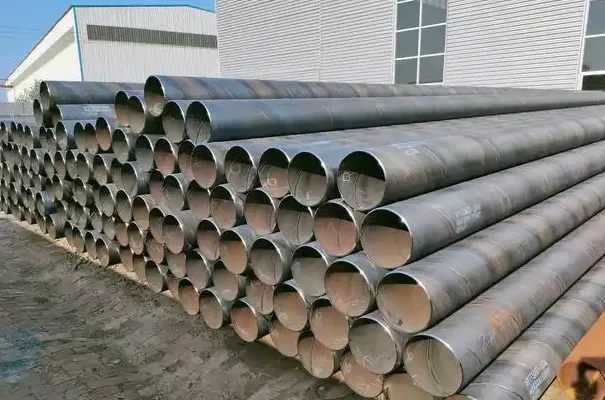
SSAW Steel Pipe Production Process
The production of SSAW steel pipe starts with hot-rolled steel coil. The coil is uncoiled and formed into a spiral shape at a controlled forming angle. The edges are then continuously joined by automatic double-sided submerged arc welding.
After welding, the pipe is sized and cut to the required length. Depending on the application and applicable standards, inspection may include hydrostatic testing, ultrasonic testing, radiographic testing, dimensional inspection, and visual examination.
Before an anti-corrosion coating is applied, the external surface may require additional preparation to remove rust, mill scale, oil, dust, welding residue, and other contaminants.
Main SSAW Steel Pipe Rust Removal Methods
1. Cleaning
Cleaning is generally the first step in steel pipe surface preparation.
Solvents, detergents, or emulsifying agents can be used to remove:
Oil and grease
Dust and dirt
Lubricants
Other organic contaminants
However, ordinary cleaning does not effectively remove firmly attached rust, mill scale, old coatings, or welding slag.
For this reason, cleaning is normally used as an auxiliary surface preparation method rather than a complete rust removal process. If significant corrosion or scale is present, mechanical or abrasive treatment may be required afterward.
2. Tool Cleaning
Tool cleaning uses manual or power tools to remove loose contaminants and corrosion products from the steel surface.
Typical tools include:
Wire brushes
Scrapers
Chipping tools
Power-driven brushes
Grinders
This method can remove loose or poorly adhered rust, scale, and welding slag. It is relatively simple and suitable for localized repairs or areas where abrasive blasting is not practical.
However, tool cleaning has limitations. When mill scale or rust is firmly bonded to the steel surface, mechanical tools may not provide the surface profile or cleanliness required by the anti-corrosion coating system.
Therefore, tool cleaning is generally more suitable for light to moderate surface contamination or localized maintenance work rather than heavily rusted steel pipes.
3. Pickling
Pickling is a chemical surface treatment process used to remove rust, scale, and other oxides from steel.
For pipeline corrosion protection, chemical pickling may be used to clean the steel surface before subsequent treatment. It can remove contaminants that are difficult to eliminate through ordinary solvent cleaning.
However, pickling also has limitations. Chemical cleaning may provide a relatively shallow surface profile and requires careful control of the process. Improper handling can also result in recontamination or renewed corrosion if the treated steel is not adequately protected afterward.
For these reasons, pickling is generally selected according to the pipe condition, production process, and requirements of the final coating system.
4. Abrasive Blasting
Abrasive blasting is one of the most effective methods for preparing steel pipe surfaces before coating.
During the process, abrasive particles such as steel shot, steel grit, mineral abrasives, or other suitable media are propelled at high velocity against the steel surface. The impact removes:
Rust
Mill scale
Oxides
Old coatings
Surface contaminants
At the same time, abrasive blasting creates a suitable surface profile that improves the mechanical adhesion between the steel substrate and the anti-corrosion coating.
This is an important advantage over simple cleaning because the coating needs not only a clean surface but also an appropriate surface profile to achieve reliable adhesion.
For this reason, abrasive blasting is commonly used when a high level of surface preparation is required for pipeline coating applications.
Comparison of SSAW Steel Pipe Surface Treatment Methods
|
Method
|
Main purpose
|
Rust removal ability
|
Surface profile
|
Typical application
|
|
Cleaning
|
Remove oil, grease and dirt
|
Low
|
Very limited
|
Preliminary cleaning
|
|
Tool cleaning
|
Remove loose rust and scale
|
Moderate
|
Limited
|
Local repair and maintenance
|
|
Pickling
|
Remove rust and oxides chemically
|
Good
|
Relatively shallow
|
Chemical surface treatment
|
|
Abrasive blasting
|
Remove rust, scale and contaminants
|
High
|
Good
|
Pre-coating surface preparation
|
Why Is Rust Removal Important for SSAW Steel Pipe?
Rust removal is important because corrosion products and surface contaminants can interfere with the adhesion and performance of protective coatings.
A coating applied over loose rust, oil, dust, or poorly prepared mill scale may have poor adhesion. Corrosion can then continue beneath the coating, potentially causing blistering, peeling, under-film corrosion, and premature coating failure.
Surface preparation therefore has two objectives:
Remove contaminants and corrosion products
Create a suitable surface for the protective coating
For projects with defined surface preparation requirements, the required preparation grade should be specified before work begins rather than selected only according to visual appearance.
SSAW Steel Pipe Surface Preparation Grades
Surface preparation should not be judged only by whether the steel “looks clean.”
For coating projects, the required preparation grade should be defined in the project specification.
ISO 8501-1:2007 provides descriptions and representative photographs for rust grades and preparation grades of steel surfaces. It covers hot-rolled steel surfaces prepared by methods including blast cleaning and hand or power-tool cleaning.
Common preparation terminology encountered in pipeline coating specifications includes grades such as Sa 2, Sa 2½, and Sa 3 for abrasive blast-cleaned surfaces. The specified grade should come from the applicable coating specification or project requirement rather than being selected simply because a particular grade is considered “better.”
This distinction is important: the correct preparation grade is the grade required by the coating system and project specification.
What Is the Difference Between Sa 2, Sa 2½ and Sa 3?
The following table provides a practical overview of the commonly referenced abrasive blast-cleaning grades:
|
Preparation grade
|
General description
|
Typical use
|
|
Sa 2
|
Thorough blast cleaning with most visible contaminants removed
|
Less demanding coating applications
|
|
Sa 2
|
Very thorough blast cleaning with only limited staining or tightly adherent residue remaining
|
Common requirement for protective coating systems
|
|
Sa 3
|
Blast cleaning to visually clean steel
|
Applications requiring a very high degree of surface cleanliness
|
The exact acceptance criteria should always be checked against the applicable standard and project specification. ISO 8501-1 provides the formal visual descriptions and photographic references used to assess these grades.
SSAW Steel Pipe Surface Treatment for Pipeline Coating
For oil and gas or other pipeline applications, surface preparation should be considered as part of the entire coating system rather than an isolated cleaning operation.
A typical workflow is:
Steel pipe inspection → degreasing/cleaning → rust and scale removal → abrasive blasting or specified preparation → dust and contamination inspection → surface profile inspection → coating application → coating inspection
For welds, edges, and other surface imperfections, additional preparation may also be required. ISO 8501-3:2025 specifically addresses preparation grades for welds, edges, and other areas with surface imperfections in connection with corrosion protection.
Frequently Asked Questions About SSAW Steel Pipe Rust Removal
How do you remove rust from SSAW steel pipe?
Rust can be removed using hand or power tools, abrasive blasting, pickling, or other specified surface preparation methods. For extensive rust and mill scale before coating, abrasive blasting is commonly used because it can both remove contaminants and prepare the surface profile.
What is the best method for SSAW steel pipe surface preparation?
There is no single method suitable for every application. The appropriate method depends on the pipe's initial surface condition, coating system, project specification, production environment, and required preparation grade.
Can wire brushing remove rust from SSAW steel pipe?
Yes. Wire brushing can remove loose rust, scale, and surface contaminants, particularly during localized maintenance. However, it may not be sufficient for firmly adherent mill scale or extensive corrosion where a higher preparation grade is required.
Does abrasive blasting remove mill scale?
Yes. Abrasive blasting can remove rust, mill scale, old coatings, and other contaminants from steel surfaces. ISO 8504-2 covers abrasive blast-cleaning methods for preparing steel before coating.
What does Sa 2½ mean for steel pipe?
Sa 2½ is a commonly specified abrasive blast-cleaning preparation grade indicating a very thorough level of cleaning, with only limited staining or tightly adherent residue remaining according to the applicable standard. The exact acceptance criteria should be checked against the current project specification and ISO 8501-1.
Read more related articles
What is SSAW steel pipe?

 English
 Español
 بالعربية
 Phone :
 Whatsapp :
 Email :