Galvanized Square Tubing: Types, Coating, Uses and Benefits
Galvanized square tubing is a hollow steel section with a square cross-section and a protective zinc coating that helps prevent rust and corrosion. It is commonly used in construction, fencing, machinery frames, solar mounting systems, and other structural applications where strength and corrosion resistance are required.
Galvanized square tubing is generally manufactured by forming steel strip into a square shape and welding the edges, followed by either pre-galvanizing the steel strip before forming or hot-dip galvanizing the finished tube. The choice of galvanizing method affects coating coverage, corrosion protection, fabrication requirements, and cost.
What Is Galvanized Square Tubing?
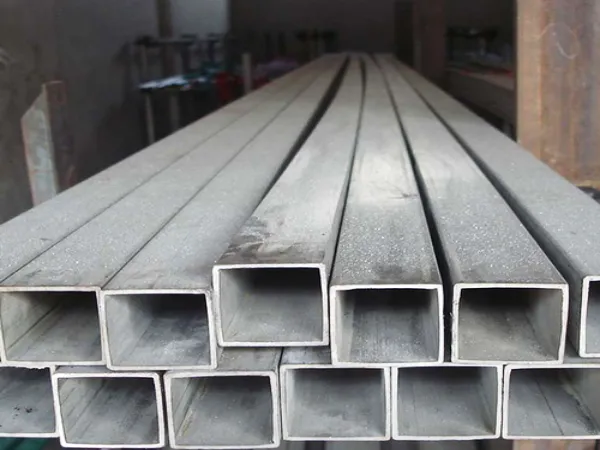
Galvanized square tubing is a type of square hollow structural section (SHS) made from carbon steel and coated with zinc for corrosion protection. Its four flat sides and hollow center provide structural strength while keeping the material relatively lightweight.
Unlike black square tubing, which has no protective zinc coating, galvanized square tubing has a zinc layer that helps protect the underlying steel from moisture and environmental exposure.
The product is available in different outside dimensions, wall thicknesses, steel grades, and lengths to meet various structural and fabrication requirements.
Common characteristics include:
Square cross-section: Four equal sides with a hollow interior.
Zinc coating: Provides a protective barrier against corrosion.
Structural strength: Suitable for frames, supports, and general fabrication.
Fabrication flexibility: Can be cut, drilled, and welded with appropriate precautions.
Multiple specifications: Available in different sizes, wall thicknesses, and lengths.
Galvanized square tubing is often selected for projects that require both structural performance and longer service life in exposed environments.
How Is Galvanized Square Tubing Manufactured?
Galvanized square tubing can be produced through different manufacturing and coating processes. Understanding these processes helps buyers select the right product for their projects.
1. Steel Strip Preparation
Carbon steel coils or strips are selected according to the required material grade and wall thickness. The steel is uncoiled, leveled, and prepared for forming.
2. Cold Forming
The steel strip passes through a series of forming rollers that gradually bend it into a square or rectangular shape.
3. Welding
For welded square tubing, the edges of the formed strip are joined using high-frequency electric resistance welding (ERW). The weld seam is then finished according to the manufacturing requirements.
4. Cutting and Sizing
The continuous tube is cut into specified lengths. Its outside dimensions, wall thickness, straightness, and other dimensional requirements are checked.
5. Galvanizing
The tube receives a zinc coating either before or after forming, depending on the selected galvanizing process.
|
Manufacturing Route
|
Galvanizing Process
|
Main Feature
|
|
Pre-galvanized tube
|
Steel strip coated before forming
|
Efficient production
|
|
Post-fabrication hot-dip galvanized tube
|
Finished tube immersed in molten zinc
|
Coating applied after tube fabrication
|
|
Electro-galvanized tube
|
Zinc deposited through electrochemical processing
|
Generally thinner, controlled coating
|
The manufacturing route should be specified clearly when ordering galvanized square tubing because it affects coating coverage and corrosion protection.
Hot-Dip vs. Pre-Galvanized Square Tubing
Hot-dip galvanized and pre-galvanized square tubing differ mainly in when and how the zinc coating is applied.
Hot-dip galvanized tubing receives its zinc coating after the square tube has been manufactured. Pre-galvanized tubing is formed from steel strip that has already received a zinc coating.
Hot-Dip Galvanized Square Tubing
Hot-dip galvanizing involves immersing a prepared steel tube in molten zinc. The zinc reacts with the steel surface to form metallurgically bonded zinc-iron alloy layers, generally covered by an outer zinc layer.
Because galvanizing takes place after tube fabrication, both the external and accessible internal surfaces can receive a protective coating.
Main characteristics:
Generally provides a thicker zinc coating than pre-galvanized tubing.
Offers good corrosion protection for outdoor applications.
Covers the finished tube, including fabricated surfaces.
Suitable for structural components exposed to weather and moisture.
Pre-Galvanized Square Tubing
Pre-galvanized square tubing is manufactured from steel strip that has been galvanized before the forming and welding processes.
The zinc coating is already present when the strip is formed into a square tube. However, forming and welding can affect the coating, particularly around the weld seam and cut edges.
Main characteristics:
Suitable for many general-purpose applications.
Usually has a thinner zinc coating than post-fabrication hot-dip galvanized tubing.
Offers efficient manufacturing and competitive pricing.
Requires attention to weld areas and exposed cut edges.
Comparison of Hot-Dip and Pre-Galvanized Square Tubing
|
Comparison
|
Hot-Dip Galvanized
|
Pre-Galvanized
|
|
Coating timing
|
After tube fabrication
|
Before tube forming
|
|
Zinc coating
|
Generally thicker
|
Generally thinner
|
|
Weld area
|
Can be coated after fabrication
|
May require additional protection
|
|
Corrosion resistance
|
Generally higher for comparable conditions
|
Depends on coating weight and exposure
|
|
Production cost
|
Usually higher
|
Often more economical
|
|
Typical uses
|
Outdoor structures, supports
|
Indoor frames, general fabrication
|
Which type should you choose?
Hot-dip galvanized square tubing is generally more suitable for outdoor structures, humid environments, and applications requiring stronger corrosion protection.
Pre-galvanized square tubing is often a practical choice for indoor applications, light structures, and projects with less demanding corrosion requirements.
The final selection should consider coating specifications, environmental exposure, expected service life, and total project cost.
Zinc Coating and Corrosion Resistance
The corrosion resistance of galvanized square tubing comes from the protective properties of zinc.
Zinc protects steel through two main mechanisms:
1. Barrier Protection
The zinc coating separates the underlying steel from moisture, oxygen, and other corrosive elements. This reduces direct exposure of the steel surface to the environment.
2. Sacrificial Protection
Zinc is more electrochemically active than iron. If the coating is scratched or damaged, zinc can corrode preferentially and provide sacrificial protection to nearby exposed steel under suitable conditions.
Factors Affecting Zinc Coating Performance
The service life of galvanized square tubing depends on several factors:
Coating thickness: A thicker zinc coating generally provides a longer period of corrosion protection under comparable conditions.
Environmental exposure: Marine, industrial, and chemically aggressive environments can accelerate zinc corrosion.
Surface preparation: Proper cleaning and preparation are essential for coating quality.
Fabrication damage: Cutting, drilling, and welding can expose uncoated steel surfaces.
Maintenance: Inspection and timely repair of damaged areas help maintain protection.
There is no single zinc coating thickness that applies to all galvanized square tubing. Requirements should be specified according to the product, manufacturing process, applicable standard, and steel thickness.
Standards for Galvanized Square Tubing
Galvanized square tubing may need to meet different standards depending on its base material, manufacturing process, and zinc coating requirements.
The following standards are commonly relevant:
|
Standard
|
Main Scope
|
|
ASTM A500/A500M
|
Cold-formed welded and seamless carbon steel structural tubing
|
|
ASTM A123/A123M
|
Zinc coatings on iron and steel products by hot-dip galvanizing
|
|
ASTM A653/A653M
|
Hot-dip zinc-coated steel sheet
|
|
ASTM A780/A780M
|
Repair of damaged and uncoated areas of hot-dip galvanized coatings
|
|
EN 10219
|
Cold-formed welded structural hollow sections of non-alloy and fine-grain steels
|
|
ISO 1461
|
Hot-dip galvanized coatings on fabricated iron and steel articles
|
These standards cover different aspects of the product and should not be treated as interchangeable.
For example, ASTM A500/A500M addresses structural tubing requirements, while ASTM A123/A123M addresses hot-dip galvanized coating requirements.
ASTM A653/A653M applies to galvanized steel sheet, which is relevant to the production of pre-galvanized tubing.
Buyers should confirm the required base material standard and coating specification separately when necessary.
Common Applications of Galvanized Square Tubing
Galvanized square tubing is widely used in structural and industrial applications because it combines a convenient square profile with zinc-based corrosion protection.
|
Application
|
Typical Use
|
|
Steel construction
|
Structural frames and support members
|
|
Fencing and gates
|
Fence posts, frames, and outdoor barriers
|
|
Solar mounting systems
|
Panel support structures and mounting frames
|
|
Agricultural equipment
|
Equipment frames and protective structures
|
|
Machinery manufacturing
|
Machine frames and support components
|
|
Transportation
|
Equipment supports and fabricated structures
|
Galvanized Square Tubing vs. Black Square Tubing
The main difference between galvanized square tubing and black square tubing is the surface protection.
Galvanized square tubing has a zinc coating that provides corrosion resistance, while black square tubing generally has an uncoated or mill-finished carbon steel surface.
|
Comparison
|
Galvanized Square Tubing
|
Black Square Tubing
|
|
Surface
|
Zinc-coated
|
Uncoated or mill-finished
|
|
Corrosion resistance
|
Better in suitable environments
|
Requires additional protection
|
|
Maintenance
|
Generally lower
|
May require painting or coating
|
|
Initial cost
|
Usually higher
|
Usually lower
|
|
Common applications
|
Outdoor structures, fencing, supports
|
General fabrication, indoor structures
|
Which is better?
Galvanized square tubing is generally a better option when corrosion protection and reduced maintenance are important. Black square tubing may be more economical for indoor applications or projects where painting and other protective treatments are planned.
The right choice depends on the installation environment, budget, fabrication requirements, and expected service life.
Galvanized Square Tubing Supplier
Choosing the right galvanized square tubing supplier is important for ensuring consistent product quality, dimensional accuracy, and coating performance.
BAOWI Steel Manufacturing Co., Ltd. supplies square steel tubes and other steel products for construction, machinery manufacturing, and structural engineering applications.
Whether your project requires square steel tubing for structural frames, outdoor supports, or general fabrication, contact BAOWI Steel to discuss your required dimensions, material specifications, galvanizing method, and order quantity.
Our team can help you identify suitable steel products and provide solutions based on your project requirements.
Contact BAOWI Steel for product specifications and a quotation.
More related articles
Square Tube Size Chart: Dimensions and Weight
Standard Rectangular Tube Size Table

 English
 Español
 بالعربية
 Phone :
 Whatsapp :
 Email :