1.Schedule 40 stainless steel pipe meaning
Schedule 40 stainless steel pipe (SCH 40) refers to a standardized pipe wall thickness used for stainless steel piping systems. Rather than indicating the pipe material or pressure rating, "Schedule 40" specifies the wall thickness corresponding to each Nominal Pipe Size (NPS). The dimensions of stainless steel Schedule 40S pipes are defined by ASME B36.19M, while stainless steel materials are typically manufactured according to ASTM A312.
Schedule 40 provides an effective balance between mechanical strength, corrosion resistance, and cost. For this reason, it is one of the most widely specified stainless steel pipe schedules for industrial process piping, water treatment, food processing, pharmaceutical manufacturing, and chemical plants.
Common material grades include:
ASTM A312 TP304
ASTM A312 TP304L
ASTM A312 TP316
ASTM A312 TP316L
Unlike carbon steel pipes that often require painting or galvanizing for corrosion protection, stainless steel forms a passive chromium oxide layer that provides long-term resistance to rust and chemical attack with minimal maintenance.
2.Why Is SCH 40 the Most Common Stainless Steel Pipe Schedule?
Among all stainless steel pipe schedules, SCH 40 is often selected because it provides an excellent balance between pressure capacity and material cost. It is thick enough for most industrial piping systems without the additional weight and expense associated with heavier schedules such as SCH 80S.
From our experience supplying stainless steel piping for industrial projects, most engineering specifications do not require the maximum possible wall thickness. Instead, engineers typically select SCH 40 because it satisfies design pressure requirements while reducing both material costs and installation weight. This balance makes it one of the most economical choices for long-term plant operation.
SCH 40 is commonly preferred when:
Medium-pressure process piping is required.
Corrosion resistance is more important than extremely high pressure.
Welding, fabrication, and field installation efficiency are priorities.
Long service life with low maintenance costs is expected.
3.Understanding the Pressure Rating of SCH 40 Stainless Steel Pipe
A common question from engineers and buyers is: How much pressure can SCH 40 stainless steel pipe withstand? The answer depends on more than the schedule number.
The allowable working pressure is affected by:
Pipe size and wall thickness
Stainless steel grade (TP304, TP316, etc.)
Operating temperature
Seamless or welded manufacturing method
Design code and safety factors
In practical applications, the same SCH 40 pipe may have different pressure ratings under different conditions. Larger diameters usually support lower pressures, while higher temperatures reduce stainless steel strength.
Welded pipes may require weld efficiency factors, and corrosion allowance should also be considered for long-term service.
Therefore, pressure values in standard tables should be treated as reference data. Final selection should be based on actual operating conditions and applicable codes such as ASME B31.3.
4.Dimensional Classifications of SCH 40 Stainless Steel Pipe
SCH 40 stainless steel pipes are available in various nominal pipe sizes (NPS), ranging from 1/8 inch to 12 inches, with each size featuring different wall thicknesses and internal diameters. These variations in dimensions and wall thicknesses make them suitable for diverse pressure and flow requirements.
For example:
1-inch SCH 40 pipe: Outer diameter of 33.4 mm, wall thickness of 2.77 mm.
4-inch SCH 40 pipe: Outer diameter of 114.3 mm, wall thickness of 6.02 mm, and an internal diameter of approximately 102.26 mm.
24-inch SCH 40 pipe: Wall thickness up to 9.525 mm.
As the schedule number increases, so does the wall thickness, enabling the pipe to withstand higher pressures and more demanding operating conditions.
5.Common Standards for SCH 40 Stainless Steel Pipe
Although Schedule 40 defines the wall thickness, several international standards work together to ensure pipe quality and compatibility.
|
Standard
|
Scope
|
|
ASME B36.19M
|
Stainless steel pipe dimensions
|
|
ASTM A312 / ASME SA312
|
Seamless and welded austenitic stainless steel pipe
|
|
ASTM A358
|
Electric-fusion welded stainless steel pipe
|
|
ASTM A778
|
Welded stainless steel pipe for low-pressure service
|
|
ASME B31.3
|
Process piping design requirements
|
6.Seamless and welded types of SCH 40 stainless steel pipes
SCH 40 stainless steel pipes are divided into seamless pipes and welded pipes.
Seamless pipes have higher strength and pressure resistance due to their uniform structure and weld-free design, and are suitable for high-pressure fluid transportation scenarios.
Stainless Welded pipes have lower manufacturing costs and high production efficiency, making them more economical in medium and low pressure applications.
In actual use, the choice of seamless or welded pipes depends on specific pressure, flow and environmental conditions. For example:
In harsh chemical processing or high temperature environments, seamless pipes are more suitable.
In more conventional construction or low-pressure fluid transportation, welded pipes are an economical and efficient choice.
|
Feature
|
Seamless
|
Welded
|
|
Manufacturing
|
Pierced billet
|
Formed and welded plate or strip
|
|
Pressure Capability
|
Higher
|
Suitable for most industrial systems
|
|
Cost
|
Higher
|
More economical
|
|
Dimensional Consistency
|
Excellent
|
Excellent for most applications
|
|
Typical Use
|
High-pressure, critical service
|
General industrial piping
|
7.Application areas of SCH 40 stainless steel pipe
Due to its high performance and economical performance,
SCH 40 stainless steel pipe has been widely used in many industries:
7.1Oil and gas
In the oil and gas industry, No. 40 stainless steel pipe is used to transport liquid and gaseous media, especially in corrosive environments.
7.2 Chemical industry
Chemical plants need pipes that can withstand high pressure and chemical corrosion, and the corrosion resistance of SCH 40 pipe makes it very suitable.
7.3 Construction and infrastructure
In the construction industry, No. 40 stainless steel pipe is used for pipes, railings and structural supports. Its beautiful surface and corrosion resistance increase its service life.
7.4 Food and pharmaceutical
Since stainless steel does not contaminate fluids or produce harmful substances, SCH 40 pipe is widely used in food processing and pharmaceutical industries.
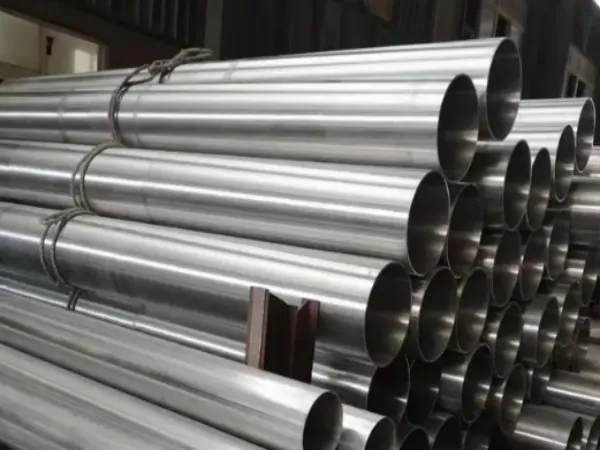
8.Schedule 40 stainless steel pipe thickness
(1)Standard thickness specifications
Schedule 40 stainless steel pipes adhere to standardized thickness specifications set forth by industry standards organizations such as ANSI and ASTM. The nominal wall thickness for Schedule 40 pipes varies depending on the nominal pipe size (NPS).
For example:
For NPS 1/8 to 10, the nominal wall thickness is 0.068 inches (1.73 mm).For NPS 12 and above, the nominal wall thickness is 0.406 inches (10.31 mm).These thickness specifications ensure consistency and uniformity in pipe dimensions, facilitating seamless integration into piping systems and compatibility with various fittings and connectors.
Schedule 40 stainless steel pipe weight per foot
The weight per foot of a Schedule 40 stainless steel pipe refers to the mass of the pipe per linear foot of its length. It is determined by the pipe's dimensions (such as diameter and wall thickness) and the density of stainless steel, typically around 0.29 pounds per cubic inch (lb/in³) for austenitic stainless steels commonly used in piping applications.
9.Tips for Choosing SCH 40 Stainless Steel Pipe
When selecting SCH 40 stainless steel pipes, consider the following factors:
Pressure Ratings: Choose the appropriate wall thickness based on the pressure requirements of your system.
Dimensional Compatibility: Ensure the pipe dimensions match the system's fittings and connections.
Corrosion Resistance Needs: For pipes exposed to highly corrosive environments, opt for hot-dip galvanized or higher-grade stainless steel materials.
Additionally, sourcing high-quality stainless steel pipes from reputable suppliers ensures compliance with ASTM or ANSI standards, delivering consistent performance and durability.
Frequently Asked Questions
Is SCH 40 the same as SCH 40S?
No. SCH 40S is the stainless steel pipe schedule specified in ASME B36.19M, while SCH 40 is generally associated with ASME B36.10M for carbon and alloy steel pipes. Many smaller pipe sizes share similar dimensions, but some larger sizes have different wall thicknesses.
Which stainless steel grade is best for SCH 40 pipe?
TP304 is suitable for most general industrial applications. TP316 or TP316L is recommended for marine environments, chloride-containing media, and chemical processing because of its superior corrosion resistance.
Is seamless pipe stronger than welded pipe?
Seamless pipe generally offers better performance under high pressure and severe operating conditions. However, modern welded stainless steel pipes provide excellent reliability and are widely used in industrial process piping where design conditions allow.
How long does SCH 40 stainless steel pipe last?
When the correct material grade is selected and the pipe operates within its design conditions, SCH 40 stainless steel pipe can provide decades of reliable service with minimal maintenance due to its excellent corrosion resistance.
Where can I find the complete SCH 40S dimensions?
For detailed outside diameter, wall thickness, and weight tables, refer to our dedicated
SCH 40S Stainless Steel Pipe Size Chart, which provides comprehensive dimensional data based on ASME B36.19M.
Read more
Schedule 40 Pipe Pressure Rating Chart and Guide

 English
 Español
 بالعربية

 Phone :
  Whatsapp :
  Email :


