The service life of(HDG)hot-dip galvanizing is typically 20–50 years or more, and can even exceed 70–100 years in dry, low-corrosion environments. Its actual lifespan depends primarily on the thickness of the galvanized layer, the corrosiveness of the environment (e.g., urban, industrial, coastal, underground), the quality of construction, and whether a subsequent coating is used. Overall, hot-dip galvanizing is a long-term corrosion protection solution that can cover the "full life cycle" of most projects, providing stable rust protection for decades in normal outdoor environments.Generally speaking, steel products such as square tubes, U-shaped steel, C-shaped steel, flat iron, and bolts usually need to be galvanized to increase their service life.
What is HDG (Hot-Dip Galvanizing)?
HDG (Hot-Dip Galvanizing) is a corrosion protection method that involves immersing steel components in a bath of molten zinc, causing the zinc to form a metallurgical bond layer (zinc-iron alloy layer) with the base metal. Compared to ordinary spraying or electroplating, HDG produces a thicker zinc layer with stronger adhesion, better wear and scratch resistance, and provides "sacrificial anode" protection—the steel itself is protected while the zinc layer corrodes first. Therefore, HDG is widely used in many structural steel applications, railings, curtain walls, pipes, and infrastructure (bridges, columns, solar panels, etc.), providing a reliable long-term corrosion protection solution.
How Long Does HDG Last in Real Conditions?
There is no single “fixed number” for HDG lifespan, because zinc corrosion rates vary by environment. However, decades of field performance data from organizations such as the AGA (American Galvanizers Association), ISO corrosion studies, and national infrastructure records provide clear ranges:
|
Environment Type
|
Expected HDG Service Life
|
|
Indoor, controlled, dry environments
|
70–100+ years (very low zinc corrosion rate)
|
|
Rural / countryside environments
|
50–80 years
|
|
Urban environments (moderate pollution)
|
30–60 years
|
|
Industrial zones (chemicals, pollution)
|
20–40 years
|
|
Coastal marine environments
|
10–30 years depending on salt exposure
|
|
Underground / soil contact
|
30–100+ years, depending on soil chemistry
|
In many mild environments, HDG lasts easily beyond the design life of the structure itself, effectively functioning as a “lifetime” corrosion-protection system.
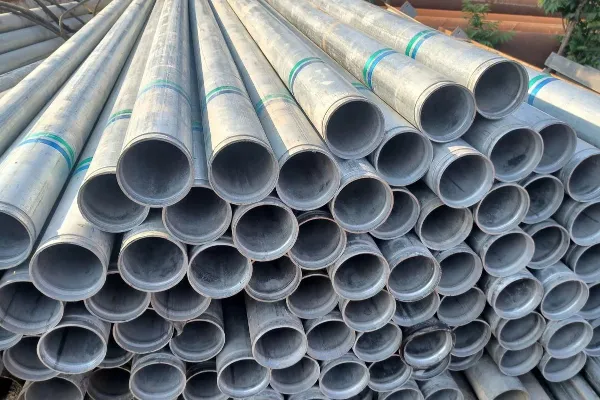
Hot-Dip vs Cold-Dip Galvanizing: How Long Do They Last?
Steel is categorized into cold-dip galvanized and hot-dip galvanized steel. Generally, cold-dip galvanized steel sheets have a lifespan of around 25 years, while hot-dip galvanized sheets have a lifespan of around 50 years. In light steel villas, the steel structure is embedded within the walls and not directly exposed to air, thus extending its lifespan. However, proper moisture-proofing of the walls is crucial. Keleda's 3D custom-designed wall insulation material is high-density polystyrene, a completely non-absorbent material that bonds tightly to the hot-dip galvanized steel sheets without any gaps. Therefore, the lifespan of the house can reach over 100 years.
Cold galvanizing refers to electroplating zinc, resulting in a thinner coating with slightly lower corrosion resistance and a tendency to discolor. It also causes significant environmental pollution. Hot-dip galvanizing uses molten zinc ingots, allowing for adjustable coating thickness and better corrosion resistance. With subsequent passivation, it can be used for outdoor rust prevention and has a long lifespan, sometimes up to 20 years. Cold galvanizing, also known as electroplating, generally produces a smoother surface without zinc specks. It comes in two types: fingerprint-resistant and non-fingerprint-resistant. Hot-dip galvanizing also comes in two types: speckled and non-speckled. Speckled galvanizing is definitely hot-dip galvanizing; non-speckled galvanizing is similar to electroplating, and differentiation requires experience.
In summary
hot-dip galvanizing (HDG) is a highly durable rust-proofing method. It involves immersing the steel in molten zinc, allowing the zinc to adhere tightly to the steel surface, forming a thick, strong protective layer that effectively blocks corrosion. Because this zinc layer is thick and strong, its lifespan typically reaches 20–50 years, and in dry, low-pollution environments, it can even exceed 70–100 years, essentially lasting as long as the building itself.
In contrast, cold galvanizing (electro-galvanizing) produces a much thinner coating with weaker rust protection. Its lifespan is generally only about half that of hot-dip galvanizing, making it more suitable for applications with light corrosion requirements. For outdoor, coastal, or industrial environments, hot-dip galvanizing is the more reliable choice.
Overall, if you want your steel to last a long time, resist rust, and have low maintenance costs, hot-dip galvanizing is the most worry-free method. It can significantly extend the lifespan of square tubes, C-shaped steel, U-shaped steel, and bolts.

 English
 Español
 بالعربية
 Phone :
  Whatsapp :
  Email :


