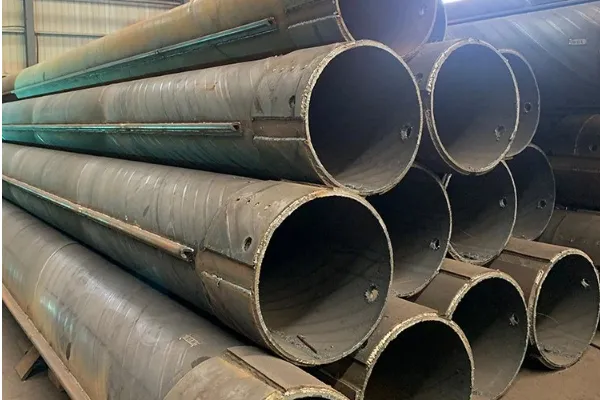
SSAW steel pipe, also known as spiral submerged arc welded steel pipe, is a type of spiral welded steel pipe produced using a double-sided submerged arc welding method. Spiral welded pipe is made from narrower plates or hot-rolled coils, significantly reducing production costs. The spiral welding process allows for the production of large-diameter pipes, suitable for transporting large quantities of oil and natural gas. There are many standards for SSAW steel pipe, such as API 5L, API 5CT, ASTM A252, ASTM 53, EN10217, EN10219, BS, JIS, and IS. Today, we will introduce the specifications of SSAW steel pipe according to ASTM A252.
What is a Spiral Welded ASTM A252 Pipe?
"Spiral welded" generally refers to pipes manufactured using spiral submerged arc welding (SSAW/HSAW). This involves rolling hot-rolled steel strip into a spiral shape, then submerging and welding it on both the inner and outer sides to create a cylindrical pipe pile.
According to the ASTM A252 standard, these steel pipes are intended for load-carrying piles, used in load-bearing foundations, or as concrete-filled pile shells, and are not designed to withstand internal fluid pressure.
Therefore, unlike standards for steel pipes used as line pipes, the focus is on structural load-bearing capacity, compression resistance, bending resistance, and durability, rather than internal pressure and media adaptability.
Spiral Welded ASTM A252 Pipe Dimensions and Tolerances
|
Property
|
Typical Range / Notes
|
|
Outside Diameter (OD)
|
219 mm – 3000+ mm (8" – 120"+)
|
|
Wall Thickness
|
6 mm – 25 mm (0.25" – 1.0")
|
|
Length
|
6 m – 12 m (custom lengths up to 50 m)
|
|
Wall Thickness Tolerance
|
–12.5% of nominal thickness
|
|
Straightness
|
Not strictly defined, controlled for piling purposes
|
|
End Finish
|
Plain ends, beveled ends, driving shoes or pile tips optional
|
ASTM A252 Grades and Mechanical Properties
ASTM A252 defines three grades based on minimum yield and tensile strength:
|
Grade
|
Minimum Yield Strength
|
Minimum Tensile Strength
|
Minimum Elongation
|
|
Grade 1
|
30 ksi (205 MPa)
|
50 ksi (345 MPa)
|
30%
|
|
Grade 2
|
35 ksi (240 MPa)
|
60 ksi (415 MPa)
|
25%
|
|
Grade 3
|
45 ksi (310 MPa)
|
66 ksi (455 MPa)
|
20%
|
Notes:
Grade 2 and Grade 3 are most commonly used in piling projects.
Grade 3 is suitable for heavy-load applications requiring higher strength.
How to Choose the Right ASTM A252 SSAW Steel Pipe Specifications?
When specifying spiral-welded A252 pipe piles in a procurement or engineering contract, it is recommended to clarify the following to avoid future disputes:
1. Standard & Grade: ASTM A252, choose Grade 2 or Grade 3.
2. Manufacturing Method: SSAW/HSAW (spiral welding), or others (such as ERW/Seamless), depending on project requirements.
3. Outer Diameter (OD), Wall Thickness (WT), Length, and whether end machining is required (plain/bevel/with tip/driving shoe).
4. Minimum Mechanical Properties (YS, TS, Elongation) Requirements.
5. Inspection/Testing Requirements & Material Certification (MTC): Tensile testing, dimensional and visual inspection, weld quality, weight deviation, heat grade marking, etc.
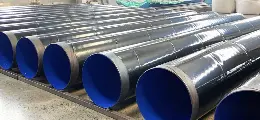
6. Surface treatment/corrosion protection (e.g., whether coating is required—black pipe/epoxy/3PE/asphalt/paint, etc.). For certain water conservancy and marine engineering projects, anti-corrosion coatings are recommended to extend service life.
7. Packaging, transportation, delivery length, and factory inspection records (traceability).
Conclusion:
In practical applications, ASTM A252 SSAW steel pipes are widely used in pile foundations, structural supports, and marine engineering due to their large-diameter manufacturability, cost advantages, and excellent load-bearing capacity. Correctly selecting specifications requires attention not only to outer diameter, wall thickness, and grade, but also to factors such as the project's load-bearing requirements, manufacturing processes, testing standards, and corrosion protection requirements. By clearly defining technical parameters, testing requirements, and surface treatment methods during the procurement phase, it is possible to ensure that the steel pipes meet the requirements for engineering performance, service life, and construction reliability, thereby avoiding later quality disputes and achieving more efficient and safer project delivery.

 English
 Español
 بالعربية
 Phone :
  Whatsapp :
  Email :


