In oil and gas well construction, casing pipes are rarely installed as a single continuous pipe length. Instead, engineers assemble multiple casing sections to reach the target depth while maintaining well integrity and operational flexibility. During this process, pup joints are used as short, precision pipe sections to adjust the total length of the casing string and ensure accurate depth positioning.
Although both pup joints and casing pipes belong to the tubular system of a well, they serve different engineering functions. Their relationship is functional rather than structural: casing forms the main load-bearing barrier, while pup joints provide controlled dimensional adjustment within the string design.
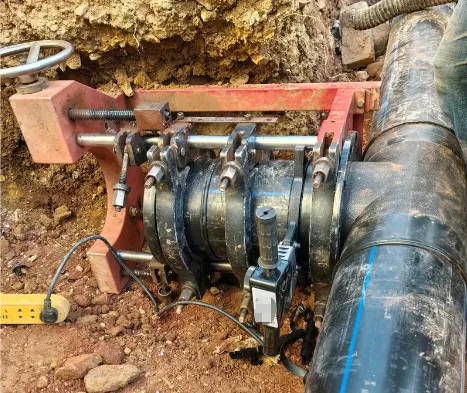
What Is the Role of Pup Joints in Casing Systems?
Petroleum pup joints are special pipe fittings used to connect pipes or casing of different specifications in oil and gas well systems. They provide reliable sealing to prevent leakage of oil, gas, and other downhole fluids, while also helping maintain the structural stability of the casing string and reducing deformation or vibration.
During drilling operations, pup joints allow flexible adjustment of the casing string length, making installation and modification more convenient. They play an important role in connection, sealing, and support, ensuring the safe and efficient operation of the well system.Overall, pup joints are essential components in oil drilling, directly affecting the stability, safety, and performance of well casing systems.
The relationship between the design of pup joint and the well pipe casing is mainly reflected in the following aspects:
Connection and conversion function: As a connector in the pipeline system, thepup joint plays the role of connecting well pipe casing of different specifications or types. In the well pipe casing system, pup joint can connect pipe sections of different diameters, materials or functions to realize the connection and conversion of the well pipe casing system to meet the needs of drilling and production operations.
Adjustment and adaptability: The design of the pup joint can take into account the special environment and needs of underground operations. By connecting or replacing pup joint of different types or lengths, the length, angle or function of the well pipe casing can be adjusted, making downhole operations more flexible and efficient.
Sealing and anti-leakage function: The pup joint has good sealing performance in the well pipe casing and can effectively prevent the leakage of oil, gas or downhole media. This is very important to ensure the safety of underground operations and environmental protection, and can reduce the occurrence of accidents such as oil leakage and gas leakage.
Difference in Functional Roles
|
Item
|
Casing Pipe
|
Pup Joint
|
|
Primary function
|
Well structural support
|
Length adjustment
|
|
Load bearing
|
Main load carrier
|
Secondary contribution
|
|
Length
|
Standard long joint
|
Short section
|
|
Design role
|
Formation isolation
|
String calibration
|
|
Usage frequency
|
Entire wellbore
|
Selective placement
|
Conclusion
The relationship between pup joints and well casing is not one of dependency, but of engineering complementarity. Casing provides the structural framework of the wellbore, while pup joints ensure dimensional precision within the casing string.In modern well design, especially in deep and directional wells, pup joints play a critical role in achieving accurate depth control, improving completion precision, and ensuring that casing systems perform as intended under real drilling conditions.When properly selected according to API standards and integrated into casing design, pup joints significantly enhance the operational reliability of the entire well construction system.
To learn more, click: Pup Joint vs Crossover Joint

 English
 Español
 بالعربية
 Phone :
  Whatsapp :
  Email :


