The practical difference between galvanized steel pipe and seamless steel pipe mainly comes down to corrosion protection, manufacturing method, pressure requirements, operating conditions, cost, and application. The right choice depends on the pipe grade, dimensions, service temperature, pressure, environment, and applicable project standard.
Galvanized steel pipe and seamless steel pipe are often compared when selecting steel pipe for construction, fluid transportation, mechanical systems, and industrial projects. However, they are not actually two opposite types of pipe.
Galvanized describes a zinc coating applied to the steel pipe surface, while seamless describes how the pipe itself is manufactured. A seamless steel pipe can therefore also be galvanized.
What Is a Galvanized Steel Pipe?
A galvanized steel pipe is a steel pipe with a protective zinc coating on its surface. The zinc coating helps protect the underlying steel from corrosion by providing a barrier and sacrificial protection.
The base pipe can be either welded or seamless. This is an important distinction because galvanizing does not determine whether a pipe has a weld seam.
Galvanized steel pipe is commonly produced by hot-dip galvanizing, although electro-galvanizing is also used for certain products and applications.
Hot-dip galvanized pipe generally provides a thicker and more durable zinc coating than electro-galvanized pipe, making it suitable for many outdoor and humid environments.
What Is a Seamless Steel Pipe?
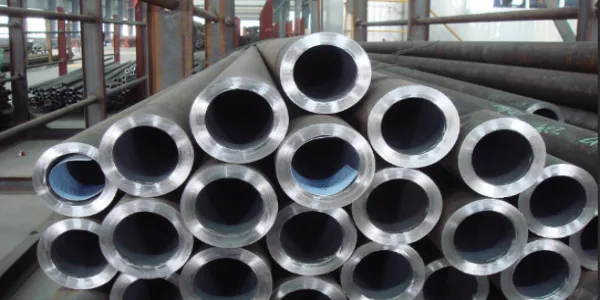
A seamless steel pipe is manufactured without a longitudinal welded seam.
A typical seamless manufacturing process starts with a solid round steel billet. The billet is heated and pierced to create a hollow shell, followed by rolling, sizing, heat treatment, and inspection according to the required specification.
Because there is no longitudinal weld, seamless pipe is widely used where the pipe specification requires particular mechanical properties or where demanding pressure and temperature service is involved.
Galvanized Steel Pipe vs Seamless Steel Pipe: Key Differences
The most important point is that these terms describe different characteristics.
|
Feature
|
Galvanized Steel Pipe
|
Seamless Steel Pipe
|
|
What it describes
|
Surface coating
|
Manufacturing method
|
|
Zinc coating
|
Yes
|
Not necessarily
|
|
Weld seam
|
May have one or may be seamless
|
No longitudinal weld seam
|
|
Corrosion protection
|
Generally improved by zinc coating
|
Depends on material and additional coating
|
|
Pressure performance
|
Depends on base pipe, grade and dimensions
|
Often selected for demanding pressure service
|
|
High-temperature service
|
Depends on coating and pipe specification
|
Certain grades are specifically designed for high-temperature service
|
|
Manufacturing
|
Welded or seamless pipe followed by galvanizing
|
Solid billet pierced and rolled/drawn
|
|
Initial cost
|
Often lower for common galvanized welded pipe
|
Generally higher
|
|
Typical use
|
Construction, outdoor structures, general utility piping
|
Industrial, mechanical, high-pressure and high-temperature applications
|
There is therefore no simple rule that one type is always better than the other. The pipe specification must match the actual service conditions.
1. Manufacturing Method
Galvanized steel pipe is defined by its zinc coating, while seamless steel pipe is defined by its manufacturing method. Galvanized pipe can be made from either welded or seamless steel pipe. Seamless pipe is manufactured from a solid steel billet without a longitudinal weld seam.
2. Corrosion Resistance
Galvanized steel pipe has a zinc coating that provides additional protection against corrosion. The zinc layer acts as a protective barrier and can provide sacrificial protection to the underlying steel. Bare seamless carbon steel pipe does not have this zinc coating and may require a separate corrosion-protection system depending on the service environment.
3. Pressure and Mechanical Performance
Seamless steel pipe is commonly selected for demanding pressure and temperature applications because it is manufactured without a longitudinal weld seam and is available in grades designed for industrial service. However, pressure capacity depends on the pipe grade, wall thickness, dimensions, temperature, pressure, and applicable standard rather than simply whether the pipe is galvanized or seamless.
4. Applications
Galvanized steel pipe is commonly used in construction, fencing, guardrails, scaffolding, outdoor structures, and general utility applications where corrosion protection is important. Seamless steel pipe is widely used in oil and gas, petrochemical, mechanical, hydraulic, power-generation, and other industrial applications requiring specified mechanical or pressure performance.
5. Cost
Common galvanized welded steel pipe is generally less expensive than comparable seamless pipe because seamless pipe requires a more complex manufacturing process. However, actual cost depends on pipe size, grade, wall thickness, coating, testing, quantity, and other project requirements.
6. Weight and Wall Thickness
Pipe weight is determined primarily by its outside diameter, wall thickness, material density, and length. Therefore, it is not accurate to assume that galvanized pipe is always lighter than seamless pipe. A seamless pipe with a thicker wall will generally weigh more than a thinner-walled galvanized pipe of the same size, regardless of the coating.
7. Can Seamless Steel Pipe Be Galvanized?
Yes. A seamless steel pipe can be galvanized. In this case, the pipe combines seamless construction with a zinc coating for corrosion protection. Therefore, galvanized and seamless are not mutually exclusive classifications. A project can specify galvanized seamless steel pipe when both seamless construction and corrosion protection are required.
Can Seamless Steel Pipe Be Galvanized?
Yes. Seamless steel pipe can be galvanized after manufacturing.
The pipe is first produced as a seamless steel pipe, then treated with a zinc coating to improve its corrosion resistance. This means a galvanized seamless pipe combines the seamless structure of the pipe with the corrosion protection of zinc.
This type of pipe can be considered when the application requires both seamless construction and additional protection against corrosion.However, the required pipe standard, steel grade, dimensions, and zinc coating thickness should be confirmed before ordering.
How to Choose Between Galvanized and Seamless Steel Pipe ?
A practical selection process starts with the service conditions rather than the product name.
1. Check the operating environment
If the pipe will be exposed to moisture, outdoor weather, or a corrosive atmosphere, corrosion protection becomes an important consideration.
2. Check pressure and temperature
For high-pressure or high-temperature service, select the pipe according to the applicable engineering standard, grade, wall thickness, and design conditions.
3. Check whether seamless construction is required
If the project specification calls for seamless pipe, a galvanized welded pipe should not be treated as an equivalent substitute simply because both have zinc coatings.
4. Check the required coating
If galvanizing is specified, confirm whether the project requires hot-dip galvanizing or another coating system and identify the applicable coating standard.
5. Check dimensions and schedule
Pipe size and wall thickness directly affect mechanical performance, weight, and cost.
ASME B36.10 is commonly used for standardized dimensions of welded and seamless wrought steel pipe.
Frequently Asked Questions
Can seamless steel pipe be galvanized?
Yes. Seamless steel pipe can be galvanized. The pipe is first manufactured without a longitudinal weld and can then receive a zinc coating, commonly through hot-dip galvanizing.
Is galvanized steel pipe always welded?
No. Galvanized steel pipe can be based on either welded or seamless steel pipe.
ASTM A53, for example, covers both welded and seamless pipe as well as hot-dipped zinc-coated pipe.
Is galvanized steel pipe stronger than seamless steel pipe?
Not necessarily. Galvanizing primarily provides corrosion protection. Mechanical strength and pressure capacity depend on the base pipe, steel grade, wall thickness, dimensions, design conditions, and applicable standard.
What is the difference between galvanized and seamless steel pipe?
Galvanized describes a zinc coating applied to the steel surface, while seamless describes a pipe manufactured without a longitudinal weld seam. They can also exist together as galvanized seamless steel pipe.
Is seamless pipe more expensive than galvanized pipe?
A common galvanized welded pipe is often less expensive than a comparable seamless pipe because seamless manufacturing is more complex. However, actual pricing depends on size, grade, wall thickness, coating, testing, quantity, and market conditions.

 English
 Español
 بالعربية
 Phone :
 Whatsapp :
 Email :