In industrial piping systems, it is well understood that material selection is of paramount importance. ASTM A182 and ASTM A105—two key standards established by the American Society for Testing and Materials (ASTM)—represent specifications for piping components tailored to distinct material categories and application scenarios.
ASTM A105 designates standard carbon steel, which is suitable for general service conditions, offering an economical and practical solution. Conversely, ASTM A182 serves as an upgraded alternative (comprising stainless steel or alloy steel), featuring superior resistance to corrosion and high temperatures, making it ideal for more demanding and complex operating environments.
Overview of ASTM A105 and ASTM A182 Standards
ASTM A105 is the standard specification for carbon steel forgings intended for piping components; it falls under the category of low-carbon steel forging materials. This standard applies to forged carbon steel piping components—including flanges, fittings, valves, and similar items—used in pressure systems operating at both ambient and elevated temperatures. The maximum weight limit for such components is 10,000 pounds (4,540 kg). The A105 material grade is similar to the "20 Steel" grade found in Chinese standards, though it possesses superior strength.
ASTM A182, conversely, is the standard specification for "Forged or Rolled Alloy and Stainless Steel Pipe Flanges, Forged Fittings, Valves, and Parts for High-Temperature Service." Rather than designating a single specific material grade, this standard serves as a manufacturing specification covering a diverse range of alloy steel and stainless steel grades, specifically intended for piping components utilized in high-temperature and high-pressure environments.
ASTM A182 vs ASTM A105: Core Differences
|
Property
|
ASTM A105
|
ASTM A182
|
|
Material Type
|
Carbon Steel
|
Alloy Steel / Stainless Steel
|
|
Corrosion Resistance
|
Low
|
High
|
|
High Temperature Resistance
|
Moderate
|
Excellent
|
|
Available Grades
|
Single (A105)
|
Multiple (F304, F316, F11, etc.)
|
|
Cost
|
Lower
|
Higher
|
|
Typical Applications
|
Oil & gas, water pipelines
|
Chemical, power plant, offshore
|
The 5 Key Differences Between ASTM A182 and ASTM A105
ASTM A105 is a standard for single-material carbon steel forgings, suitable for conventional environments involving moderate-to-low temperatures and pressures (characterized by low cost and moderate performance). In contrast, ASTM A182 is a multi-material standard covering alloy steels and stainless steels, specifically designed for high-temperature, high-pressure, and severely corrosive environments (characterized by high performance and high cost).
1. Fundamental Differences in Standard Positioning and Material Properties
ASTM A105: A standard for single-material carbon steel forgings, targeting moderate-to-low pressure piping components (such as flanges and fittings) operating within a temperature range from ambient to 425°C. Its material composition is similar to China's "20 Steel" grade but offers higher strength; it serves as a "General-Purpose Carbon Steel Solution."
ASTM A182: A specialized high-temperature standard encompassing a multi-material system, including alloy steels (e.g., F11/F22), stainless steels (e.g., F304/F316), and duplex steels. It is specifically engineered for high-temperature, high-pressure, and corrosive environments, serving as a "High-Performance Specialty Material Platform."
2. Differences in Chemical Composition Complexity and Degree of Alloying
A105: Features a simple low-carbon steel composition (C ≤ 0.35%, Mn 0.6–1.05%), containing only trace amounts of Cr, Ni, and Mo (total ≤ 1%), with no special alloying for strengthening purposes.
A182: Depending on the specific grade, it contains high proportions of alloying elements (e.g., F22 contains 2.25% Cr and 1% Mo; F316 contains 16% Cr, 12% Ni, and 2% Mo). Alloying is utilized to achieve specific properties—such as creep resistance, corrosion resistance, or high strength—resulting in a highly targeted and specialized chemical composition.
The A182 standard covers a wide range of material grades, and their chemical compositions vary significantly. The following are examples of several typical grades:
Alloy Steel Grades:
F11 (1.25Cr-0.5Mo): Carbon 0.05–0.15%, Chromium 0.50–1.00%, Molybdenum 0.44–0.65%
F22 (2.25Cr-1Mo): Carbon 0.05–0.15%, Chromium 2.00–2.50%, Molybdenum 0.87–1.13%
F91: Carbon 0.08–0.12%, Chromium 8.00–9.50%, Molybdenum 0.85–1.05%
Stainless Steel Grades:
F304 (304 Stainless Steel): Carbon ≤0.08%, Chromium 18.0–20.0%, Nickel 8.0–11.0%
F316 (316 Stainless Steel): Carbon ≤0.08%, Chromium 16.0–18.0%, Nickel 10.0–14.0%, Molybdenum 2.00–3.00%
F51 (Duplex Stainless Steel): Carbon ≤0.03%, Chromium 21.00–23.00%, Nickel 4.50–6.50%, Molybdenum 2.50–3.50%
Mechanical Properties Overview
|
Property
|
ASTM A105
|
ASTM A182 (F316 Example)
|
|
Tensile Strength
|
≥ 485 MPa
|
≥ 515 MPa
|
|
Yield Strength
|
≥ 250 MPa
|
≥ 205 MPa
|
|
Ductility
|
Good
|
Excellent
|
While A105 provides strong mechanical performance, A182 (especially stainless grades) offers better toughness and long-term durability.
3. Differences in the Ultimate Load-Bearing Capacity of Mechanical Properties
A105: Offers moderate strength levels (Tensile Strength ≥ 485 MPa, Yield Strength ≥ 250 MPa), making it suitable for conventional pressure systems.
A182: Performance varies depending on the specific material grade; high-end grades significantly outperform A105 (e.g., F91 features a Tensile Strength ≥ 620 MPa; F51 Duplex Steel features a Tensile Strength ≥ 620 MPa). These grades are capable of meeting the demands of extreme operating conditions, such as those found in supercritical power plants (operating above 540°C) or deep-sea high-pressure environments.
4. Clear Distinctions in Application Severity
A105: Suited for moderate-to-low temperatures (-29°C to 425°C), non-corrosive media (water, steam, petroleum), and standard industrial systems operating under general pressure (e.g., ordinary petrochemical pipelines).
A182: Specialized for high-temperature and high-pressure conditions (>425°C / high stress), corrosive media (acids, alkalis, chlorides), and critical safety applications (e.g., power plant main steam pipelines, valves for chemical reactors).
5. Cost Differences
A105: Low initial cost (carbon steel raw materials are inexpensive), but prone to failure in high-temperature or corrosive environments, resulting in high maintenance costs.
A182: High initial cost (due to the premium for alloy and stainless steel materials), but offers a superior Total Cost of Ownership (TCO) over the long term—particularly in harsh environments—thanks to its extended service life and minimal maintenance requirements.
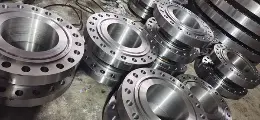
Difference Between ASTM A182 and ASTM A105 Flanges
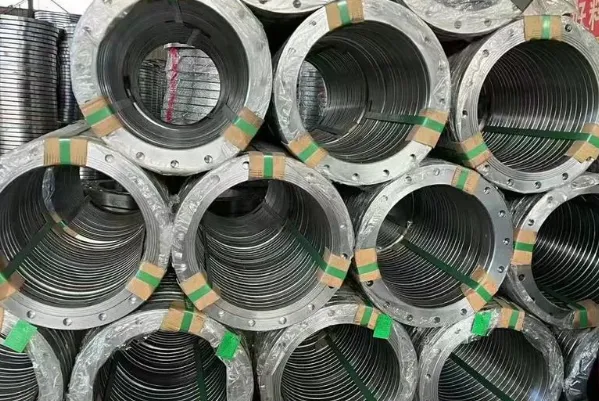
Carbon Steel A105 Flanges: A105 flanges are forged carbon steel components used in piping systems, including fittings, valves, and pressure equipment. They work well at moderate temperatures (up to 500–550°C) and are commonly used in hydrocarbon, marine, petrochemical, and oil & gas projects. Types include Weld Neck, Blind, Plate, and more.
Carbon Steel A182 Flanges: A182 flanges are alloy or stainless steel components for high-temperature and corrosive environments. They are durable, low-maintenance, and widely used in chemical, petroleum, and paper industries, making them reliable for demanding applications.
The main difference between ASTM A182 and ASTM A105 flanges lies in material and performance: ASTM A105 flanges are made from carbon steel, making them cost-effective and suitable for general-purpose, non-corrosive environments, while ASTM A182 flanges are made from alloy or stainless steel, offering better resistance to corrosion and high temperatures, which makes them ideal for demanding applications like chemical processing and power plants.
Conclusion
ASTM A105 and ASTM A182 represent two distinct tiers of piping material selection. As an economical and practical carbon steel option, A105 is suitable for piping systems operating under most standard temperature and pressure conditions. In contrast, A182 offers a diverse range of high-performance materials—spanning from alloy steels to stainless steels—specifically engineered for demanding industrial environments.
The key to making the right choice lies in accurately assessing the specific application requirements: operating temperature, pressure rating, corrosivity of the medium, projected service life, and budgetary constraints. For general industrial applications, A105 offers excellent value for money; however, for high-temperature, high-pressure, or corrosive environments—such as those found in the petrochemical industry or power generation plants—A182 materials, despite their higher initial cost, deliver superior reliability and a longer service life.
In actual engineering practice, these two materials are often utilized in combination; by selecting the appropriate material for different sections of the piping system based on their specific operating conditions, it is possible to achieve an optimal balance between safety, reliability, and cost-effectiveness.
Read more
ASTM A105 Material Specification

 English
 Español
 بالعربية
 Phone :
  Whatsapp :
  Email :