DI pipe stands for ductile iron pipe. It is a pressure pipe made from ductile cast iron and is widely used in water distribution, water transmission, wastewater, and other underground pipeline systems.Unlike traditional gray cast iron, ductile iron contains graphite in a nodular or spheroidal form. This microstructure gives ductile iron pipe a useful combination of strength, toughness, and ductility.DI pipes are available in different nominal diameters, wall thicknesses, pressure classes, joint types, coatings, and linings. The correct specification depends on the pipeline's working pressure, installation conditions, soil environment, fluid, and applicable standard.
This guide explains what DI pipe means, how ductile iron pipes are manufactured, common ductile iron pipe sizes and standards, pressure classifications, joints, coatings, applications, advantages, and how DI pipe compares with steel, PVC, HDPE, and gray cast iron.
What is a Ductile Iron Pipe?
DI pipe is short for ductile iron pipe. It is manufactured from ductile cast iron, a type of cast iron in which graphite forms into compact nodules instead of the flakes found in traditional gray cast iron.Magnesium is commonly used during the treatment of molten iron to promote the formation of spheroidal graphite. This change in microstructure improves the mechanical behavior of the material.Unlike gray cast iron, which contains graphite flakes, ductile iron has rounded graphite particles. This difference improves its mechanical properties.
How Are DI Pipes Manufactured?
Most ductile iron pipes are manufactured by centrifugal casting. During this process, molten ductile iron is introduced into a rotating mold. Centrifugal force distributes the molten metal around the mold and helps produce a dense, uniform pipe wall.
A typical DI pipe manufacturing process is:
Raw Materials → Melting → Magnesium Treatment → Inoculation → Centrifugal Casting → Heat Treatment → Machining → Coating/Lining → Inspection → Testing → Packaging
1. Raw Material Preparation
Iron, steel scrap, recycled ductile iron, and alloying materials are selected according to the required chemical composition.The composition must be controlled because it affects the final microstructure and mechanical properties.
2. Melting
The raw materials are melted in a furnace.Before casting, the molten iron is analyzed and adjusted to meet the required chemical and metallurgical requirements.
3. Magnesium Treatment
Magnesium treatment changes the graphite morphology.Instead of forming long graphite flakes, carbon forms compact graphite nodules within the iron matrix.This is one of the most important steps in producing ductile iron.
4. Centrifugal Casting
The treated molten iron is poured into a rotating mold.The rotation distributes the molten metal around the mold wall. After solidification, the resulting pipe has a relatively uniform structure and controlled dimensions.
5. Heat Treatment
Depending on the required specification and material grade, heat treatment can be used to obtain the required matrix and mechanical properties.
6. Machining
Pipe ends are machined to meet dimensional requirements.The socket, spigot, flange, or other connection area must be accurately manufactured because joint performance depends heavily on dimensional control.
7. Coating and Lining
The external surface may receive corrosion protection, while the internal surface can receive a lining suitable for the transported fluid.
Common systems include zinc-based coatings, cement-mortar linings, epoxy coatings, and polyethylene encasement.
8. Inspection and Testing
Finished DI pipes are inspected for:
Dimensions
Surface condition
Mechanical properties
Coating condition
Lining condition
Joint dimensions
Hydrostatic performance
Overall conformity with the specified standard
Ductile Iron Pipe Standards
The applicable standard is one of the first things to confirm when purchasing ductile iron pipe.
Different regions use different dimensional systems, pressure classifications, and testing requirements. Therefore, two pipes with the same nominal diameter should not automatically be assumed to have identical dimensions.
AWWA C151 for DI Pipe
In North America, AWWA C151/A21.51 is an important standard for centrifugally cast ductile iron pipe.
AWWA identifies C151 as its standard for ductile-iron pipe, centrifugally cast. The standard covers pipe used for potable water, raw water, wastewater, and reclaimed water systems.
AWWA also lists related standards including:
AWWA C150 — Thickness Design of Ductile-Iron Pipe
AWWA C111 — Rubber-Gasket Joints
AWWA C104 — Cement-Mortar Lining
AWWA C105 — Polyethylene Encasement
AWWA C110 — Ductile-Iron and Gray-Iron Fittings
AWWA C115 — Flanged Ductile-Iron Pipe
These standards cover different aspects of the pipe system rather than replacing one another.
ISO 2531
ISO 2531 is widely used for ductile iron pipes, fittings, accessories, and joints for water applications.
It is particularly relevant to projects using metric DN dimensions.
EN 545
EN 545 covers ductile iron pipes, fittings, accessories, and joints for water pipelines.
It is widely referenced in European water infrastructure projects.
EN 598
EN 598 is associated with ductile iron pipes and fittings for sewerage applications.
The required lining, coating, joint, and pressure characteristics can differ from potable-water applications.
GB/T 13295
For projects using Chinese standards, GB/T 13295 is an important reference for ductile iron pipes, fittings, and accessories for water supply and drainage.
|
Standard
|
Main Application/Scope
|
|
AWWA C151
|
Centrifugally cast ductile iron pipe
|
|
AWWA C150
|
Pipe thickness design
|
|
AWWA C111
|
Rubber-gasket joints
|
|
AWWA C104
|
Cement-mortar lining
|
|
AWWA C105
|
Polyethylene encasement
|
|
ISO 2531
|
Ductile iron pipes and fittings for water
|
|
EN 545
|
Ductile iron water pipelines
|
|
EN 598
|
Ductile iron sewerage systems
|
|
GB/T 13295
|
Ductile iron pipes and fittings for water supply and drainage
|
Ductile Iron Pipe Classes and Pressure Ratings
Ductile Iron (DI) pipe classes and pressure ratings are standardized by organizations like AWWA (American Water Works Association) to ensure safe handling of internal water and wastewater pressures.
One common source of confusion is the difference between wall thickness class and pressure rating.They are related, but they are not always the same thing.For example, different standards use different classification systems. ISO and EN systems may use K classes or pressure classes, while AWWA uses thickness classes and design procedures.AWWA C150 specifically addresses the thickness design of ductile iron pipe, while AWWA C151 specifies the pipe itself.
The pressure capacity of a DI pipeline depends on more than the pipe diameter.
Important factors include:
Nominal diameter
Wall thickness
Material properties
Working pressure
Surge pressure
Joint design
Burial depth
Soil conditions
External loads
Installation method
For this reason, it is not good practice to choose a DI pipe solely by saying, for example, "DN300 K9 equals a certain pressure."The actual allowable pressure must be confirmed using the applicable standard and design conditions.
Ductile Iron Pipe Pressure Classes
DI pipe pressure classes indicate the pressure rating used to classify ductile iron pipe for pressure-pipeline applications. Under the AWWA system, commonly referenced pressure classes include Class 150, Class 200, Class 250, Class 300, and Class 350.
These pressure classes are used in conjunction with the applicable pipe diameter, wall thickness, material properties, design criteria, and operating conditions. Therefore, the pressure class should not be treated as the only factor determining the allowable operating pressure of a completed pipeline.
|
DI Pipe Pressure Class
|
Rated Working Pressure
|
|
Class 150
|
150 psi
|
|
Class 200
|
200 psi
|
|
Class 250
|
250 psi
|
|
Class 300
|
300 psi
|
|
Class 350
|
350 psi
|
What are the advantages of ductile iron pipes?
Those in the construction industry are likely familiar with ductile iron pipes. They are a fundamental engineering material required in construction, enabling the introduction of tap water and the removal of wastewater.
Compared to ordinary cast iron pipes, ductile iron pipes retain the corrosion resistance of ordinary cast iron pipes while offering advantages such as lighter weight, impact resistance, greater bending performance, and easier installation. Ductile iron pipes also have a longer service life due to their iron-like properties, resulting in good mechanical and ductile properties. Installation is relatively simple, and they provide excellent sealing.
Ductile iron pipes are a preferred choice for water supply pipes, offering high cost-effectiveness. They are mainly used for municipal and industrial water supply, gas transmission, and oil transportation. Many brands now produce ductile iron pipes, such as Saint-Gobain's ductile iron pipes. These pipes use centrifugal casting technology, combine various internal and external anti-corrosion solutions, and feature T-type or STD-type joints. They are suitable for various soil environments and have passed ISO2531, EN545, and GB/T 13295 product quality certifications. They are widely used in various water transmission fields.
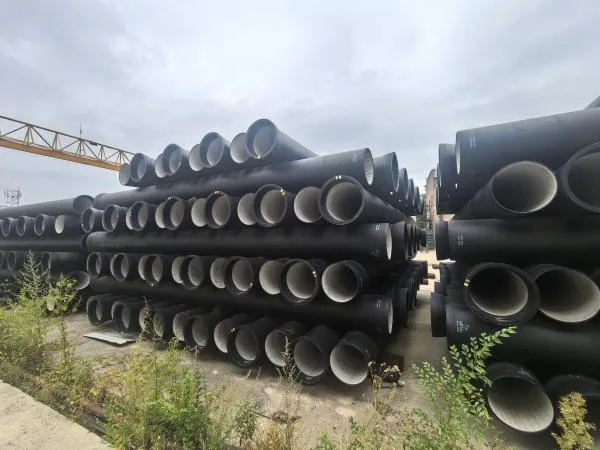
Ductile iron pipes are commonly used in a variety of applications, including:
1. Water distribution systems: Ductile iron pipes are frequently used in water distribution systems due to their high durability and corrosion resistance.
2. Sewer systems: Ductile iron pipes are also used in sewer systems, where their corrosion resistance and ability to withstand high water pressure are particularly valuable.
3. Gas distribution systems: Ductile iron pipes are used in gas distribution systems, where their high tensile strength and corrosion resistance make them an ideal choice.
4. Mining applications: Ductile iron pipes are used in mining applications, where their high durability and corrosion resistance are especially valuable.
If you would like to see the details, you can check here:Ductile Iron Pipe Applications: Uses in Water, Sewer, Gas and More
Ductile Iron vs. Other Pipe Materials
|
Feature
|
Ductile Iron Pipe
|
Grey Cast Iron
|
PVC/HDPE
|
Steel / Stainless Steel
|
|
Strength
|
Very high
|
High but brittle
|
Low–medium
|
High but corrosion-prone
|
|
Ductility
|
Excellent
|
Poor
|
Good
|
Good
|
|
Corrosion Resistance
|
High with coating
|
Low
|
High (chemical)
|
Medium (needs coating)
|
|
Lifespan
|
≥ 100 years
|
Shorter
|
10–50 years
|
Variable
|
|
Installation
|
Easy, flexible joints
|
Difficult
|
Very easy
|
Complex (welding)
|
|
Environmental
|
Highly recyclable
|
Recyclable
|
Low recyclability
|
Recyclable
|
Project engineers often select pipe sizes according to flow requirements. View the full
ductile iron pipe size chart here.
DI Pipe vs Steel Pipe
|
Feature
|
DI Pipe
|
Steel Pipe
|
|
Manufacturing
|
Centrifugal casting
|
Forming/welding or seamless
|
|
Strength
|
High
|
High to very high
|
|
Ductility
|
Good
|
Excellent
|
|
Common joints
|
Push-on, mechanical, flange
|
Welding, flange, mechanical
|
|
Underground water use
|
Excellent
|
Excellent
|
|
Field welding
|
Usually unnecessary
|
Often used
|
|
Weight
|
Heavy
|
Depends on design
|
|
Corrosion protection
|
Often required
|
Often required
|
Ductile Iron Pipe Supplier/Manufacturer
When it comes to reliable ductile iron pipes, BAOWI Steel stands out as a trusted leader in the industry. With years of expertise and a commitment to quality, BAOWI Steel offers pipes that meet international standards, ensuring exceptional durability, corrosion resistance, and ease of installation. Whether for municipal water systems, industrial projects, or natural gas pipelines, our products deliver unmatched performance and cost-efficiency.At BAOWI Steel, we pride ourselves on providing customized solutions tailored to your specific needs. Our dedication to precision manufacturing and rigorous quality control ensures that every pipe meets the highest standards. Partner with BAOWI Steel for your piping needs and experience unparalleled service and excellence.
Conclusion
Ductile iron pipes remain a cornerstone material in modern water and infrastructure engineering. Their unmatched combination of strength, ductility, corrosion resistance, and long-term reliability makes them ideal for projects that demand both performance and durability. With a proven service life that can exceed a century and a track record of dependable operation across the world, ductile iron continues to set the benchmark for municipal and industrial pipeline systems. For engineers, contractors, and city planners seeking a safe, sustainable, and future-ready piping solution, ductile iron pipe stands out as one of the most trusted choices available today.
FAQ
Is DI pipe the same as ductile iron pipe?
Yes. DI pipe is the common abbreviation for ductile iron pipe. DIP is another abbreviation frequently used in engineering documents.
Is ductile iron stronger than cast iron?
Ductile iron generally has higher strength, ductility, and toughness than traditional gray cast iron because its graphite forms nodules rather than flakes.
What is the most common DI pipe size?
There is no single universal size. Common municipal water sizes include DN100, DN150, DN200, DN250, DN300, DN400, DN500, and DN600, but the required size depends on flow and project design.
What standards are used for DI pipe?
Common standards include AWWA C151, ISO 2531, EN 545, EN 598, and GB/T 13295, depending on the project location and application.
What is the difference between DI pipe and DIP?
There is generally no material difference. DI pipe and DIP are both abbreviations for ductile iron pipe.
Does DI pipe need a coating?
The required corrosion protection depends on soil and service conditions. External coatings, polyethylene encasement, and internal linings may be specified when required by the environment and project standard.
View more related articles
Ductile Iron Pipe vs Seamless Black Steel Pipe

 English
 Español
 بالعربية
 Phone :
  Whatsapp :
  Email :


