What is 3LPE coating?
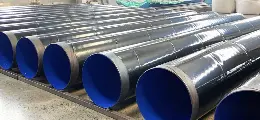
3LPE coating refers to a multi-layer system consisting of three distinct layers: a high-performance fusion-bonded epoxy primer, a copolymer adhesive, and a polyethylene outer layer, thereby providing robust and durable protection. Under moderate to high-temperature conditions, 3LPE coatings offer protection for pipelines of both small and large diameters.Steel pipes such as SSAW and SMLS pipes can both be treated with 3LPE anti-corrosion coating.
Three-Layer Polyethylene (3LPE) coatings provide long-term protection against corrosion. The Fusion-Bonded Epoxy (FBE) layer exhibits excellent anti-corrosion properties for metal substrates, effectively preserving and protecting the pipeline over the long term under moderate temperature conditions. Low-Application-Temperature Fusion-Bonded Epoxy (LAT FBE) can be utilized as a primer layer; it is suitable for applications requiring low preheat temperatures and serves to maintain the structural integrity of high-strength steel over the long term. Furthermore, the 3LPE system demonstrates superior resistance to cathodic disbondment, thereby reducing the lifecycle costs associated with cathodic protection.
Standards and Specifications
3LPE coated steel pipes are manufactured according to international standards such as:
DIN 30670 (Europe)
ISO 21809-1 (Global pipeline standard)
CSA Z245.21 (North America)
Typical technical parameters include:
Coating thickness: 1.8 mm – 4.0 mm
Operating temperature: -40°C to 80°C
Pipe diameter range: 25 mm to 3000 mm
These standards ensure consistent quality, adhesion strength, and long-term performance.
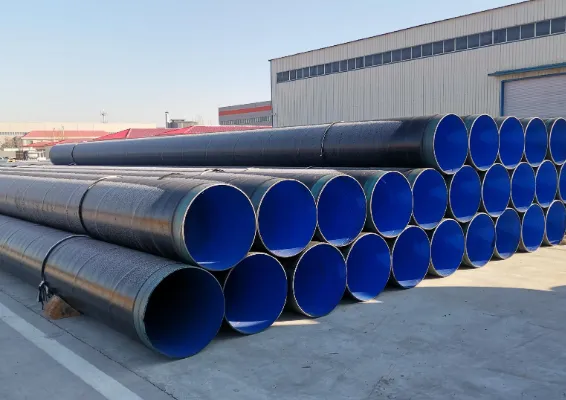
Advantages of 3LPE Coating steel pipes
1. Excellent Corrosion Resistance
3LPE coating provides a strong barrier against moisture, soil chemicals, and electrochemical reactions, preventing steel degradation.
2. Long Service Life
Pipelines coated with 3LPE can last 50–75 years or more with minimal maintenance.
3. High Mechanical Strength
The polyethylene outer layer offers:
Impact resistance
Abrasion resistance
Protection during transportation and installation
4. Strong Adhesion Performance
The multi-layer system ensures excellent bonding between coating and steel, reducing the risk of peeling or delamination.
5. Cost Efficiency
Although initial costs may be higher than single-layer coatings, 3LPE significantly reduces:
Maintenance costs
Repair frequency
3LPE-coated pipe consists of a three-layer coating system
The first layer (FBE: > 100 µm) is composed of fusion-bonded epoxy. This layer provides corrosion protection and forms a fusion bond with the shot-blasted steel surface.
The second layer (170–250 µm) is a copolymer adhesive, which exhibits excellent chemical bonding properties with both the underlying epoxy layer and the outer polyethylene layer.
The third layer (2.5–3.7 mm) is a polyethylene layer, designed to protect the pipe from any physical damage.
These three layers bond firmly with the steel pipe to form an exceptional anti-corrosion coating system, suitable for pipe diameters ranging from 25 mm to 2420 mm.
3-layer polyethylene-coated steel pipe is the preferred choice globally for the transmission of oil and natural gas; it is capable of withstanding a wide range of temperatures and environmental conditions—from arid onshore terrains to deep-water regions. 3-layer polyethylene-coated steel pipe is utilized for the transport of potable water, oil, natural gas, and other fluids. 3LPE-coated pipes are suitable for operation at elevated temperatures, ranging from 60°C to 80°C.
Why Choose 3LPE Coating for Steel Pipes?
3LPE coating has become the industry standard due to its ability to combine:
Chemical resistance
Mechanical protection
Long-term durability
For pipeline projects requiring reliability and longevity, 3LPE offers one of the most cost-effective and proven solutions.
Conclusion
3LPE coating for steel pipes is a highly advanced anti-corrosion technology that significantly enhances pipeline performance and lifespan. With its three-layer structure, compliance with international standards, and excellent durability, it remains the preferred choice for oil, gas, and water transmission systems worldwide.

 English
 Español
 بالعربية
 Phone :
  Whatsapp :
  Email :


