What Is 304 Stainless Steel Plate Sheet?
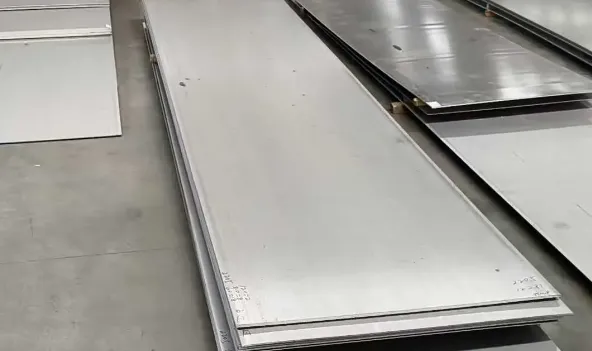
304 stainless steel plate sheet is one of the most widely used austenitic stainless steels, known for its excellent corrosion resistance, durability, and versatility. It belongs to the 18-8 stainless steel family, typically containing 18% chromium and 8% nickel, which provides outstanding resistance to oxidation and rust in various environments.304 stainless steel sheet is a sheet product made from 304 stainless steel through hot rolling or cold rolling processes.
It is commonly supplied in two forms:
Stainless steel sheet (thin, usually ≤6mm)
Stainless steel plate (thicker, typically >6mm)
Properties of 304 Stainless Steel Plate Sheet
1. Corrosion Resistance
304 stainless steel performs well in most atmospheric environments and many chemical conditions. It is ideal for indoor and outdoor use, especially where moisture exposure is common.
2. Excellent Formability
This material can be easily formed, bent, and fabricated, making it suitable for complex shapes and industrial applications.
3. Good Weldability
304 stainless steel supports all standard welding methods without requiring preheating, making it a top choice for fabrication.
4. High Strength & Durability
It offers a strong balance between strength and weight, ensuring long-term structural reliability.
5. Hygienic Surface
Its smooth, non-porous surface makes it ideal for sanitary environments like food processing and medical equipment.
Chemical Composition of 304 Stainless Steel Plate
|
Element
|
Content (%)
|
|
Chromium (Cr)
|
18.0 – 20.0
|
|
Nickel (Ni)
|
8.0 – 10.5
|
|
Carbon (C)
|
≤ 0.08
|
|
Manganese (Mn)
|
≤ 2.0
|
|
Silicon (Si)
|
≤ 0.75
|
Common Standards & Specifications
304 stainless steel plate sheet is produced according to international standards, including:
ASTM A240 / A240M
ASTM A666
EN 10088-2 (1.4301)
JIS G4304 / G4305 (SUS304)
Typical Size Range
Thickness: 0.3 mm – 100 mm
Width: 1000 mm – 2500 mm
Length: 2000 mm – 6000 mm (customizable)
304 stainless steel plate is a plate made of austenitic stainless steel containing 18.0%-20.0% chromium and 8.0%-10.5% nickel. According to the rolling process, it is divided into hot-rolled and cold-rolled [1]. Its technical basis can be traced back to the foundational research on iron-chromium-nickel austenitic alloy by Professor L.B. Guillet of France in 1906. The specific prototype was formed in 1912 by the V2A alloy developed by Krupp Steel Plant in Germany. In 1924, it was improved into modern 304 stainless steel by Firth Brown Laboratory in the United Kingdom [2]. The plate needs to undergo annealing, solution treatment, stress relief annealing and stabilization treatment to ensure mechanical properties. The national standard grades include 0Cr18Ni9, 06Cr19Ni9 and S30408.
How to Distinguish Between 304 and 201 Stainless Steel Sheets
1. From a distance, both 304 and 201 stainless steel sheets appear to have the same matte finish and luster. However, we can differentiate them using other methods. Close-up observation with the naked eye reveals that 304 has a saturated, bright color and a very smooth feel; while 201 appears slightly darker, with lower color saturation, and feels somewhat rough to the touch. In a water test, water stains on 304 are easily removed, while those on 201 are more difficult to remove.
2. Distinguish using a polishing machine: When polishing 304 stainless steel, the sparks are short and few; conversely, 201 produces many sparks. When using this method, maintain consistent polishing pressure.
3. Distinguish using stainless steel pickling paste: Apply the paste to both 304 and 201 and observe the color change; if the color turns white or remains unchanged, it's 304; conversely, if it turns black, it's 201.
Conclusion
304 stainless steel plate sheet remains a top choice across industries due to its balance of performance, affordability, and versatility. Whether for construction, food processing, or industrial applications, it delivers reliable performance and long service life.

 English
 Español
 بالعربية

 Phone :
  Whatsapp :
  Email :


