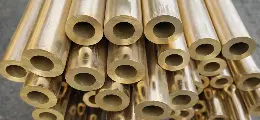
SMLS pipes are widely used in industries such as oil & gas, construction, power generation, mechanical engineering, and pipeline transportation. Because they are manufactured without a welded seam, seamless pipes offer superior pressure resistance, structural strength, and reliability compared to welded pipes.
In the long-standing dialogue between steel and industry, seamless carbon steel pipe has consistently stood as the most silent yet most resilient narrator. Like a network of vessels coursing with energy, it connects oilfield drilling rigs, power plant boilers, urban water supply grids, and even the transport systems of deep-sea oil and gas fields. The key factor determining whether these "steel vessels" can precisely adapt to such diverse environments lies in their dimensional system—behind this seemingly cold set of numbers lies the accumulated wisdom of a century of industrial evolution and the meticulous craftsmanship of countless engineers.
What Is a Seamless Carbon Steel Pipe (SMLS)?
Carbon steel seamless pipe is a hollow tubular material—devoid of seams—produced by perforating, hot rolling, or cold drawing a solid round steel bar alloy composed primarily of iron and carbon. Characterized by high strength, high-pressure resistance, low cost, and excellent machinability, it is widely utilized for fluid conveyance (such as petroleum, natural gas, and water) as well as for structural engineering components.
Standards: API 5L, API 5CT, ASTM A106/A53, ASTM A519, JIS G 3441, JIS G3444, JIS G3445 DIN 2391, EN10305, EN10210, ASME SA106, SA192, SA210, SA213, SA335, DIN17175, ASTM A179…
Steel grade
API 5L: API 5L: GR B, X42, X46, X56, X60, X65, X70
ASTM A53/A106: GR A, GR B, GR CASME SA106: GR.A, GR.B, GR.CASME
SA192:
SA192ASME SA209M: T1, T1a
ASTM A335: P1, P2, P5, P9, P11, P22, P23
ASTM A333: Gr.1, Gr.3, Gr.4, Gr.6, Gr.7, Gr.8, Gr.9, Gr.10, Gr.11
Standard SMLS Carbon Steel Pipe Sizes
The dimensions of seamless pipes are usually defined by Nominal Pipe Size (NPS), Outside Diameter (OD), and Wall Thickness (Schedule).Below is a simplified ASME B36.10M size chart for commonly used seamless carbon steel pipes.
|
NPS
|
Outside Diameter (mm)
|
SCH 40 Wall Thickness (mm)
|
SCH 80 Wall Thickness (mm)
|
|
1/8"
|
10.3
|
1.73
|
2.41
|
|
1/4"
|
13.7
|
2.24
|
3.02
|
|
3/8"
|
17.1
|
2.31
|
3.2
|
|
1/2"
|
21.3
|
2.77
|
3.73
|
|
3/4"
|
26.7
|
2.87
|
3.91
|
|
1"
|
33.4
|
3.38
|
4.55
|
|
1-1/4"
|
42.2
|
3.56
|
4.85
|
|
1-1/2"
|
48.3
|
3.68
|
5.08
|
|
2"
|
60.3
|
3.91
|
5.54
|
|
2-1/2"
|
73
|
5.16
|
7.01
|
|
3"
|
88.9
|
5.49
|
7.62
|
|
4"
|
114.3
|
6.02
|
8.56
|
|
5"
|
141.3
|
6.55
|
9.53
|
|
6"
|
168.3
|
7.11
|
10.97
|
|
8"
|
219.1
|
8.18
|
12.7
|
|
10"
|
273
|
9.27
|
15.09
|
|
12"
|
323.9
|
10.31
|
17.48
|
|
14"
|
355.6
|
11.13
|
19.05
|
|
16"
|
406.4
|
12.7
|
21.44
|
|
18"
|
457.2
|
14.27
|
23.83
|
|
20"
|
508
|
15.09
|
26.19
|
|
24"
|
609.6
|
17.48
|
30.96
|
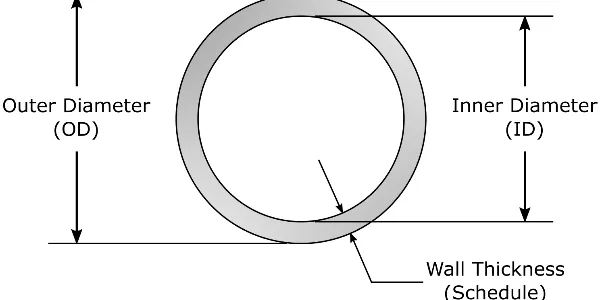
SMLS Pipe Dimensions Diagram
Key pipe dimension terms include:
Outside Diameter (OD)
The external diameter of the pipe.
Inside Diameter (ID)
The internal flow diameter.
Wall Thickness (WT)
The thickness of the pipe wall.
These dimensions determine:
pipe pressure capacity
flow capacity
structural strength
International Standards for Seamless Carbon Steel Pipes
Several international standards regulate seamless pipe production and testing.
Common standards include:
ASTM A106 – High-temperature service pipes
ASTM A53 – General structural pipes
API 5L – Oil and gas pipeline pipes
ASTM A333 – Low-temperature pipes
ASTM A335 – Alloy steel pipes for high-temperature service
EN 10216 – European pressure pipe standard
FAQ About SMLS Carbon Steel Pipe Sizes
What is the largest seamless pipe size available?
Most manufacturers can produce seamless pipes up to 24 inches (610 mm) in diameter.
What does SCH mean in pipe sizes?
SCH (Schedule) refers to the wall thickness classification of the pipe.
Common schedules include:
SCH10
SCH20
SCH40
SCH80
SCH160
Are seamless pipes stronger than welded pipes?
Yes. Because seamless pipes do not contain a weld seam, they usually have higher strength and pressure resistance.

 English
 Español
 بالعربية

 Phone :
  Whatsapp :
  Email :


