The global SSAW steel pipe market reached $5.819 billion in sales in 2025 and is projected to continue growing in the coming years. Regionally, the Chinese market has seen rapid growth in recent years. As one of the world's largest steel producers and consumers, China has strong demand for various types of steel pipes used in infrastructure and energy projects, including SSAW pipes and SMLS Pipe.
SSAW Steel Pipe is one of the most widely used large-diameter welded steel pipes in modern infrastructure and energy transportation projects. The pipe is produced using spiral forming technology and submerged arc welding, which allows manufacturers to produce large diameter pipes with high strength and reliable weld quality.Due to its excellent structural performance, cost efficiency, and adaptability to large-scale engineering projects, SSAW steel pipe has become an important material in industries such as municipal engineering, oil and gas transportation, bridge construction, and water conservancy systems.
With the acceleration of global urbanization and infrastructure development, the demand for SSAW steel pipes continues to grow steadily. Technological innovation, stricter environmental regulations, and increasing international trade are also creating new opportunities for the SSAW steel pipe industry.
Advantages of Submerged Arc Welded Pipe Development
Submerged arc welded pipe (SAW) is a type of pipe manufactured by welding steel plates or strips into pipe blanks using a submerged arc welding process. Based on the forming process, it is divided into spiral submerged arc welded pipe (SSAW) and straight seam submerged arc welded pipe (LSAW). Its core advantages are:
High efficiency and energy saving: The electric arc is covered by a flux layer, reducing heat loss by more than 30%, and increasing welding efficiency by 2-3 times compared to manual welding;
Stable quality: The weld seam density reaches 99.9%, suitable for high-pressure, low-temperature, and corrosive environments;
Controllable cost: High degree of automation, single-line capacity can reach 500,000 tons/year, and labor costs account for less than 15%.
The industry's history can be traced back to the early 20th century's demand for oil pipeline construction. After 2010, it entered a stage of large-scale development with the upgrading of global energy infrastructure. Currently, LSAW pipes, due to their large diameter (up to 1422mm) and thick wall (up to 45mm), account for over 60% of oil and gas long-distance pipelines, becoming the dominant product in the market.
What Is SSAW Steel Pipe ?
SSAW steel pipe refers to Spiral Submerged Arc Welded pipe, which is manufactured by continuously forming steel strip or steel plate into a spiral shape and welding the seam using submerged arc welding technology.Unlike straight seam welded pipes, SSAW pipes have a spiral weld seam, which distributes stress more evenly along the pipe body and allows the production of larger diameters with relatively thinner steel plates.
Common international standards for SSAW steel pipes include:
API 5L
ASTM A252
EN 10219
GB/T 9711
Typical diameter range of SSAW pipes:
219 mm – 3620 mm
These pipes are widely used in long-distance pipelines and structural engineering projects.
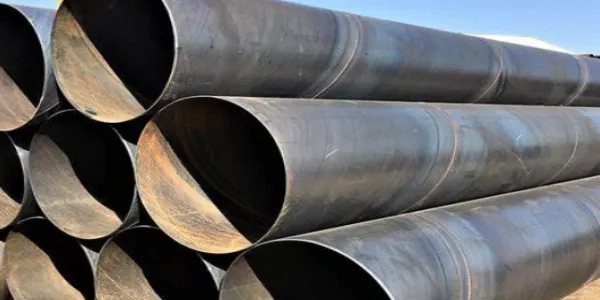
Overview and Key Drivers of the SSAW Steel Pipe Market
SSAW steel pipe (spiral submerged arc welded pipe) has become a key material in global energy infrastructure and industrial sectors due to its advantages such as large diameter, high efficiency, and low cost. The global market size reached 57.95 billion yuan in 2024 and is projected to grow to 68.16 billion yuan by 2031, with a compound annual growth rate (CAGR) of 2.0%. Its key drivers include:
1. Explosive Demand in Energy Infrastructure: Global investment in long-distance oil and gas pipeline construction continues to grow, projected to reach 1.2 trillion US dollars between 2025 and 2030, with SSAW steel pipe accounting for over 60% of high-pressure, large-diameter pipelines. China's 14th Five-Year Plan clearly states a 50% increase in oil and gas pipeline mileage, with single projects such as the West-East Gas Pipeline IV and the China-Russia East Route using over 200,000 tons of pipe.
2. Expanding Emerging Application Scenarios: Demand is surging in emerging fields such as hydrogen energy pipelines, offshore wind power foundations, and carbon capture and storage (CCUS). Global investment in hydrogen pipelines is projected to reach $80 billion between 2026 and 2030, making SSAW steel pipe the preferred material due to its pressure resistance and corrosion resistance.
3. Regional Market Differentiation: The Asia-Pacific region (especially China) accounts for 70% of global production capacity and benefits from infrastructure exports under the Belt and Road Initiative; the recovery of shale gas in North America is driving demand for high-grade steel (X80 and above); in Europe, driven by carbon tariff policies, low-carbon SSAW pipe commands a premium of 12%-15%.
Conclusion
The SSAW steel pipe industry is shifting from scale expansion to technology-driven development. Enterprises need to seize the high-end market through a dual strategy of "greening + intelligentization" while paying attention to policy dividend areas such as hydrogen energy and CCUS, in order to cope with the dual challenges of raw material fluctuations and technological iterations.

 English
 Español
 بالعربية

 Phone :
  Whatsapp :
  Email :


