While steel production has relied on coal as an energy source since the Industrial Revolution, the steel industry, like other sectors, is transitioning to a future that significantly reduces emissions of carbon dioxide and other greenhouse gases. Low-carbon steel (C: ≤ 0.25%), also known as mild steel, readily undergoes various processes such as forging, welding, and cutting, and is commonly used in the manufacture of chains, rivets, bolts, shafts, and more.
Applications of MS Pipe
Mild carbon steel is widely used. Typical applications include common hardware tools, cookware, medical equipment, machinery, construction, and infrastructure.
1. Construction and Infrastructure
Mild carbon steel has excellent tensile strength in building frames for construction projects. It meets earthquake and wind resistance requirements and is resistant to insect damage. Furthermore, it is corrosion-resistant and flame-retardant, making it ideal for use in construction.
2. Machinery
Mild carbon steel's high strength, ductility, and hardness make it a popular choice for manufacturing mechanical components. Due to its low carbon content, it can be machined, cut, pressed, and formed without breaking.
3. Cookware
Due to its very low carbon content, mild steel does not rust, keeping cookware clean and sharp for a long time. Mild steel is more heat-resistant than other materials, can be used as a non-stick material, and is healthier than aluminum cookware.
4. Pipes
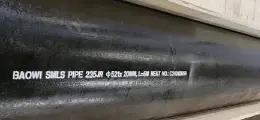
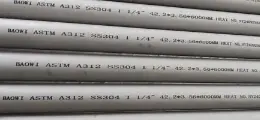
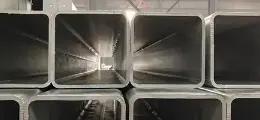
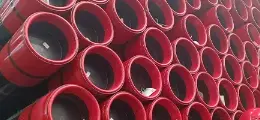
Due to its extremely ductile nature, mild steel is very popular for making various pipes and utility poles. Mild steel is a food-safe material, making it ideal for transporting water, beverages, and natural gas in steel pipes. Furthermore, due to its low carbon content, pipes used outdoors will not rust in harsh environments and cold weather. Compared to plastic pipes, mild steel pipes are more environmentally friendly and have a longer service life. They can also be cut into rectangular shapes.

What is the relationship between MS pipe and green steel pipe?
Although the concepts of "low-carbon steel" and "green steel" sound similar, they refer to completely different things. One is "material composition" and the other is "production method and environmental attributes". There is no direct relationship between them, but there may be intersections in some cases.
Is black steel pipe made of mild steel?
Black steel pipe is typically made of mild steel. Due to its excellent weldability, ductility, and low cost, it is suitable for use in ungalvanized pipelines, such as those used for natural gas, water, and steam systems. However, some black steel pipe may also be made of medium-carbon steel, depending on the application and strength requirements. Therefore, while black steel pipe is often made of mild steel, it is not completely equivalent to mild steel pipe.

 English
 Español
 بالعربية
 Phone :
 Whatsapp :
 Email :