Choosing the correct carbon steel pipe pressure rating is critical for pipeline safety, reliability, and compliance with ASME and ASTM standards. Carbon steel pipes are widely used in oil & gas, petrochemical, power generation, water treatment, and industrial processing systems, where pressure ratings directly affect safe operating performance.
Pipe pressure rating depends on more than pipe schedule alone. Factors such as material grade, wall thickness, operating temperature, corrosion allowance, and design code all influence the maximum allowable working pressure. This guide covers pressure rating calculations, pressure charts, flow rate tables, water hammer effects, burst pressure, and comparisons of Schedule 40, Schedule 80, Schedule 160, and XXS pipes to help you select the right pipe for your application.
What Is Carbon Steel Pipe Pressure Rating?
A carbon steel pipe pressure rating refers to the maximum allowable internal pressure that a pipe can safely withstand during continuous service under specified operating conditions. It is one of the most important parameters in piping system design because it directly affects safety, service life, and regulatory compliance.
Factors Affecting Pipe Pressure Rating
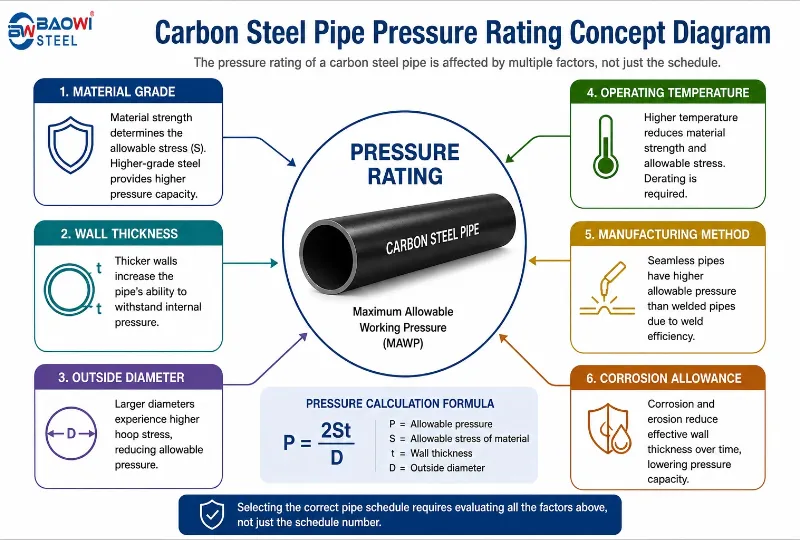
The maximum working pressure of a carbon steel pipe is determined by the following factors:
Pipe material (ASTM A53 Grade B, ASTM A106 Grade B, API 5L Grade B, etc.)
Outside diameter (OD)
Wall thickness (Schedule 40, Schedule 80, Schedule 160, XXS)
Operating temperature
Allowable stress specified by ASME codes
Manufacturing process (Seamless or ERW)
Corrosion or erosion allowance
Weld joint efficiency
As operating temperature increases, the allowable stress of carbon steel decreases. Consequently, the allowable pressure rating also decreases, even if the pipe dimensions remain unchanged.
What Does Pipe Schedule Mean?
The term Schedule (SCH) describes the wall thickness series of a steel pipe rather than its pressure rating. Pipes with the same nominal pipe size (NPS) have the same outside diameter, but different schedules have different wall thicknesses and inside diameters.
A thicker wall generally provides greater pressure resistance because more material is available to withstand internal stress. However, pressure rating is not determined by wall thickness alone. Material strength, operating temperature, corrosion allowance, and design code requirements must also be considered.
The most common carbon steel pipe schedules include:
|
Pipe Schedule
|
Wall Thickness
|
Typical Pressure Capacity
|
Common Applications
|
|
SCH 40
|
Standard
|
Medium
|
Water supply, HVAC, general industrial piping
|
|
SCH 80
|
Thick
|
High
|
Steam, oil & gas, compressed air
|
|
SCH 160
|
Extra Thick
|
Very High
|
High-pressure process systems
|
|
XXS (Double Extra Strong)
|
Thickest
|
Maximum
|
Critical high-pressure service
|
Working Pressure vs Design Pressure vs Burst Pressure
These three terms are frequently confused but have very different meanings.
|
Term
|
Definition
|
Typical Use
|
|
Working Pressure
|
The maximum pressure for continuous and safe operation.
|
Daily plant operation
|
|
Design Pressure
|
The pressure selected by engineers for system design, including safety margins.
|
ASME piping design
|
|
Burst Pressure
|
The pressure at which the pipe will rupture during destructive testing.
|
Laboratory testing only
|
Working pressure should never be confused with burst pressure. Burst pressure is only used to evaluate the structural limit of a pipe and should never be considered an acceptable operating pressure.
How Is Carbon Steel Pipe Pressure Rating Calculated?
A carbon steel pipe's pressure rating is not determined solely by its schedule number. Instead, engineers calculate the Maximum Allowable Working Pressure (MAWP) according to design codes such as ASME B31.3, ASME B31.1, and ASME Section II using the pipe dimensions, material properties, and service conditions.
A simplified pressure calculation formula is:
P=2St/D
Where:
P = Allowable pressure
S = Allowable stress of material
t = Wall thickness
D = Outside diameter
Several variables influence the final result.
Carbon Steel Pipe Pressure Rating Reference Chart
The following chart summarizes the approximate working pressure, burst pressure, and water hammer factors for ASTM A53 Grade B and ASTM A106 Grade B carbon steel pipes. These values are commonly used as a quick engineering reference under ambient temperature conditions.
Schedule 80 Carbon Steel Pipe Pressure Rating Chart
|
SCH 80 Steel Pipe Pressure Rating(psig)
|
|
Pipe Size
|
Pipe Schedule
|
Temperature(oF)
|
|
(inches)
|
100
|
200
|
300
|
400
|
500
|
600
|
650
|
700
|
750
|
|
1"
|
40
|
3048
|
2629
|
2362
|
2171
|
2019
|
1924
|
1867
|
1824
|
1810
|
|
80
|
4213
|
3634
|
3265
|
3002
|
2791
|
2659
|
2580
|
2528
|
2501
|
|
160
|
6140
|
5296
|
4759
|
4375
|
4068
|
3876
|
3761
|
3684
|
3646
|
|
1 1/2"
|
40
|
2257
|
1947
|
1750
|
1608
|
1496
|
1425
|
1383
|
1354
|
1340
|
|
80
|
3182
|
2744
|
2466
|
2267
|
2108
|
2009
|
1949
|
1909
|
1889
|
|
160
|
4619
|
3984
|
3580
|
3291
|
3060
|
2916
|
2829
|
2772
|
2743
|
|
2"
|
40
|
1902
|
1640
|
1474
|
1355
|
1260
|
1201
|
1165
|
1141
|
1129
|
|
80
|
2747
|
2369
|
2129
|
1957
|
1820
|
1734
|
1682
|
1648
|
1631
|
|
160
|
4499
|
3880
|
3486
|
3205
|
2980
|
2840
|
2755
|
2699
|
2671
|
|
3"
|
40
|
1806
|
1558
|
1400
|
1287
|
1196
|
1140
|
1106
|
1084
|
1072
|
|
80
|
2553
|
2202
|
1979
|
1819
|
1691
|
1612
|
1564
|
1532
|
1516
|
|
160
|
3840
|
3312
|
2976
|
2736
|
2544
|
2424
|
2352
|
2304
|
2280
|
|
4"
|
40
|
1531
|
1321
|
1187
|
1091
|
1014
|
967
|
938
|
919
|
909
|
|
80
|
2213
|
1909
|
1715
|
1577
|
1466
|
1397
|
1355
|
1328
|
1314
|
|
160
|
3601
|
3106
|
2791
|
2566
|
2386
|
2273
|
2206
|
2161
|
2138
|
|
5"
|
40
|
1342
|
1158
|
1040
|
956
|
889
|
847
|
822
|
805
|
797
|
|
80
|
1981
|
1709
|
1535
|
1411
|
1312
|
1250
|
1213
|
1189
|
1176
|
|
160
|
3414
|
2945
|
2646
|
2433
|
2262
|
2155
|
2091
|
2049
|
2027
|
|
6"
|
40
|
1219
|
1052
|
945
|
869
|
808
|
770
|
747
|
732
|
724
|
|
80
|
1913
|
1650
|
1483
|
1363
|
1267
|
1208
|
1172
|
1148
|
1136
|
|
160
|
3289
|
2836
|
2549
|
2343
|
2179
|
2076
|
2014
|
1973
|
1953
|
|
8"
|
40
|
1073
|
926
|
832
|
765
|
711
|
678
|
657
|
644
|
637
|
|
80
|
1692
|
1459
|
1311
|
1205
|
1121
|
1068
|
1036
|
1015
|
1005
|
|
160
|
3175
|
2738
|
2460
|
2262
|
2103
|
2004
|
1944
|
1905
|
1885
|
|
10"
|
40
|
974
|
840
|
755
|
694
|
645
|
615
|
596
|
584
|
578
|
|
80
|
1609
|
1388
|
1247
|
1147
|
1066
|
1016
|
986
|
966
|
956
|
|
160
|
3147
|
2714
|
2439
|
2242
|
2085
|
1986
|
1927
|
1880
|
1868
|
To view the Schedule 40 chart, please click: Schedule 40 Pipes Pressure Rating Chart
For international EPC projects, exported equipment, and overseas oil and gas stations: Strict adherence to the original English version of the ASME B36.10M Carbon Steel Pipe Pressure Rating Reference Chart, using SCH+Class dual labeling to meet the acceptance standards of various countries.
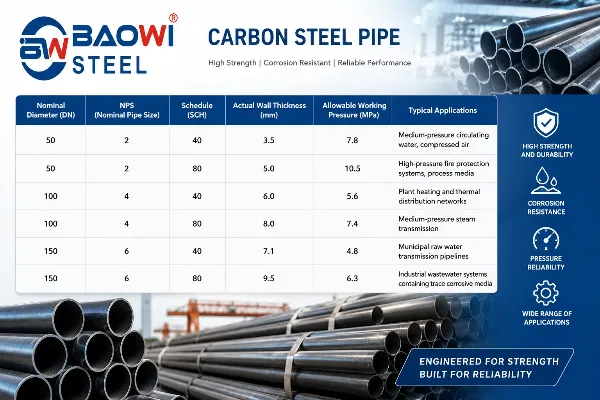
Simplified Reference Chart for Pressure Rating of Carbon Steel Pipes at Normal Temperature (Field-Use Version) This chart is based on seamless ASTM A106 Gr.B pipes at 20℃ normal temperature, in non-corrosive clean water media. It is a simplified version of the industry-standard Carbon Steel Pipe Pressure Rating Reference Chart and can be used directly for quick on-site selection, replacing the original lengthy standard chart.
Quick Reference Pressure Comparison
|
Pipe Schedule
|
Relative Working Pressure
|
Relative Burst Pressure
|
Typical Applications
|
|
SCH 40
|
Standard
|
Medium
|
Water supply, HVAC, low-pressure process piping
|
|
SCH 80
|
High
|
High
|
Steam, oil & gas, compressed air
|
|
SCH 160
|
Very High
|
Very High
|
High-pressure process systems
|
|
XXS
|
Maximum
|
Maximum
|
Critical high-pressure service
|
SCH 40 vs SCH 80 Pressure Rating Comparison
|
Feature
|
SCH 40
|
SCH 80
|
|
Wall Thickness
|
Lower
|
Higher
|
|
Pressure Capacity
|
Lower
|
Higher
|
|
Weight
|
Lighter
|
Heavier
|
|
Cost
|
Lower
|
Higher
|
|
Typical Use
|
Water, HVAC
|
Oil & Gas, Steam
|
In short, the carbon steel pipe pressure reference table cannot be used directly; it is only a reference for normal temperature, clean water, and seamless pipes. When selecting pipes, one cannot simply look at the pressure values in the table. It is also necessary to consider the steel pipe material, wall thickness, processing method, operating temperature, and the medium being transported. If only harmless media such as normal temperature clean water or ordinary compressed air are being transported, the table in this article is perfectly adequate for selection. However, in the event of high-temperature steam, corrosive wastewater, or flammable and explosive oils and gases, one must not rely solely on the simplified table. Instead, one must consult the original industry standards and calculate the pressure-bearing capacity based on the actual site conditions to prevent pipe cracking and leakage, and to avoid safety hazards.
A more detailed table can be found here; the content is for reference only.
Carbon Steel Pipe Pressure Rating & Flow Rate Charts Guide (SCH40, SCH80, SCH160 & XXS)

 English
 Español
 بالعربية






 Phone :
  Whatsapp :
  Email :


