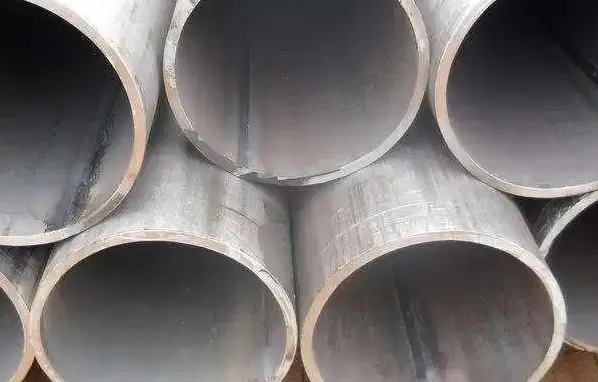
The pressure capacity of an LSAW steel pipe is calculated based on its material strength, pipe dimensions (outside diameter and wall thickness), and design code requirements. In general, engineers use formulas derived from standards such as ASME B31.3 or B31.4, where internal pressure is estimated using allowable stress, weld joint efficiency, and safety factors. The thicker the pipe wall and the higher the steel grade, the greater the pressure it can safely withstand, while larger diameters tend to reduce pressure resistance. Final pressure rating also depends on operating conditions such as temperature, corrosion allowance, and service environment, ensuring the pipe performs safely under real working conditions.
Pipe Pressure Definition for LSAW Steel Pipe
LSAW Steel Pipe pressure is a core parameter in pipeline systems. It has a crucial impact on operational efficiency and system stability. It refers to the internal force exerted on the pipe wall by the fluid flowing inside a closed LSAW steel pipe system. It is generally expressed as force per unit area. In the International System of Units (SI), it is measured in Pascal (Pa) or more commonly Megapascal (MPa).
Industry Standards Used in LSAW Pressure Design
Pressure capacity calculations are not arbitrary—they follow strict standards:
1.
ASTM International:Provides material testing standards for steel grades and mechanical properties.
2.
API 5L Specification:Defines requirements for line pipe used in oil and gas pipelines, including LSAW pipes.
3. ASME B31.3:Used for process piping systems in chemical and industrial plants.
4. ASME B31.8:Used for gas transmission and distribution pipelines.
Formula to Calculate LSAW Steel Pipe Pressure Capacity
The most commonly used formula is based on Barlow’s equation:
P=D/2St
Where:
P = Internal pressure capacity
S = Allowable stress of steel material
t = Wall thickness of pipe
D = Outside diameter of pipe
Factors in the Formula
To ensure accuracy, engineers must consider:
Material grade (API 5L X42, X52, X65, etc.)
Wall thickness (mm or inch)
Pipe diameter
Safety factor
Welding efficiency (LSAW weld quality)
Wall Thickness Influence in LSAW Pipe Pressure Design
Schedule 40 is a common wall thickness specification for LSAW steel pipes used in water transmission, oil and gas transportation, and industrial piping systems. Because pressure capacity depends largely on wall thickness, a Schedule 40 pipe can typically handle more internal pressure than a thinner-wall pipe of the same size and steel grade. Pressure calculations are usually based on several factors, including outside diameter, wall thickness, material strength, and corrosion allowance. For this reason, Schedule 40 is often selected when a balance between pressure performance, durability, and cost is required.Schedule 40 is only used as a reference wall thickness concept, while LSAW pipe pressure design is governed by API 5L and ASME B31.3.
LSAW Steel Pipe Pressure Unit Conversion Table
|
Unit Conversion
|
To
|
Multiply By
|
|
MPa
|
psi (pounds/sq. inch)
|
145
|
|
MPa
|
ksi
|
0.145
|
|
MPa
|
kgf/mm²
|
0.10197
|
|
MPa
|
bar
|
10
|
|
MPa
|
kPa
|
1000
|
LSAW Steel Pipe Pressure Rating Table & Engineering Notes
Notes on Allowable Working Pressure for LSAW Steel Pipe
1.This table provides a general reference guide for LSAW steel pipe pressure rating. It should not replace professional engineering design or project-specific calculations.
2.The allowable internal pressure for LSAW Steel Pipe is calculated based on the ASME B31.3 “Process Piping” code (Clause 304.1.2). However, different design standards may result in different allowable pressure values. Final engineering verification is always required.
3.Pipes with wall thickness greater than one-sixth of the outside diameter are not included in this simplified table. For thick-wall LSAW steel pipes, additional stress factors must be considered according to ASME B31.3 design rules.
4.Calculations typically apply to API 5L LSAW Steel Pipe, ASTM A53, ASTM A106, and ASTM A106M materials. For ERW pipes, a weld joint efficiency factor (commonly 85%) should be applied. Corrosion allowance and wear loss must also be included where necessary.
5.Carbon steel LSAW pipes may experience carbide-to-graphite transformation after long-term exposure above 427°C, which can affect mechanical strength and pressure capacity.
6.Allowable working pressure values are expressed in Megapascal (MPa). Unit conversions are provided below for engineering reference.
Common Mistakes in Pressure Calculation
1. Ignoring Weld Efficiency
A major error—LSAW pipes must always include E factor.
2. Using Nominal Instead of Minimum Wall Thickness
Manufacturing tolerance must be considered.
3. Not Applying Corrosion Allowance
Leads to overestimated capacity.
4. Mixing Units
MPa, bar, psi errors are very common in field calculations.
Conclusion
In conclusion, calculating LSAW Steel Pipe pressure capacity is essential for safe and efficient pipeline design. By using Barlow’s formula, considering material properties, and applying safety factors, engineers can accurately determine pressure limits.Additionally, combining engineering standards with real-world conditions ensures better performance and long-term reliability in industrial applications.

 English
 Español
 بالعربية
 Phone :
  Whatsapp :
  Email :


