ASTM A53 ERW carbon steel pipe pressure rating refers to the maximum internal pressure the pipe can safely withstand under specific operating conditions. The pressure rating depends on several factors, including pipe outside diameter, wall thickness (schedule), material strength, operating temperature, and design safety factors. In general, thicker-wall pipes such as Schedule 80 can handle significantly higher pressures than Schedule 40 pipes of the same size. Engineers typically calculate pressure ratings using the Barlow Formula to ensure compliance with industry standards and safe system operation in applications such as oil and gas, water transmission, construction, and industrial piping systems.
ASTM A53 ERW Pipe Pressure Rating Explained
The pressure rating of ASTM A53 ERW pipe refers to the maximum internal pressure the pipe can safely handle without failure.
It depends on several engineering factors:
Pipe diameter (
OD)
Wall thickness (Schedule 10, 40, 80, etc.)
Material grade (A or B)
Operating temperature
Safety factor
The core pressure specification of ASTM A53
ASTM A53 is a standard specification for seamless and welded carbon steel pipes developed by the American Society for Testing and Materials (ASTM International). The latest version is ASTM A53/A53M-22. This standard covers steel pipes with nominal sizes NPS 1/8 to NPS 26 (outer diameter 10.3 mm–660 mm), and classifies them into two categories according to manufacturing process:
Type S (Seamless Pipe): Hot-rolled or cold-drawn, without weld seams;
Type E (Electrical Resistance Welded Pipe, ERW): Welded by high-frequency resistance welding (HFW), and is the core focus of this discussion.
ERW steel pipes must meet strict chemical composition requirements: carbon content ≤0.25% (Class A) or ≤0.30% (Class B), manganese content 0.27%–1.40%, and impurities such as phosphorus and sulfur are strictly limited to ensure weldability and corrosion resistance. In terms of mechanical properties, Class A pipes have a tensile strength ≥330MPa and a yield strength ≥205MPa; Class B pipes have a tensile strength ≥415MPa and a yield strength ≥240MPa, which can meet the requirements of medium and low pressure conditions.
Pressure Calculation Formula (Simplified) Explained
Engineers calculate maximum allowable pressure using Barlow’s Formula:
P = (2 × S × t × E) / D
Where:
P = Maximum allowable pressure (PSI)
S = Allowable stress (20,000 PSI for ASTM A53 Grade B at ambient)
t = Wall thickness (inches)
E = Quality factor (1.0 for seamless, 0.85 for ERW)
D = Outside diameter (inches)
Worked Example: 2″ Schedule 40 vs Schedule 80
Schedule 40:
t = 0.154″, D = 2.375″
P = (2 × 20,000 × 0.154 × 1.0) / 2.375 = 3,177 PSI
Schedule 80:
t = 0.218″, D = 2.375″
P = (2 × 20,000 × 0.218 × 1.0) / 2.375 = 4,507 PSI
The 42% thicker wall delivers 42% higher pressure capacity.
ASTM A53 ERW Pipe Pressure Rating Table (Reference)
|
NPS
|
Wall Thickness (in)
|
Weight Class
|
Schedule
|
-20~400°F
|
500°F
|
600°F
|
650°F
|
|
1/8
|
0.068
|
STD
|
40
|
2668
|
2521
|
2308
|
2268
|
|
1/8
|
0.095
|
XS
|
80
|
4947
|
4675
|
4279
|
4205
|
|
1/4
|
0.088
|
STD
|
40
|
2157
|
2038
|
1866
|
1833
|
|
1/4
|
0.119
|
XS
|
80
|
4085
|
3860
|
3533
|
3472
|
|
3/8
|
0.091
|
STD
|
40
|
1852
|
1750
|
1602
|
1574
|
|
3/8
|
0.126
|
XS
|
80
|
3598
|
3400
|
3112
|
3058
|
|
1/2
|
0.109
|
STD
|
40
|
1608
|
1519
|
1391
|
1367
|
|
1/2
|
0.147
|
XS
|
80
|
3107
|
2936
|
2687
|
2641
|
|
3/4
|
0.113
|
STD
|
40
|
1397
|
1320
|
1209
|
1188
|
|
3/4
|
0.154
|
XS
|
80
|
2672
|
2526
|
2312
|
2272
|
|
1
|
0.133
|
STD
|
40
|
1245
|
1176
|
1077
|
1058
|
|
1
|
0.179
|
XS
|
80
|
2376
|
2245
|
2055
|
2019
|
|
1-1/4
|
0.14
|
STD
|
40
|
1112
|
1051
|
962
|
945
|
|
1-1/4
|
0.191
|
XS
|
80
|
2096
|
1981
|
1813
|
1782
|
|
1-1/2
|
0.145
|
STD
|
40
|
1050
|
992
|
908
|
893
|
|
1-1/2
|
0.2
|
XS
|
80
|
1974
|
1865
|
1707
|
1678
|
|
2
|
0.154
|
STD
|
40
|
954
|
901
|
825
|
811
|
|
2
|
0.218
|
XS
|
80
|
1808
|
1709
|
1564
|
1537
|
|
2-1/2
|
0.203
|
STD
|
40
|
938
|
887
|
812
|
798
|
|
2-1/2
|
0.276
|
XS
|
80
|
1742
|
1646
|
1507
|
1481
|
|
3
|
0.216
|
STD
|
40
|
883
|
834
|
793
|
750
|
|
3
|
0.3
|
XS
|
80
|
1639
|
1549
|
1418
|
1394
|
|
3-1/2
|
0.226
|
STD
|
40
|
847
|
801
|
733
|
720
|
|
3-1/2
|
0.318
|
XS
|
80
|
1571
|
1485
|
1359
|
1335
|
|
4
|
0.237
|
STD
|
40
|
827
|
782
|
715
|
703
|
|
4
|
0.337
|
XS
|
80
|
1525
|
1441
|
1319
|
1296
|
Notes
1. Permissible working pressures are calculated based on the formulas and allowable stresses specified in ASME B31.3 Process Piping Code.
2. Wall thickness loss due to threading has been considered.
3. The effects of corrosion, erosion, mechanical loads, and bending stresses have not been considered.
4. The listed permissible working pressures are for non-shock working conditions.
5. For working conditions exceeding the temperature and pressure ranges in the table, consult the project piping engineer.
6. This table is for reference only. The actual selection of piping and fitting pressure ratings is influenced by various factors. The final selection should be confirmed by the project piping engineer to ensure safe system operation.
Temperature Derating
Pressure capacity decreases at elevated temperatures. For ASTM A53 Grade B:
|
Temperature
|
Derating Factor
|
Sch 40 (2″)
|
Sch 80 (2″)
|
|
73°F (23°C)
|
1
|
3,177 PSI
|
4,507 PSI
|
|
200°F (93°C)
|
0.93
|
2,955 PSI
|
4,192 PSI
|
|
400°F (204°C)
|
0.82
|
2,605 PSI
|
3,696 PSI
|
|
500°F (260°C)
|
0.76
|
2,415 PSI
|
3,425 PSI
|
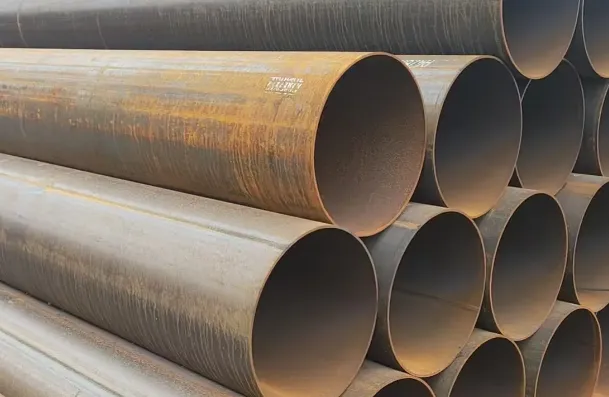
Factors That Affect ASTM A53 ERW Pipe Pressure Rating
1. Wall Thickness
Wall thickness has the greatest influence on pressure resistance.As wall thickness increases, the pipe can withstand higher internal pressure.
2. Pipe Diameter
Larger diameters generally reduce pressure capacity when wall thickness remains constant.
3. Operating Temperature
Steel strength decreases at elevated temperatures.Consequently, pressure ratings often require derating for high-temperature service.
4. Corrosion Allowance
Many industrial systems reserve additional wall thickness to compensate for long-term corrosion.
5. Design Standards
Pressure ratings may vary depending on:
ASME B31.3
ASME B31.1
API Standards
Local engineering codes
If you've ever received a piping specification sheet that says ASTM A53 Grade B Type E SCH 40 and then looked up "rated pressure," you'll quickly discover a confusing fact:
The ASTM A53 standard itself doesn't directly provide a uniform value like "Pressure Rating = XXX PSI."It provides—material mechanical properties, dimensional tolerances, hydrostatic testing requirements, and manufacturing process requirements. The pressure rating (Working Pressure/Allowable Pressure) is a design calculation result, depending on the specifications you use (ASME B31.1/B31.3/B31.9, etc.), wall thickness, weld coefficient, safety factor, and medium temperature.
This is why the same 4″ SCH 40 pipe can be described as ~2580 PSI (theoretical burst reference) or ~600–800 PSI (actual steam system working pressure)—neither is wrong, just the context is different. Let's break it down layer by layer.
The pressure rating of ASTM A53 ERW Grade B is not a fixed PSI number printed on the pipe, but a design value "calculated" using the Barlow formula, allowable stress (≈0.6–0.7 × 35 ksi), ERW weld coefficient (0.85), temperature reduction, and corrosion allowance. Treating it as a living calculation result rather than dead nameplate data will prevent you from being misled by suppliers' "Max 6,000 PSI" claims.

 English
 Español
 بالعربية



 Phone :
  Whatsapp :
  Email :


