Heat treatment is an important secondary process used to improve the mechanical performance and dimensional stability of rectangular hollow sections (RHS). By controlling heating and cooling conditions, heat treatment can reduce residual stress caused by cold forming, improve ductility, and create more uniform mechanical properties throughout the steel section.
Unlike hot-finished hollow sections, most rectangular tubes in North America are produced through cold forming and electric resistance welding (ERW). During the forming process, the steel experiences plastic deformation, especially at the corners of rectangular sections. Heat treatment can help relieve these stresses and improve the overall performance of the finished product.
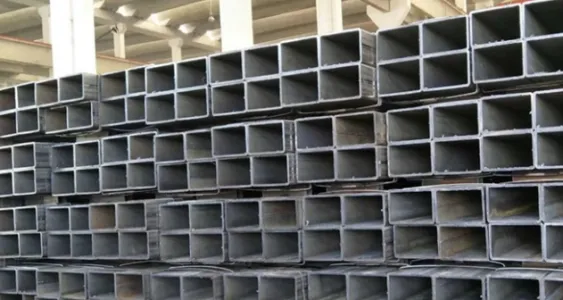
Why Heat Treatment Is Used for Rectangular Tubes
Rectangular hollow sections are widely used in structural applications because of their high strength-to-weight ratio, efficient load distribution, and easy fabrication. Before selecting a rectangular hollow section for a specific project, engineers usually need to confirm the required outside dimensions, wall thickness, and weight. A detailed standard rectangular tube size table can help users compare common RHS dimensions and select the appropriate section for their application.The main purposes of heat treatment include:
Standard Rectangular Tube Size Table
Reducing residual stress after cold forming
Improving ductility, especially in corner areas
Increasing dimensional stability
Improving uniformity of mechanical properties
Preparing steel sections for demanding applications such as structural engineering and galvanizing
It is important to note that heat treatment does not simply increase the strength of all rectangular tubes. Instead, its main function is to optimize the internal structure and reduce the negative effects caused by forming processes.
Common Heat Treatment Processes for Rectangular Hollow Sections (RHS)
1. Stress Relieving
Stress relieving is one of the most common heat treatment methods for cold-formed rectangular tubes.
During manufacturing, bending and welding create internal stresses inside the steel. Stress relieving involves heating the tube to a controlled temperature and allowing it to cool gradually.
Benefits include:
Lower residual stress
Improved dimensional stability
Reduced risk of deformation during fabrication
Better performance under compression loading
For hollow structural sections (HSS), stress relieving is often specified when improved mechanical consistency is required.
2. Normalizing
Normalizing involves heating steel above its critical transformation temperature and then cooling it in air.
This process changes the microstructure of the steel and produces a finer grain structure.
Advantages of normalizing include:
Improved toughness
More uniform mechanical properties
Better structural reliability
Hot-finished hollow sections manufactured according to standards such as ASTM A501 and EN 10210 typically involve a normalizing process during production.
3. Quenching and Tempering
Quenching involves rapid cooling after heating to increase hardness and strength. Tempering is then performed to reduce brittleness and improve toughness.
Although quenching and tempering are common for high-performance alloy steels, they are not typically used for standard
ASTM A500 rectangular tubes.
These processes are mainly applied when special mechanical properties are required.
Heat Treatment of Cold-Formed vs Hot-Finished Rectangular Tubes
Rectangular hollow sections can generally be divided into cold-formed and hot-finished products.
|
Type
|
Manufacturing Method
|
Heat Treatment Characteristics
|
|
Cold-formed RHS
|
Roll forming + ERW welding
|
May require stress relief depending on specification
|
|
Heat-treated HSS
|
Cold formed + controlled heat treatment
|
Reduced residual stress and improved ductility
|
|
Hot-finished RHS
|
Heated and formed at high temperature
|
More uniform properties and lower residual stress
|
Cold-formed sections usually have higher residual stresses because of plastic deformation during forming. Heat treatment helps reduce these effects.
ASTM Standards Related to Heat Treatment of Rectangular Tubes
ASTM A500 Rectangular Tubes
ASTM A500 is one of the most widely used specifications for cold-formed carbon steel structural tubing.
Typical ASTM A500 rectangular tubes are manufactured through cold forming and ERW welding. Standard production does not require post-production heat treatment.
However, manufacturers must control:
Chemical composition
Tensile strength
Yield strength
Elongation
Dimensional accuracy
ASTM A501 Rectangular Tubes
ASTM A501 covers hot-formed welded and seamless carbon steel structural tubing.
Because the steel is formed at elevated temperatures, the manufacturing process provides more uniform mechanical properties compared with cold-formed sections.
ASTM A501 products are often selected when hot-finished characteristics are required.
ASTM A1085 Hollow Structural Sections
ASTM A1085 is a high-strength structural tubing specification that allows heat treatment as an additional requirement.
Heat-treated A1085 hollow sections can provide:
Reduced residual stress
Improved ductility
More consistent structural performance
Heat Treatment and Hot-Dip Galvanizing
Cold-formed rectangular tubes may have concerns related to residual stress and corner deformation during hot-dip galvanizing.
Because galvanizing involves immersion in molten zinc at approximately 450°C (850°F), proper steel condition is important.
For certain applications, stress relief or thermal treatment before galvanizing can help reduce the risk of cracking or embrittlement caused by forming stresses.
Does Heat Treatment Increase Rectangular Tube Strength?
Heat treatment does not always increase the measured tensile strength of rectangular tubes.
Its primary benefits are:
Reducing internal stress
Improving ductility
Increasing structural reliability
Producing more consistent performance
For structural applications, reduced residual stress can improve compression behavior and long-term service performance.
Applications of Heat-Treated Rectangular Hollow Sections
Heat-treated rectangular tubes are commonly used in applications requiring higher reliability and structural performance, including:
Steel building structures
Bridges and infrastructure
Heavy machinery frames
Industrial equipment
Transportation structures
Structural components requiring improved toughness
Conclusion
Heat treatment plays an important role in improving the performance of certain rectangular hollow sections. While most ASTM A500 rectangular tubes are produced without additional heat treatment, stress relieving and other thermal processes may be applied when reduced residual stress, improved ductility, or enhanced structural reliability is required.
Understanding the difference between cold-formed, heat-treated, and hot-finished rectangular tubes helps engineers select the right product for demanding structural applications.
FAQ
Does ASTM A500 rectangular tube require heat treatment?
No. Standard ASTM A500 rectangular tubes are generally produced by cold forming and ERW welding without mandatory post-production heat treatment.
What is the purpose of heat treatment for RHS?
Heat treatment mainly reduces residual stress, improves ductility, and creates more uniform mechanical properties.
What is the difference between ASTM A500 and ASTM A501?
ASTM A500 covers cold-formed structural tubing, while ASTM A501 covers hot-formed structural tubing with different manufacturing characteristics.
Can heat treatment improve rectangular tube ductility?
Yes. Heat treatment can improve ductility, especially in areas affected by cold forming, such as corners of rectangular sections.
Read more related articles
Rectangular Tube Thickness Chart: Standard Wall Thickness Guide

 English
 Español
 بالعربية



 Phone :
  Whatsapp :
  Email :


