The primary difference between ductile iron pipe (DI pipe) and steel pipe goes beyond mere material composition; there are significant distinctions in strength, toughness, corrosion resistance, connection methods, pressure-bearing capacity, and application scenarios. Ductile iron pipe is best suited for underground municipal water and sewage systems, whereas steel pipe is preferred for industrial applications, high-pressure or high-temperature lines, and large water mains exceeding 600 mm in diameter.
Choosing between ductile iron pipe and steel pipe is an important decision for water transmission, municipal infrastructure, wastewater, and industrial piping projects.At first glance, steel may appear stronger and ductile iron may appear heavier. However, pipe selection cannot be based on material strength or purchase price alone.The actual decision depends on pressure requirements, pipe wall thickness, inside diameter, hydraulic performance, corrosion protection, jointing method, installation conditions, maintenance, and lifecycle cost.
This guide compares ductile iron pipe vs steel pipe from an engineering and procurement perspective. It explains where each material performs well, what factors can change the total project cost, and how to choose the right pipe for a specific application.
What Is the Difference Between DI Pipe and Steel Pipe?
Ductile iron pipe is manufactured from ductile cast iron. Magnesium treatment changes the shape of graphite within the iron from flakes into rounded nodules. This microstructure gives ductile iron a combination of strength and ductility that makes it suitable for pressure-pipe applications.
Steel pipe is manufactured from steel and can use different production methods, including
seamless,
ERW,
SSAW, and
LSAW processes. Steel also comes in many grades, so "steel pipe" does not describe one single mechanical specification.
For water infrastructure, the two materials also follow different standards.
AWWA currently lists C150 for ductile-iron pipe thickness design and C151 for centrifugally cast ductile-iron pipe. It lists C200 for steel water pipe 6 inches and larger. For installation, AWWA lists C600 for ductile-iron water mains and C604 for steel water pipe.
This distinction matters because a ductile iron pipe and a steel pipe should not be compared using only their raw material properties.The complete pipe design matters.
Quick Comparison: DI Pipe vs Steel Pipe
|
Factor
|
Ductile Iron Pipe
|
Steel Pipe
|
|
Material structure
|
Nodular graphite cast iron
|
Iron-carbon steel alloy
|
|
Typical water applications
|
Water, wastewater, reclaimed water
|
Water, transmission, industrial systems
|
|
Pressure design
|
AWWA C150/C151 for applicable water systems
|
Depends on steel grade, wall thickness and applicable standard
|
|
Typical joints
|
Push-on, mechanical, restrained, flanged
|
Welded, flanged and mechanical connections
|
|
Field welding
|
Usually not required for standard joints
|
Often required for welded systems
|
|
Corrosion protection
|
Cement-mortar lining, coatings or polyethylene encasement depending on conditions
|
Coatings, linings and other corrosion-control systems
|
|
Hydraulic performance
|
Often benefits from a relatively large inside diameter
|
Depends strongly on OD and wall thickness
|
|
Weight
|
Generally heavier for comparable nominal sizes
|
Generally lighter for comparable pressure designs
|
|
Field adaptability
|
Strong and relatively simple to install
|
Highly adaptable but may require welding and field fabrication
|
|
Best-known applications
|
Municipal water and wastewater
|
Water, oil and gas, industrial and structural applications
|
|
Selection method
|
Based on project design and applicable standard
|
Based on project design, steel grade and applicable standard
|
Ductile Iron Pipe vs Steel Pipe Strength
Steel generally has a higher strength-to-weight ratio, while ductile iron offers a strong combination of strength and ductility for pressure pipe applications. This makes both materials suitable for demanding pipeline systems, but their advantages are different.
Pipe performance depends on more than tensile strength. Wall thickness, diameter, pressure, external loads, and installation conditions also matter. Ductile iron pipe follows design requirements such as AWWA C150 and C151, while steel pipe design depends on its grade and applicable standard. So, the better choice should be based on the complete pipe design, not strength alone.
Ductile Iron Pipe vs Steel Pipe: Which Is Stronger?
|
Property
|
Ductile Iron Pipe
|
Steel Pipe
|
|
Tensile Strength
|
High
|
Generally higher depending on grade
|
|
Yield Strength
|
High
|
Varies by steel grade
|
|
Strength-to-Weight Ratio
|
Good
|
Excellent
|
|
Ductility
|
Good
|
Excellent
|
|
Pressure Pipe Design
|
AWWA C150/C151
|
Depends on applicable steel pipe standard
|
|
Best Advantage
|
Buried water infrastructure
|
High-strength and specialized applications
|
Ductile Iron Pipe vs Steel Pipe: Applications
The main difference in applications comes down to service conditions, installation requirements, and project design. Ductile iron pipe is widely used for buried municipal infrastructure, while steel pipe offers greater flexibility for high-pressure, high-temperature, industrial, and specially fabricated systems.
Typical Applications of Ductile Iron Pipe
Ductile iron pipe is commonly used in buried water and wastewater infrastructure where long service life and reliable joint performance are important. Typical applications include:
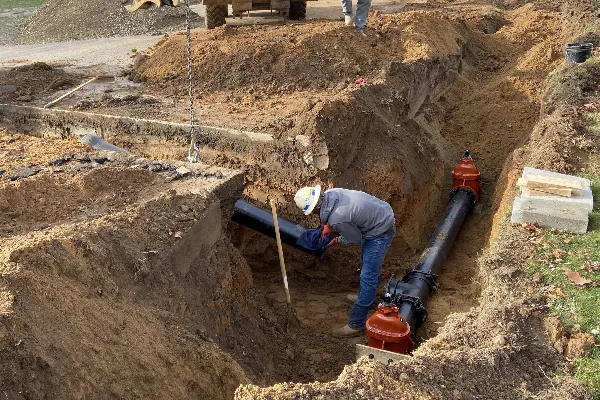
Municipal water systems: Used for drinking water, water distribution, and transmission mains across a wide range of diameters.
Wastewater systems: Suitable for pressure sewer and wastewater applications where durability and abrasion resistance are required.
Fire protection systems: Commonly used for underground fire water mains because of its strength and reliable gasketed joint systems.
Applications of Steel Pipe
Steel pipe is widely used when a project requires high strength, custom fabrication, welded connections, or specialized operating conditions. Common applications include:
Oil and gas pipelines: Carbon steel pipe is widely used for transmission and distribution systems because of its strength, weldability, and established pipeline standards.
Industrial high-pressure or high-temperature systems: Steel is commonly selected for power plants, chemical facilities, process piping, and other applications with demanding operating conditions.
Special crossings and above-ground installations: Steel pipe works well for bridge crossings, exposed pipelines, road and railway crossings, and other projects where welded joints and structural flexibility are important.
In simple terms, ductile iron pipe is often a practical choice for buried municipal water and wastewater systems, while steel pipe provides more flexibility for industrial, high-pressure, high-temperature, and custom-fabricated applications. The final selection should always be based on pressure, temperature, pipe size, corrosion conditions, installation method, and the applicable project standard.
Ductile Iron Pipe vs Steel Pipe Service Life
Both materials can provide long service when they are properly designed, manufactured, installed, and protected.
Actual service life depends on:
Corrosion environment
Pipe design
Pressure cycling
Surge
External loads
Installation quality
Joint performance
Lining
Coating
Maintenance
Ductile iron has been widely used in municipal water infrastructure, and AWWA C151 specifically covers centrifugally cast ductile-iron pipe for potable water, raw water, wastewater, and reclaimed water systems.
Steel can also provide long service when the appropriate coating, lining, inspection, and corrosion-control system is maintained.Therefore, avoid promising a fixed service life for either material without considering the project environment.

 English
 Español
 بالعربية
 Phone :
  Whatsapp :
  Email :