EN 10210 is a standard for hot-rolled structural hollow profiles developed by the European Committee for Standardization (CEN). It covers both seamless (SMLS) and welded (e.g., ERW, LSAW) processes and is suitable for load-bearing structures such as buildings, bridges, and offshore platforms. As a harmonized standard of the EU Building Products Regulation (CPR 305/2011/EU), EN 10210 steel pipes require CE certification and are one of the preferred materials for high-end structural engineering in Europe and globally. Compared with Chinese national standards (such as GB/T 8162 "Seamless Steel Tubes for Structural Purposes" and GB/T 3094 "High Carbon Chromium Bearing Steel Seamless Tubes"), EN 10210 has stricter requirements for dimensional accuracy, low-temperature toughness, and material purity, better meeting the engineering needs of large spans, high loads, and extreme environments (such as the Arctic and deep sea).
EN 10210 Seamless Structural Steel Pipe
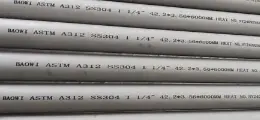
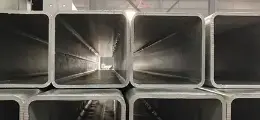
EN 10210 defines hot-finished structural hollow sections made from non-alloy and fine grain steels.EN 10210 seamless structural steel pipe refers to hot-formed, high-strength hollow sections (can be seamless or welded) used for load-bearing structures.
Components of EN 10210:
EN 10210-1 — Technical delivery conditions
EN 10210-2 — Tolerances, dimensions, and sectional properties
Applications: Steel structures, bridges, mechanical supports, lifting equipment, industrial frames, etc.
Typical steel grades: S235JRH, S275J0H, S355J2H, S420NH, S460NLH
Material System of EN 10210 Seamless Steel Pipes
EN 10210 steel pipes are made of non-alloy steel (such as S235, S275) or fine-grained steel (such as S355, S460). The meanings of the material grades are as follows:
Prefix "S": Indicates structural steel;
Number: Minimum yield strength (unit: MPa), such as S355 indicating a yield strength ≥355MPa;
Suffix: Indicates the impact toughness grade (such as J2H indicating an impact energy ≥27J at -20℃, K2H indicating an impact energy ≥40J at -20℃).
EN 10210 standard applicable size range
Diameter Typical diameters are 21.3mm, 26.9mm, 33.7mm, 42.4mm, etc.
Common wall thicknesses are 2.3mm, 2.6mm, 3.2mm, 4.0mm, etc.
The following table shows a part of the standard sizes of EN 10210 hollow round tubes:
|
Outer diameter D (mm)
|
Thickness T (mm)
|
Mass per unit length M (kg/m)
|
Cross-sectional area A (cm²)
|
Moment of inertia I (cm⁴)
|
Radius of gyration i (cm)
|
Elastic modulus Wel (cm³)
|
Plastic modulus Wpl (cm³)
|
Torsion constant It (cm⁴)
|
Torsion modulus constant Ct (cm³)
|
Surface area per meter As (m²/m)
|
Standard length per ton (m)
|
|
21.3
|
2.3
|
1.08
|
1.37
|
0.629
|
0.677
|
0.59
|
0.834
|
1.26
|
1.18
|
0.0669
|
928
|
|
21.3
|
2.6
|
1.2
|
1.53
|
0.681
|
0.668
|
0.639
|
0.915
|
1.36
|
1.28
|
0.0669
|
834
|
|
21.3
|
3.2
|
1.43
|
1.82
|
0.768
|
0.65
|
0.722
|
1.06
|
1.54
|
1.44
|
0.0669
|
700
|
|
26.9
|
2.3
|
1.4
|
1.78
|
1.36
|
0.874
|
1.01
|
1.4
|
2.71
|
2.02
|
0.0845
|
717
|
|
26.9
|
2.6
|
1.56
|
1.98
|
1.48
|
0.864
|
1.1
|
1.54
|
2.96
|
2.2
|
0.0845
|
642
|
|
26.9
|
3.2
|
1.87
|
2.38
|
1.7
|
0.846
|
1.27
|
1.81
|
3.41
|
2.53
|
0.0845
|
535
|
|
33.7
|
2.6
|
1.99
|
2.54
|
3.09
|
1.1
|
1.84
|
2.52
|
6.19
|
3.67
|
0.106
|
501
|
|
33.7
|
3.2
|
2.41
|
3.07
|
3.6
|
1.08
|
2.14
|
2.99
|
7.21
|
4.28
|
0.106
|
415
|
|
33.7
|
4
|
2.93
|
3.73
|
4.19
|
1.06
|
2.49
|
3.55
|
8.38
|
4.97
|
0.106
|
341
|
|
42.4
|
2.6
|
2.55
|
3.25
|
6.46
|
1.41
|
3.05
|
4.12
|
12.9
|
6.1
|
0.133
|
392
|
|
42.4
|
3.2
|
3.09
|
3.94
|
7.62
|
1.39
|
3.59
|
4.93
|
15.2
|
7.19
|
0.133
|
323
|
|
42.4
|
4
|
3.79
|
4.83
|
8.99
|
1.36
|
4.24
|
5.92
|
18
|
8.48
|
0.133
|
264
|
|
48.3
|
2.6
|
2.93
|
3.73
|
9.78
|
1.62
|
4.05
|
5.44
|
19.6
|
8.1
|
0.152
|
341
|
|
48.3
|
3.2
|
3.56
|
4.53
|
11.6
|
1.6
|
4.8
|
6.52
|
23.2
|
9.59
|
0.152
|
281
|
|
48.3
|
4
|
4.37
|
5.57
|
13.8
|
1.57
|
5.7
|
7.87
|
27.5
|
11.4
|
0.152
|
229
|
|
48.3
|
5
|
5.34
|
6.8
|
16.2
|
1.54
|
6.69
|
9.42
|
32.3
|
13.4
|
0.152
|
187
|
|
60.3
|
2.6
|
3.7
|
4.71
|
19.7
|
2.04
|
6.52
|
8.66
|
39.3
|
13
|
0.189
|
270
|
|
60.3
|
3.2
|
4.51
|
5.74
|
23.5
|
2.02
|
7.78
|
10.4
|
46.9
|
15.6
|
0.189
|
222
|
|
60.3
|
4
|
5.55
|
7.07
|
28.2
|
2
|
9.34
|
12.7
|
56.3
|
18.7
|
0.189
|
180
|
|
60.3
|
5
|
6.82
|
8.69
|
33.5
|
1.96
|
11.1
|
15.3
|
67
|
22.2
|
0.189
|
147
|
|
76.1
|
2.6
|
4.71
|
6
|
40.6
|
2.6
|
10.7
|
14.1
|
81.2
|
21.3
|
0.239
|
212
|
|
76.1
|
3.2
|
5.75
|
7.33
|
48.8
|
2.58
|
12.8
|
17
|
97.6
|
25.6
|
0.239
|
174
|
|
76.1
|
4
|
7.11
|
9.06
|
59.1
|
2.55
|
15.5
|
20.8
|
118
|
31
|
0.239
|
141
|
|
76.1
|
5
|
8.77
|
11.2
|
70.9
|
2.52
|
18.6
|
25.3
|
142
|
37.3
|
0.239
|
114
|
|
88.9
|
3.2
|
6.76
|
8.62
|
79.2
|
3.03
|
17.8
|
23.5
|
158
|
35.6
|
0.279
|
148
|
|
88.9
|
4
|
8.38
|
10.7
|
96.3
|
3
|
21.7
|
28.9
|
193
|
43.3
|
0.279
|
119
|
|
88.9
|
5
|
10.3
|
13.2
|
116
|
2.97
|
26.2
|
35.2
|
233
|
52.4
|
0.279
|
96.7
|
|
88.9
|
6.3
|
12.8
|
16.3
|
140
|
2.93
|
31.5
|
43.1
|
280
|
63.1
|
0.279
|
77.9
|
|
101.6
|
3.2
|
7.77
|
9.89
|
120
|
3.48
|
23.6
|
31
|
240
|
47.2
|
0.319
|
129
|
|
101.6
|
4
|
9.63
|
12.3
|
146
|
3.45
|
28.8
|
38.1
|
293
|
57.6
|
0.319
|
104
|
|
101.6
|
5
|
11.9
|
15.2
|
177
|
3.42
|
34.9
|
46.7
|
355
|
69.9
|
0.319
|
84
|
|
101.6
|
6.3
|
14.8
|
18.9
|
215
|
3.38
|
42.3
|
57.3
|
430
|
84.7
|
0.319
|
67.5
|
|
101.6
|
8
|
18.5
|
23.5
|
260
|
3.32
|
51.1
|
70.3
|
519
|
102
|
0.319
|
54.2
|
|
101.6
|
10
|
22.6
|
28.8
|
305
|
3.26
|
60.1
|
84.2
|
611
|
120
|
0.319
|
44.3
|
|
114.3
|
3.2
|
8.77
|
11.2
|
172
|
3.93
|
30.2
|
39.5
|
345
|
60.4
|
0.359
|
114
|
EN 10219 vs EN 10210
EN 10219: This standard is for cold-formed, welded steel tubes. It primarily applies to structural hollow sections made by welding thin steel plates at ambient temperatures. These tubes are usually manufactured by cold-forming steel sheet or strip, which is then welded to form the tube shape. They are widely used in building construction, bridges, and certain energy applications.
EN 10210: This standard covers hot-formed (extruded), seamless steel tubes. Tubes manufactured under this standard are formed at high temperatures, which provides them with distinct mechanical properties, including greater strength and resistance to fatigue. They are generally used for more demanding applications, including heavy structural support in critical infrastructure projects and certain green energy technologies.
FAQ
Q1: Is EN 10210 always seamless?
No. It includes both seamless and welded pipes. “Seamless” must be specified.
Q2: What is the most commonly used grade?
S355J2H for structural and heavy-duty applications.
Q3: Can EN 10210 pipe be used for pressure applications?
It’s mainly for structural use, not pressure. For pressure, use EN 10216.
Conclusion
EN 10210 seamless structural steel pipes, with their stringent dimensional tolerances, superior material properties, and comprehensive certification system, have become a benchmark product for high-end structural engineering worldwide. When Chinese companies participate in cross-border projects (such as overseas projects under the Belt and Road Initiative), they need to pay close attention to the differences between EN 10210 and Chinese national standards, and select appropriate materials (such as S355J2H) and specifications to ensure structural safety and compliance. Meanwhile, with the upgrading of China's manufacturing industry, some companies (such as Tianjin Reifen and Guangzhou Jin Metal) have begun producing "dual-standard steel pipes" (meeting both EN 10210 and GB/T 8162), providing more choices for the international market.

 English
 Español
 بالعربية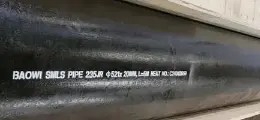
 Phone :
  Whatsapp :
  Email :


