Carbon steel square tubes are hollow steel sections with four equal sides, manufactured from carbon steel for structural, mechanical, and general fabrication applications.
They offer a practical combination of strength, rigidity, weldability, and cost efficiency, making them widely used in construction, machinery, furniture, and industrial equipment.
Carbon steel square tubing is available in different dimensions, wall thicknesses, steel grades, and manufacturing processes.
Common specifications include ASTM A500 for structural tubing and ASTM A513 for electric-resistance-welded mechanical tubing. The right selection depends on the required load capacity, dimensional accuracy, fabrication method, and service environment.
This guide covers carbon steel square tube sizes, theoretical weight calculations, common grades, manufacturing methods, mechanical properties, and purchasing considerations to help buyers select the right product.
What Is a Carbon Steel Square Tube?
A carbon steel square tube is a hollow structural or mechanical steel section with a square cross-section. It is manufactured from carbon steel, an iron-based alloy in which carbon is the principal alloying element affecting hardness, strength, and ductility.
Unlike solid square steel bars, square tubes have an empty interior. This reduces material consumption and overall weight while providing useful bending and torsional resistance.
Carbon steel square tubes are commonly manufactured through electric resistance welding (
ERW) or other processes specified by the applicable product standard. They are available in different sizes and wall thicknesses to meet structural and fabrication requirements.
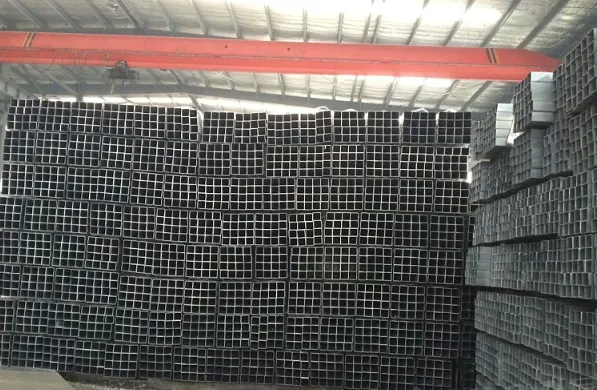
Types of Carbon Steel Square Tubes
Carbon steel square tubing can be classified by manufacturing process, forming method, and intended application. Understanding these differences helps buyers choose suitable products for their projects.
Welded Carbon Steel Square Tube
Welded square tubes are typically manufactured by forming flat steel strip or coil into a square profile and joining the longitudinal edges through electric resistance welding (ERW).
The production process generally includes:
Uncoiling and leveling the steel strip.
Forming the strip into a round or square profile.
Welding the longitudinal seam.
Sizing and shaping the tube to the required dimensions.
Cutting to specified lengths.
Inspecting dimensional accuracy and surface quality.
Welded carbon steel square tubes are widely used in construction, machinery, furniture, and general fabrication because of their manufacturing efficiency and broad size availability.
Seamless Carbon Steel Square Tube
Seamless square tubes are produced without a longitudinal welded seam. Depending on the production route, a seamless round hollow billet is formed and subsequently shaped into a square section.
The manufacturing process can involve hot forming or cold drawing and forming operations.
Seamless square tubing may be selected for applications requiring specific mechanical properties, manufacturing characteristics, or the absence of a longitudinal weld seam.
However, seamless products are not automatically stronger than welded products. Actual performance depends on the steel grade, dimensions, wall thickness, manufacturing quality, and applicable inspection requirements.
Low-Carbon steel square tubes
Features of low-carbon steel:
Low-carbon steel usually refers to carbon steel with a carbon content of less than 0.25%. Due to its low strength, low hardness and good softness, it is also called soft steel. It includes most ordinary carbon structural steels and some high-quality carbon structural steels. Most of them are used for engineering structural parts without heat treatment, and some are used for mechanical parts requiring wear resistance after heat treatment such as carburizing.
The annealed structure of low-carbon steel is ferrite and a small amount of pearlite. It has low strength and hardness, good plasticity and toughness, so it has good cold formability and can be cold formed by curling, bending, stamping and other methods. In addition, this steel also has good weldability.
Characteristics of MS square tube:
1. Material: MS square tube is made of mild steel, a type of mild steel known for its durability and strength.
2. Shape: As the name suggests, MS square tube has a square cross-section. They are available in various sizes and thicknesses to meet different requirements.
3. Hollow structure: MS square tube is hollow inside, making it light in weight while maintaining structural strength. This design helps reduce the overall weight of the structure.
4. Low cost: Compared with other steel materials, low carbon steel is relatively cheap, and its lower carbon content can also reduce environmental pollution.
5. Weldable: Mild steel is easy to weld, allowing the use of MS square tubes to manufacture various structures and frames.
6. Mechanical properties: It has good plasticity and toughness, can be manufactured into various shapes, and has high strength and hardness.
Carbon Steel Square Tube Sizes
|
SIZE
|
WEIGHT
|
WEIGHT
|
|
O.D. & WALL
|
FOOT
|
20' LENGTH
|
|
1/2 x 1/2 x .060 +
|
0.362
|
7.24
|
|
|
|
5/8 x 5/8 x .048 +
|
0.367
|
7.34
|
|
5/8 x 5/8 x .060 +
|
0.442
|
8.84
|
|
|
|
3/4 x 3/4 x .048 +
|
0.457
|
9.14
|
|
3/4 x 3/4 x .060 +
|
0.552
|
11.04
|
|
|
|
7/8 x 7/8 x .060 +
|
0.642
|
12.84
|
|
|
|
1 x 1 x .060 +
|
0.763
|
15.26
|
|
1 x 1 x .090 +
|
1.115
|
22.3
|
|
1 x 1 x .120 +
|
1.443
|
28.86
|
|
|
|
1-1/4 x 1-1/4 x .060 +
|
0.981
|
19.62
|
|
1-1/4 x 1-1/4 x .120 +
|
1.844
|
36.88
|
|
|
|
1-1/2 x 1-1/2 x .060 +
|
1.163
|
23.26
|
|
1-1/2 x 1-1/2 x .083 +
|
1.589
|
31.78
|
|
1-1/2 x 1-1/2 x .120 +
|
2.249
|
44.98
|
|
1-1/2 x 1-1/2 x .188 «
|
3.231
|
64.62
|
|
|
|
1-3/4 x 1-3/4 x .083 +
|
1.864
|
37.28
|
|
|
|
2 x 2 x .060 +
|
1.564
|
31.28
|
|
2 x 2 x .083 +
|
2.143
|
42.86
|
|
2 x 2 x .120 «
|
3.05
|
61
|
|
2 x 2 x .188 «
|
4.32
|
86.4
|
|
2 x 2 x .250 «
|
5.41
|
108.2
|
|
|
|
2-1/2 x 2-1/2 x .120 «
|
3.76
|
75.2
|
|
2-1/2 x 2-1/2 x .188 «
|
5.59
|
111.8
|
|
2-1/2 x 2-1/2 x .250 «
|
7.11
|
142.2
|
|
|
|
3 x 3 x .120 «
|
4.58
|
91.6
|
|
3 x 3 x .188 «
|
6.87
|
137.4
|
|
3 x 3 x .250 «
|
8.81
|
176.2
|
|
|
|
3-1/2 x 3-1/2 x .188 «
|
8.15
|
163
|
|
3-1/2 x 3-1/2 x .250 «
|
10.51
|
210.2
|
|
|
|
4 x 4 x .120 «
|
6.21
|
124.2
|
|
4 x 4 x .188 «
|
9.42
|
188.4
|
|
4 x 4 x .250
|
12.21
|
244.2
|
|
4 x 4 x .375 «
|
17.3
|
346
|
|
|
|
5 x 5 x .250 «
|
15.62
|
312.4
|
|
|
|
6 x 6 x .250 «
|
19.02
|
380.4
|
|
SPECIFICATIONS
|
|
Ornamental + ASTM-A513 / 500 GR. A
|
|
Structural « ASTM - A500 GR. B
|
Cs Square Tubing Benefits
Increased yield and tensile strength
Uniform size and shape
Good strength-to-weight ratio
Numerous size options
Extremely cost-effective
Excellent compression and support characteristics
Carbon Steel Square Tube Supplier/Carbon Steel Square Tube Manufacturer - BAOWI STEEL MANUFACTURING CO.,LTD
Baowi Steel specializes in a wide range of carbon steel square tubes, including square and rectangular tubes, galvanized square tubes, and large square tubes. With an extensive selection of specifications and sizes, we’re equipped to meet diverse industry needs. Whether you’re a new or returning customer, we welcome your inquiries and look forward to assisting you in finding the perfect solution for your project. Have questions? Our dedicated online customer service team is here to provide prompt and professional assistance. Partner with Baowi Steel for top-quality products and unmatched service!
Carbon Steel A160 Square Tubes Services
High precision laser cutting services
Saw cutting services
Galvanizing services
Hole punching
Tube and Pipe Bending services
A500B FR
A500B HSS
A500B REDKOTE
A500C HSS
A1085 HSS
Finish: Cold Formed
Condition: Welded or Seamless
Applications: general machinery, structural use, furniture, fabrication
Specifications:
ASTM A500/513 AISI 1010/20 Grade B
Available in full bars or cut to size lengths, production cutting available
Color Code: BLUE
Manufacturer of CS A333 grade 6 Square Tube, Refer A36 Hot Rolled
Carbon Steel Square Tubing Sizes
Common Grades and Standards for Carbon Steel Square Tubes
Carbon steel square tubes are manufactured to different standards depending on their intended use. ASTM standards are commonly specified in North American structural and mechanical tubing markets.
The most important distinction is between structural tubing and mechanical tubing.
|
Standard
|
Product Description
|
Typical Applications
|
|
ASTM A500
|
Cold-formed welded and seamless carbon steel structural tubing
|
Buildings, bridges, and structural frames
|
|
ASTM A513
|
Electric-resistance-welded carbon and alloy steel mechanical tubing
|
Machinery, automotive components, and fabrication
|
|
ASTM A1085
|
Cold-formed welded carbon steel structural tubing
|
Structural engineering and construction
|
ASTM A500 Square Tube
ASTM A500 is one of the most commonly specified standards for carbon steel structural square and rectangular tubing.
It covers cold-formed welded and seamless carbon steel tubing used in buildings, bridges, and other general structural applications.
Common grades include:
Grade A
Grade B
Grade C
Grade D, where applicable under the relevant specification
Grade B and Grade C are frequently encountered in structural tubing procurement. Grade C is often selected where its specified mechanical properties meet the project requirements.
Buyers should confirm the required grade, dimensions, wall thickness, and applicable edition of ASTM A500 before ordering.
ASTM A513 Square Tube
ASTM A513 covers electric-resistance-welded carbon and alloy steel mechanical tubing produced from hot-rolled or cold-rolled steel.
It includes round, square, rectangular, and special-shaped tubing.
ASTM A513 is commonly used for applications requiring controlled dimensions, suitable surface conditions, and mechanical tubing characteristics.
It is particularly relevant to machinery, automotive components, furniture, and general metal fabrication.
ASTM A1085 Square Tube
ASTM A1085 is another structural tubing specification used in applications requiring defined mechanical and dimensional requirements.
It is commonly considered for structural applications where its specified properties and manufacturing requirements are appropriate.
The applicable standard should always be confirmed against the project's engineering drawings and purchasing specifications.
Read more related articles
Rectangular Tube Thickness Chart: Standard Wall Thickness Guide
Rectangular Tube Weight Chart
Square Tube Strength Calculation and Notes
Square Tube Size Chart: Dimensions and Weight

 English
 Español
 بالعربية
 Phone :
 Whatsapp :
 Email :