ASTM A182 flanges are widely used in high-pressure and high-temperature piping systems across oil and gas, petrochemical plants, power generation, offshore platforms, and refinery units. These flanges do not have a single fixed pressure value. Instead, their performance depends on a combination of flange class (150–2500), material grade (such as F304, F316, F5, F11, F22, and F51), and operating temperature conditions.
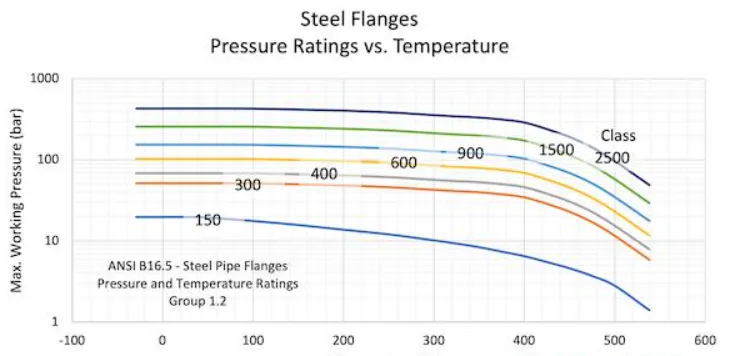
In engineering practice, flange pressure capacity always decreases as temperature increases because material strength reduces under thermal stress. Therefore, engineers must always use ASME B16.5 or ASME B16.47 pressure-temperature rating tables to determine the correct flange class before system design approval.
This article explains how ASTM A182 flange ratings work, how ASME standards define pressure limits, how temperature affects performance, and how engineers select the correct flange class in real-world piping systems. It also includes comparison tables, selection steps, and practical engineering insights to support safe and cost-effective design decisions.
1. What Is ASTM A182 Flange?
ASTM A182 is a material specification that covers forged or rolled alloy steel and stainless steel flanges, fittings, valves, and similar components used in high-temperature and high-pressure service.These flanges are designed for critical industrial environments where mechanical strength, corrosion resistance, and temperature stability are required simultaneously.
Common ASTM A182 grades include:
F304 / F304L → general stainless steel service
F316 / F316L → chloride corrosion resistance
F321 → stabilized high-temperature stainless steel
F5 → Cr-Mo alloy steel for elevated temperature service
F11 / F22 → high-pressure steam and refinery systems
F51 (Duplex) → high strength + corrosion resistance
Each grade behaves differently under pressure and temperature, which directly affects flange rating selection.
2. What Is Flange Pressure Rating?
A flange pressure rating (also called flange class or pressure class) defines the maximum allowable working pressure (MAWP) that a flange can safely handle at a given temperature.
In simple engineering terms:
Higher class = higher pressure capacity
Lower class = lower pressure capacity
Higher temperature = lower allowable pressure
For example:
Class 150 low-pressure utility systems
Class 300 general industrial pipelines
Class 600 high-pressure steam systems
Class 900–2500 pressure and offshore applications
Flange ratings are standardized to ensure global compatibility and safety in piping design.
3.Flange Pressure Rating Table for ASTM A182 Gr F304/304L
Below is a table showing the maximum pressure (in psi) for flanges made from ASTM A182 Gr F304/304L at increasing temperatures for various pressure classes (150, 300, 400, 600, 900, 1500, 2500):
|
Temperature (F)
|
Class 150
|
Class 300
|
Class 400
|
Class 600
|
Class 900
|
Class 1500
|
Class 2500
|
|
100
|
275
|
720
|
960
|
1440
|
2160
|
3600
|
6000
|
|
200
|
230
|
600
|
800
|
1200
|
1800
|
3000
|
5000
|
|
300
|
205
|
560
|
745
|
1120
|
1680
|
2800
|
4665
|
|
400
|
190
|
515
|
685
|
1030
|
1545
|
2570
|
4280
|
|
500
|
170
|
480
|
635
|
955
|
1430
|
2390
|
3980
|
|
600
|
140
|
450
|
600
|
900
|
1350
|
2250
|
3750
|
|
700
|
115
|
430
|
570
|
860
|
1290
|
2150
|
3580
|
|
800
|
95
|
410
|
545
|
815
|
1220
|
2030
|
3390
|
|
900
|
75
|
375
|
500
|
750
|
1130
|
1880
|
3145
|
|
1000
|
50
|
350
|
465
|
700
|
1045
|
1740
|
2900
|
Flange Pressure Rating Table for ASTM A182 Gr F316/316L
Below is a table showing the maximum pressure (in psi) for flanges made from ASTM A182 Gr F316/316L at increasing temperatures for various pressure classes (150, 300, 400, 600, 900, 1500, 2500):
|
Temperature (F)
|
Class 150
|
Class 300
|
Class 400
|
Class 600
|
Class 900
|
Class 1500
|
Class 2500
|
|
100
|
275
|
720
|
960
|
1440
|
2160
|
3600
|
6000
|
|
200
|
230
|
600
|
800
|
1200
|
1800
|
3000
|
5000
|
|
300
|
215
|
560
|
745
|
1120
|
1680
|
2800
|
4665
|
|
400
|
200
|
515
|
685
|
1030
|
1545
|
2570
|
4280
|
|
500
|
185
|
480
|
635
|
955
|
1430
|
2390
|
3980
|
|
600
|
165
|
450
|
600
|
900
|
1350
|
2250
|
3750
|
|
700
|
140
|
430
|
570
|
860
|
1290
|
2150
|
3580
|
|
800
|
125
|
410
|
545
|
815
|
1220
|
2030
|
3390
|
|
900
|
110
|
375
|
500
|
750
|
1130
|
1880
|
3145
|
|
1000
|
95
|
350
|
465
|
700
|
1045
|
1740
|
2900
|
Flange Pressure Rating Table for ASTM A182 Gr F51 (Duplex Stainless Steel)
Below is a table showing the maximum pressure (in psi) for flanges made from ASTM A182 Gr F51 (Duplex Stainless Steel) at increasing temperatures for various pressure classes (150, 300, 400, 600, 900, 1500, 2500):
|
Temperature (F)
|
Class 150
|
Class 300
|
Class 400
|
Class 600
|
Class 900
|
Class 1500
|
Class 2500
|
|
100
|
290
|
750
|
1000
|
1500
|
2250
|
3750
|
6250
|
|
200
|
260
|
680
|
905
|
1360
|
2040
|
3400
|
5665
|
|
300
|
230
|
655
|
870
|
1315
|
1975
|
3290
|
5480
|
|
400
|
210
|
635
|
840
|
1265
|
1900
|
3165
|
5275
|
|
500
|
195
|
600
|
800
|
1200
|
1800
|
3000
|
5000
|
|
600
|
170
|
570
|
760
|
1140
|
1710
|
2850
|
4750
|
|
700
|
140
|
550
|
735
|
1100
|
1650
|
2750
|
4585
|
|
800
|
115
|
525
|
700
|
1050
|
1580
|
2630
|
4380
|
|
900
|
90
|
450
|
600
|
900
|
1350
|
2250
|
3750
|
|
1000
|
65
|
410
|
545
|
820
|
1230
|
2050
|
3420
|
4.Types of Flange Ratings
Flanges are essential components in piping systems because they connect and disconnect pipes while maintaining pressure containment and system integrity. To ensure safety and interchangeability, flange ratings are standardized by organizations such as ANSI and ASME, which define the maximum allowable pressure a flange can withstand at specific temperatures.
ANSI/ASME B16.5:
This standard applies to flanges and flanged fittings from ½ inch to 24 inches (DN15–DN600). It defines pressure classes from 150 to 2500, where each class represents the flange’s allowable pressure capacity at different temperatures.
ANSI/ASME B16.47:
This standard is used for larger diameter flanges from 26 inches to 60 inches (DN650–DN1500). It covers pressure classes from 75 to 900, following the same pressure–temperature rating principle as B16.5.
ASME B16.5/B16.47 is a standard for flange dimensions and pressure ratings, specifying maximum pressure limits for various classes (ranging from 150 to 2500) at different temperatures; conversely, ASTM A182 is a material standard that defines the chemical composition and mechanical properties of forged steels such as F304, F316, and F5. These standards must be used in conjunction: the former determines the flange's "class and pressure-temperature rating curve," while the latter dictates the "material of construction." Ultimately, the flange's safe pressure-bearing capacity is determined by the combination of ASME pressure-temperature ratings and ASTM A182 material properties.
5.Factors Affecting Pressure-Temperature Ratings
5.1. Temperature Effect
As temperature increases, steel strength decreases, which reduces allowable pressure.
5.2. Material Grade (ASTM A182 F5)
F5 is a chromium-molybdenum alloy steel designed for high-temperature service.
5.3. Flange Class
Higher class flanges can withstand significantly higher pressure levels.
5.4. Design Standard
ASME B16.5 and B16.47 define different limits depending on flange size and configuration.
6.Engineering Applications of ASTM A182 F5 Flanges
ASTM A182 F5 flanges are widely used in:
Power generation steam pipelines
High-temperature refinery systems
Petrochemical cracking units
Boiler and heat exchanger systems
Pressure vessels and process piping
Conclusion
ASTM A182 flanges are not defined by a single fixed pressure value. Their real pressure capacity is determined by the combination of ASME flange class, material grade, and operating temperature. As temperature increases, allowable pressure decreases due to the reduction in material strength, which makes proper selection critical for safe piping design.
In practical engineering applications, ASME B16.5 and B16.47 provide the pressure–temperature rating system, while ASTM A182 defines the material properties such as corrosion resistance, mechanical strength, and high-temperature performance. Only when both standards are used together can engineers accurately determine a safe and reliable flange selection.
Therefore, correct flange class selection is not only a design requirement but also a key factor in ensuring system safety, long service life, and cost efficiency in high-pressure and high-temperature industrial environments.

 English
 Español
 بالعربية




 Phone :
  Whatsapp :
  Email :