Black steel pipe and black iron pipe are often confused, but they are not always the same product.In general, seamless black steel pipe refers to an uncoated carbon steel pipe manufactured to industrial standards such as ASTM A53, ASTM A106, or API 5L, while black iron pipe is a traditional plumbing term mainly used for residential gas and low-pressure piping systems.Although both have a black, uncoated surface, they differ in manufacturing method, strength, pressure rating, and application range. Understanding these differences is important for selecting the correct pipe for industrial or residential use.
The short answer: In modern industry, black iron pipe and black steel pipe are closely related products, and the terms are sometimes used interchangeably. However, black steel pipe usually refers to ungalvanized carbon steel pipe manufactured to standards such as ASTM A53, ASTM A106, or API 5L, while black iron pipe often refers to threaded black pipe commonly used in residential gas systems.
Quick Comparison: Seamless Black Steel Pipe vs. Black Iron Pipe
|
Feature
|
Seamless Black Steel Pipe
|
Black Iron Pipe
|
|
Material
|
Carbon steel
|
Mild carbon steel (commonly referred to as black iron)
|
|
Manufacturing
|
Seamless hot-rolled or cold-drawn
|
Usually welded or threaded black steel pipe
|
|
Weld Seam
|
No
|
Usually has a weld seam (depending on product type)
|
|
Surface Finish
|
Black oxide scale, uncoated
|
Black oxide finish, uncoated
|
|
Pressure Capacity
|
High
|
Medium to low
|
|
Mechanical Strength
|
Excellent
|
Good
|
|
Corrosion Resistance
|
Moderate (requires coating for outdoor service)
|
Moderate
|
|
Typical Standards
|
ASTM A53, ASTM A106, API 5L
|
ASTM A53
|
|
Main Applications
|
Oil & gas, petrochemical, power plants, boilers, fire protection
|
Residential natural gas, propane, compressed air, general plumbing
|
|
Cost
|
Higher
|
Lower
|
Are Seamless Black Steel Pipe and Black Iron Pipe the Same?
Black steel pipe and black iron pipe are often used interchangeably in the market, especially in residential gas and plumbing applications. However, they are not always the same in industrial standards and engineering use.In general, black steel pipe refers to carbon steel pipe with a black oxide surface that can be either seamless or welded and is commonly manufactured to standards such as ASTM A53, ASTM A106, or API 5L.
Seamless black steel pipe is produced without a weld seam, giving it higher strength and making it suitable for high-pressure and high-temperature systems.By comparison, black iron pipe is a common industry term used mainly for welded carbon steel pipe supplied with threaded ends for residential gas systems, HVAC lines, and other low-pressure applications.
Although both look similar, they differ mainly in manufacturing method, mechanical strength, and pressure rating, which determines their suitable applications.
What Is Seamless Black Steel Pipe?
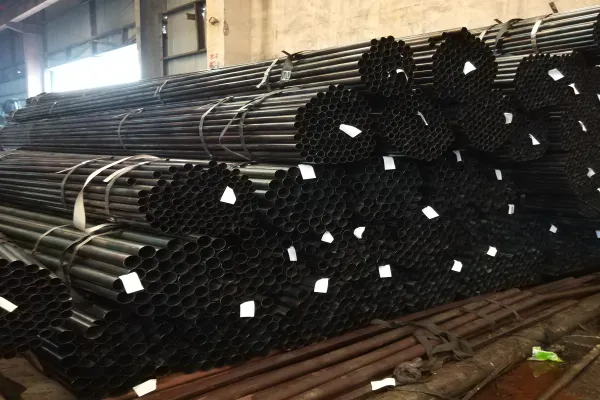
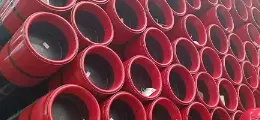
Seamless black steel pipe is an uncoated carbon steel pipe manufactured without any welded joints. It is produced by piercing a solid round steel billet and then rolling or drawing it into the required diameter and wall thickness.Since no welding is involved, the pipe has a continuous and uniform structure throughout its entire length. This manufacturing method provides several important advantages:
Higher tensile and yield strength
Better pressure-bearing capability
Improved resistance to cracking and leakage
Excellent performance under high temperatures
Longer service life in demanding industrial environments
Unlike galvanized steel pipe, seamless black steel pipe does not have a zinc coating. Its characteristic black appearance comes from the iron oxide layer formed during the hot rolling process.Typical manufacturing standards include:
ASTM A53 Grade B
ASTM A106 Grade B
API 5L Grade B
ASME SA106
What Is Black Iron Pipe?
Black iron pipe is typically low-carbon steel pipe with a black oxide finish, most commonly supplied with threaded ends for easy installation.In North America, plumbers frequently use the term black iron pipe for threaded black pipe used in natural gas and propane systems. Despite the name, it is not pure iron and should not be confused with cast iron pipe.Historically, black iron pipe was widely installed in homes built before the widespread adoption of copper, CPVC, and PEX systems.
Are Black Iron Pipe and Black Steel Pipe the Same?
This is the question most buyers ask.Technically, they are very similar. Both are carbon-steel products with a black oxide surface.
In practice, the distinction is usually based on application:
Black iron pipe :threaded pipe for residential gas distribution.
Black steel pipe :seamless or welded carbon steel pipe for industrial service.
That is why many suppliers and contractors use the two terms interchangeably, while industrial specifications usually prefer the term black steel pipe.
Key Differences Between Seamless Black Steel Pipe and Black Iron Pipe
To better understand how these two pipes perform in real applications, the differences can be analyzed from eight critical engineering and commercial aspects.
1. Material Composition
Both products are made from carbon steel, but industrial black steel pipe is generally produced to stricter mechanical and chemical requirements under ASTM or API standards.For example, ASTM A53 Grade B and API 5L Grade B specify controlled carbon, manganese, phosphorus, and sulfur limits to ensure consistent performance.
2. Manufacturing Process
This is one of the biggest differences.
Black steel pipe may be:
Seamless – produced from a solid billet.
ERW welded – produced from steel strip and welded.
Black iron pipe is commonly supplied as threaded pipe sections intended for mechanical joining rather than heavy industrial welding.
3. Mechanical Strength
Because of its seamless structure, seamless black steel pipe offers:
Higher tensile strength
Better resistance to internal pressure
Improved fatigue resistance
Black iron pipe, while strong enough for residential use, has lower mechanical strength compared to seamless pipe.
4. Pressure Rating
Pressure capacity depends on pipe schedule (SCH 40, SCH 80, SCH 160), diameter, wall thickness, material grade, and operating temperature. As a general rule:
Seamless black steel pipe is preferred for higher-pressure applications.
Threaded black iron pipe is commonly used for low- to medium-pressure gas systems.
Black steel pipe is available in different schedules, such as:
SCH 40
SCH 80
SCH 160
A thicker wall generally provides higher pressure resistance and better durability.
For example:
|
Pipe Type
|
Typical Application
|
|
SCH 40 black steel pipe
|
General industrial piping, mechanical systems
|
|
SCH 80 black steel pipe
|
Higher pressure applications
|
|
ASTM A106 seamless pipe
|
High-temperature and pressure service
|
|
API 5L pipe
|
Oil and gas transmission
|
Black iron pipe is commonly used for low- to medium-pressure gas distribution systems where threaded connections are acceptable.
For industrial pressure piping, engineers normally select black steel pipe based on applicable standards, design pressure, and operating conditions rather than appearance.
5. Corrosion Resistance
Neither black steel pipe nor black iron pipe has a zinc coating. Both rely on a thin iron oxide layer formed during manufacturing rather than a protective galvanized finish.
As a result, both materials will eventually rust when exposed to moisture or corrosive environments. However, corrosion performance depends more on the service environment, wall thickness, and maintenance than on the product name.
6. Cost Difference
Black iron pipe usually has a lower initial purchase cost because it is commonly supplied in standard threaded lengths for residential applications.
Seamless black steel pipe generally costs more due to:
More complex manufacturing
Higher mechanical properties
Compliance with ASTM and API standards
Better suitability for demanding industrial environments
Although the upfront investment is higher, black steel pipe often reduces long-term maintenance and replacement costs in industrial projects.
7. Installation and Maintenance
Black iron pipe is widely used in residential systems because it is easy to cut and thread, uses standard threaded fittings, and requires minimal installation equipment.Pressure rating is not determined by whether a pipe is called “black steel” or “black iron.”
Seamless black steel pipe is more commonly installed in industrial applications using welding, flanges, or industrial connectors, and it provides stronger joints and better performance under high pressure and temperature conditions.
8. Application Scope
Seamless Black Steel Pipe Applications
Oil and gas transmission
Petrochemical plants
Boiler and heat exchange systems
Fire protection systems
High-pressure industrial piping
Mechanical and structural applications
Black Iron Pipe Applications
Residential natural gas lines
Propane distribution systems
HVAC and compressed air lines
Low-pressure fire sprinkler systems
Indoor plumbing (limited modern use)
Applicable Standards for Black Steel Pipe
Industrial black steel pipe is manufactured according to internationally recognized standards, including:
|
Standard
|
Description
|
|
ASTM A53
|
Welded and seamless black steel pipe for mechanical and pressure applications
|
|
ASTM A106
|
Seamless carbon steel pipe for high-temperature service
|
|
API 5L
|
Line pipe for oil and natural gas transportation
|
|
ASME B36.10M
|
Steel pipe dimensions and schedules
|
|
ASTM A795
|
Steel pipe for fire protection systems
|
Black Steel Pipe vs Black Iron Pipe: Which One Should You Choose?
The right choice depends on your application, pressure requirements, and industry standards. Black steel pipe is preferred for high-pressure systems, industrial piping, oil & gas, fire protection, and structural applications where strength and durability are critical.
Black iron pipe is commonly used for residential gas lines, propane systems, and low- to medium-pressure applications because of its easy threaded installation and lower cost. For industrial projects, seamless black steel pipe is usually the better choice due to its higher strength and specification compliance.
FAQ
1. Is black iron pipe actually made of iron?
No. It is made of carbon steel, not pure iron. The term is historical.
2. Can black steel pipe rust?
Yes. Without coating, both black steel and black iron pipes will eventually corrode.
3. Which is stronger, seamless or black iron pipe?
Seamless black steel pipe can be advantageous in applications requiring reliable pressure and temperature performance because it has no longitudinal weld seam. However, actual strength and pressure capacity depend on the pipe grade, wall thickness, diameter, manufacturing standard, and operating conditions.
4. Can black iron pipe be used for water?
It is not recommended for potable water because it corrodes and may contaminate flow.
5. Is seamless pipe better for gas lines?
For industrial gas systems, yes. For residential gas, black iron pipe is usually sufficient.
6. What standard is black steel pipe made to?
Common standards include ASTM A53, ASTM A106, and API 5L.

 English
 Español
 بالعربية
 Phone :
  Whatsapp :
  Email :


