Schedule 20 pipe is a relatively light-wall pipe classification used in selected low-pressure and moderate-service piping applications. The term Schedule 20 describes pipe wall thickness, not the chemical composition or grade of the steel. Depending on the application, Schedule 20 pipe can be supplied in carbon steel, stainless steel, or alloy steel materials.
Common material specifications associated with Schedule 20 piping include
ASTM A53,
ASTM A106, API 5L, 304/304L, 316/316L, 321 stainless steel, and ASTM A335 P11, P22, and P91 alloy steel.
However, material selection should not be based on the schedule number alone. Temperature, pressure, corrosion resistance, fluid characteristics, welding requirements, mechanical properties, and applicable piping codes all need to be considered.
Schedule 20 Pipe Common Materials
The main material groups used for Schedule 20 pipe can be divided into three categories:
|
Material
|
Common Grades / Specifications
|
Typical Advantage
|
Typical Applications
|
|
Carbon steel
|
ASTM A53 Gr. B, ASTM A106 Gr. B, API 5L Gr. B/X42/X52
|
Cost-effective and weldable
|
Water, air, oil, gas and general piping
|
|
Stainless steel
|
304, 304L, 316, 316L, 321
|
Corrosion resistance and cleanliness
|
Chemical, food, pharmaceutical and process piping
|
|
Alloy steel
|
ASTM A335 P11, P22, P91
|
High-temperature and high-strength performance
|
Power generation and high-temperature process systems
|
The most suitable material depends on the actual operating conditions rather than simply the desired Schedule 20 wall thickness.
Schedule 20 Carbon Steel Pipe
Carbon steel is one of the most widely used material groups for general industrial piping.
Common specifications include ASTM A53, ASTM A106, and API 5L, although these standards serve different purposes and should not be treated as interchangeable.
ASTM A53 Schedule 20 Pipe
ASTM A53 covers steel pipe commonly used for mechanical and pressure applications as well as general steam, water, gas, and air service.Grade B is widely specified for industrial piping because of its combination of strength, weldability, availability, and cost.
Schedule 20 A53 pipe may be considered where the design conditions permit a relatively light wall. The actual suitability must be verified against the applicable pressure-temperature requirements.
ASTM A106 Schedule 20 Pip
ASTM A106 is a specification for seamless carbon steel pipe for high-temperature service.
Grade B is a commonly specified grade. Compared with general-purpose carbon steel pipe, A106 is particularly relevant to piping systems where elevated temperature service is an important design consideration.
A Note About Stainless Steel Schedule Designations
A common mistake is to assume that a Schedule 20 designation always has exactly the same dimensional meaning regardless of material.
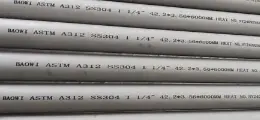
ASME B36.19M covers dimensions for welded and seamless wrought stainless steel pipe and uses “S” schedule designations to distinguish its stainless-steel dimensional system from ASME B36.10M. ASME also notes that some stainless-steel pipe thicknesses are based on dimensions from B36.10M and are commercially available.
Therefore, when purchasing Schedule 20 stainless steel pipe, the purchaser should specify the applicable dimensional standard rather than relying on the schedule number alone.
Schedule 20 Alloy Steel Pipe
Alloy steel is used when carbon steel does not provide sufficient performance for the service conditions.
For high-temperature applications, common alloy steel pipe specifications include ASTM A335 P11, P22, and P91.
ASTM A335 covers seamless ferritic alloy-steel pipe intended for high-temperature service. The specification includes requirements related to chemical composition, mechanical properties, testing, and examination.
ASTM A335 P11 Schedule 20 Pipe
P11 is a chromium-molybdenum alloy steel grade used for elevated-temperature service.
Its alloying elements improve high-temperature strength and resistance to degradation compared with ordinary carbon steel.
Typical applications include:
Steam piping
Power generation
Refinery piping
High-temperature process systems
ASTM A335 P22 Schedule 20 Pipe
P22 contains higher chromium and molybdenum levels than P11.
It is commonly associated with high-temperature and high-pressure applications in:
Power plants
Boilers
Steam systems
Petrochemical plants
Refining equipment
P22 can provide improved high-temperature performance, but welding, heat treatment, inspection, and fabrication requirements need to be carefully controlled.
ASTM A335 P91 Schedule 20 Pipe
P91 is a higher-alloy ferritic/martensitic steel developed for demanding high-temperature applications.
It is used in applications such as:
Superheater and reheater systems
High-temperature steam piping
Power generation
Boiler systems
ASTM A335 identifies P91 as one of its ferritic alloy-steel grades and specifies chemical and mechanical requirements for the material.
Because P91 is a high-performance material, fabrication and welding procedures are particularly important. The material should not be selected simply because it offers higher strength; the complete design, welding procedure, heat treatment, inspection, and service requirements must be evaluated.
How to Select the Right Schedule 20 Pipe Material
Choosing the material should start with the service conditions rather than the pipe schedule.
1. Check Operating Temperature
Temperature can significantly affect allowable stress and material performance.
For normal-temperature utility service, carbon steel may be sufficient. For sustained elevated-temperature service, an alloy steel specification such as ASTM A335 may be more appropriate.
2. Check Operating Pressure
Schedule 20 is a relatively light wall and should not automatically be considered suitable for high-pressure service.
Pressure capability depends on:
Outside diameter
Wall thickness
Material allowable stress
Operating temperature
Design code
Corrosion allowance
Joint efficiency where applicable
A thicker schedule is not necessarily the only solution, but the pipe wall must satisfy the design calculation.
3. Evaluate Corrosion
Carbon steel can be economical when the fluid and environment are not highly corrosive.
Stainless steel may be a better option when corrosion resistance is a major design requirement. The specific grade should be matched to the chemical environment rather than choosing stainless steel as a generic category.
4. Consider Fluid Cleanliness
For food, pharmaceutical, and certain chemical applications, stainless steel may be preferred because of its corrosion resistance, cleanability, and surface characteristics.
5. Consider Welding and Fabrication
Material selection affects welding procedures, preheating, post-weld heat treatment, filler metal selection, and inspection requirements.This is particularly important for alloy steels such as P91.
6. Confirm the Applicable Standard
A complete purchasing specification should identify both the material standard and the dimensional standard.
For example:
NPS 4 Schedule 20 ASTM A106 Grade B seamless pipe
is much more specific than simply ordering:
4-inch Schedule 20 carbon steel pipe
The same principle applies to stainless steel and alloy steel pipe.

 English
 Español
 بالعربية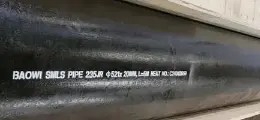

 Phone :
  Whatsapp :
  Email :


