The inside diameter of
ductile iron pipe (DI pipe)determines the available flow area and is an important dimension for hydraulic calculations, flow velocity, pressure loss, and connection design. However, the actual inside diameter is not always identical to the nominal pipe size.
For ductile iron pipe manufactured to
AWWA C150/A21.51, the inside diameter depends primarily on the outside diameter, pipe wall thickness, pressure or thickness class, and the type and thickness of internal lining. Published AWWA C151 dimensional data show that different wall classes can produce different inside diameters for the same nominal pipe size.
This ductile iron pipe inside diameter chart provides commonly referenced dimensions in inches and millimeters and explains how to calculate ID when a specific pipe class or lining is required.
Ductile Iron Pipe Inside Diameter Chart
The following table uses representative dimensions for ductile iron pipe based on AWWA C151/A21.51 dimensional data. The ID values are calculated from the listed outside diameter and wall thickness and are intended for dimensional reference rather than as a substitute for the manufacturer's certified dimensional data.
|
Size
|
Class
|
Nominal Thickness (in)
|
UNL (in)
|
CL (in)
|
DCL (in)
|
|
3"
|
350
|
0.25
|
3.46
|
3.34
|
3.21
|
|
3"
|
51
|
0.25
|
3.46
|
3.34
|
3.21
|
|
3"
|
52
|
0.28
|
3.4
|
3.28
|
3.15
|
|
3"
|
53
|
0.31
|
3.34
|
3.22
|
3.09
|
|
3"
|
54
|
0.34
|
3.28
|
3.16
|
3.03
|
|
3"
|
55
|
0.37
|
3.22
|
3.1
|
2.97
|
|
3"
|
56
|
0.4
|
3.16
|
3.04
|
2.91
|
|
4"
|
350
|
0.25
|
4.3
|
4.18
|
4.05
|
|
4"
|
51
|
0.26
|
4.28
|
4.16
|
4.03
|
|
4"
|
52
|
0.29
|
4.22
|
4.1
|
3.97
|
|
4"
|
53
|
0.32
|
4.16
|
4.04
|
3.91
|
|
4"
|
54
|
0.35
|
4.1
|
3.98
|
3.85
|
|
4"
|
55
|
0.38
|
4.04
|
3.92
|
3.79
|
|
4"
|
56
|
0.41
|
3.98
|
3.86
|
3.73
|
|
6"
|
350
|
0.25
|
6.4
|
6.28
|
6.15
|
|
6"
|
50
|
0.25
|
6.4
|
6.28
|
6.15
|
|
6"
|
51
|
0.28
|
6.34
|
6.22
|
6.09
|
|
6"
|
52
|
0.31
|
6.28
|
6.16
|
6.03
|
|
6"
|
53
|
0.34
|
6.22
|
6.1
|
5.97
|
|
6"
|
54
|
0.37
|
6.16
|
6.04
|
5.91
|
|
6"
|
55
|
0.4
|
6.1
|
5.98
|
5.85
|
|
6"
|
56
|
0.43
|
6.04
|
5.92
|
5.79
|
|
8"
|
350
|
0.25
|
8.55
|
8.43
|
8.3
|
|
8"
|
50
|
0.27
|
8.51
|
8.39
|
8.26
|
|
8"
|
51
|
0.3
|
8.45
|
8.33
|
8.2
|
|
8"
|
52
|
0.33
|
8.39
|
8.27
|
8.14
|
|
8"
|
53
|
0.36
|
8.33
|
8.21
|
8.08
|
|
8"
|
54
|
0.39
|
8.27
|
8.15
|
8.02
|
|
8"
|
55
|
0.42
|
8.21
|
8.09
|
7.96
|
|
8"
|
56
|
0.45
|
8.15
|
8.03
|
7.9
|
|
10"
|
350
|
0.26
|
10.58
|
10.46
|
10.33
|
|
10"
|
50
|
0.29
|
10.52
|
10.4
|
10.27
|
|
10"
|
51
|
0.32
|
10.46
|
10.34
|
10.21
|
|
10"
|
52
|
0.35
|
10.4
|
10.28
|
10.15
|
|
10"
|
53
|
0.38
|
10.34
|
10.22
|
10.09
|
|
10"
|
54
|
0.41
|
10.28
|
10.16
|
10.03
|
|
10"
|
55
|
0.44
|
10.22
|
10.1
|
9.97
|
|
10"
|
56
|
0.47
|
10.16
|
10.04
|
9.91
|
Notes:
UNL = Unlined
CL = Cement Lined
DCL = Double Cement Lined
Dimensions are in inches.
Class 350 is listed separately from the thickness classes (50–56) in the source table.
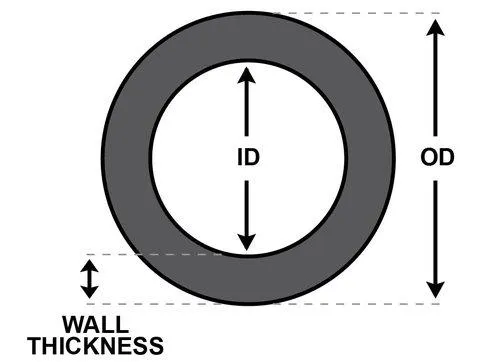
How to Calculate Ductile Iron Pipe Inside Diameter?
For an unlined pipe, the basic calculation is:
Inside Diameter (ID) = Outside Diameter (OD) − 2 × Wall Thickness
For example, a 12-inch ductile iron pipe with an outside diameter of 13.20 inches and a wall thickness of 0.28 inches has an approximate barrel inside diameter of:
ID = 13.20 − (2 × 0.28) = 12.64 inches
This calculation is useful for a quick dimensional check.
However, it should not be used blindly for lined ductile iron pipe. Internal cement-mortar or other linings occupy part of the internal diameter, so the effective clear opening can be smaller than the calculated unlined ID.
Ductile Iron Pipe ID vs Nominal Pipe Size
One of the most common mistakes when selecting ductile iron pipe is assuming that the nominal size equals the actual inside diameter.
For example, a nominal 12-inch ductile iron pipe does not necessarily have a 12.00-inch actual ID. Depending on wall thickness and lining, the clear inside diameter can be different.
This distinction matters when calculating:
Flow velocity
Cross-sectional flow area
Friction losses
Pump requirements
Hydraulic capacity
Pigging or cleaning requirements
Internal equipment clearance
Connections to existing pipelines
For hydraulic calculations, engineers should use the actual or specified inside diameter rather than relying only on the nominal size.
Why Ductile Iron Pipe Inside Diameter Changes ?
Pipe Wall Thickness
A thicker pipe wall reduces the internal opening when the outside diameter remains the same.
Larger wall thickness → smaller ID
Smaller wall thickness → larger ID
AWWA C151 includes both pressure-class and special-thickness-class approaches, so a single nominal pipe size can have multiple wall thicknesses.
Pressure or Thickness Class
Ductile iron pipe is not normally specified using the same Schedule system commonly used for steel pipe.
Depending on the applicable standard and project specification, ductile iron pipe may be identified by pressure class or thickness class.
For this reason, terms such as Schedule 20 ductile iron pipe should not automatically be treated as equivalent to the Schedule designation used for carbon steel pipe.
Internal Lining
Many ductile iron water pipes use an internal lining. The lining thickness reduces the available clear opening.
For example, manufacturer dimensional data can list different inside diameters for an unlined condition and for different cement-mortar lining configurations. McWane's dimensional information specifically shows separate inside-diameter values for unlined, standard cement-lined, and double cement-lined conditions.
Ductile Iron Pipe Inside Diameter and Flow Area
Inside diameter is directly related to the internal flow area.
For a circular pipe:
A = πD² / 4
Where:
A = internal flow area
D = actual inside diameter
π = approximately 3.1416
Because diameter is squared in the equation, even a relatively small change in inside diameter can affect the calculated flow area.
For example, using an approximate ID of 12.64 inches:
A ≈ π × 12.64² / 4
This gives an internal area of approximately 125.5 square inches, before accounting for any additional reduction caused by an internal lining.
For detailed hydraulic design, use the certified internal diameter for the specific pipe construction.
Ductile Iron Pipe Manufacturer
Baowi Steel supplies ductile iron pipe for water transmission, wastewater, and infrastructure applications.
We can provide dimensional information, pipe specifications, and product options according to project requirements and applicable standards.
If you need a ductile iron pipe inside diameter chart for a specific standard, pressure class, or pipe size range, contact Baowi Steel for detailed dimensional data.
More related articles
Ductile Iron Pipe Size Chart and Specifications

 English
 Español
 بالعربية



 Phone :
  Whatsapp :
  Email :


