Ductile iron pipes are primarily used for buried water supply and sewage pipelines, whereas seamless black steel pipes are commonly utilized in industrial, high-temperature, and prefabricated piping systems. Ductile iron pipes are made of ductile iron and feature standardized mechanical joints; in contrast, seamless black steel pipes are manufactured from carbon steel and typically connected via welding, flanges, or other methods.
The primary differences between ductile iron pipes and seamless black steel pipes lie in their material composition, application scenarios, connection methods, corrosion protection measures, pressure and temperature requirements, and installation techniques.
This guide compares ductile iron pipes with seamless black steel pipes and outlines the key factors to consider when choosing between them.
What Is Ductile Iron Pipe?
Ductile iron pipe is a pressure pipe manufactured from ductile cast iron. Unlike traditional gray cast iron, ductile iron contains graphite in a nodular or spheroidal form, which improves ductility and toughness.
It is particularly established in water and wastewater infrastructure.
The American Water Works Association currently lists AWWA C151-23, Ductile-Iron Pipe, Centrifugally Cast, together with AWWA C150-21(R23), Thickness Design of Ductile-Iron Pipe. AWWA also maintains standards covering cement-mortar lining, polyethylene encasement, fittings and rubber-gasket joints.
What Is Seamless Black Steel Pipe?
Seamless black steel pipe is a carbon steel pipe manufactured without a welded longitudinal seam and generally supplied with a dark mill or black surface finish.
An important point for buyers is that "black steel pipe" is not itself a complete product specification.
Ductile Iron Pipe vs Seamless Black Steel Pipe: Key Differences
Ductile iron pipe is mainly used for buried water and wastewater pipelines, while seamless black steel pipe is more commonly used in industrial, high-temperature, and fabricated piping systems. The two differ in material, manufacturing, pressure performance, corrosion protection, joining methods, applications, and cost.
The following seven points explain the main differences between ductile iron pipe and seamless black steel pipe and help buyers select the appropriate pipe for a specific project.
1. Material and Manufacturing
Ductile iron pipe is made from ductile cast iron, in which graphite is formed into nodules to improve ductility and toughness compared with traditional gray cast iron. Ductile iron pipe is commonly manufactured by centrifugal casting.
Seamless black steel pipe is made from carbon steel and does not have a welded longitudinal seam. Seamless pipe is produced by forming a solid steel billet into a hollow pipe, followed by sizing and heat treatment or other finishing processes depending on the specification.
The term “black” generally refers to the dark mill finish or surface condition of the steel pipe. It is not a separate steel grade.
For ductile iron pipe, common water-pipe standards include AWWA C150 and AWWA C151. For seamless carbon steel pipe used in high-temperature service, ASTM A106 is a commonly specified standard.
2. Strength and Pressure Performance
Neither ductile iron pipe nor seamless black steel pipe can be described as universally stronger. Pressure capability depends on pipe size, wall thickness, material grade, design temperature, joint type, and applicable design standard.
Ductile iron pipe is widely used for pressurized underground water systems. Its pressure design is commonly based on the pipe's pressure class, thickness design, and joint requirements.
Seamless black steel pipe can provide high strength and is widely used in industrial systems where pressure and temperature requirements are important. ASTM A106 seamless carbon steel pipe, for instance, is designed for high-temperature service.
For a project requiring a specific pressure rating, buyers should compare the actual design requirements rather than comparing the materials alone.
3. Corrosion Resistance
Both materials require appropriate corrosion protection. Neither ductile iron nor black steel should be considered naturally corrosion-proof.
Ductile iron pipe used in water systems may have cement-mortar lining, external coatings, or polyethylene encasement, depending on soil conditions and project requirements.
Seamless black steel pipe can be affected by external corrosion, particularly in wet or aggressive environments. Protection may include paint or protective coatings, corrosion allowance, internal lining, or cathodic protection depending on the application.
For underground water pipelines, soil chemistry and installation conditions are particularly important. For industrial steel piping, the fluid, operating temperature, moisture, and chemical environment should be evaluated together.
4. Joining Methods and Installation
Ductile iron pipe is commonly installed using push-on joints, mechanical joints, restrained joints, or flanged connections. These systems can simplify field installation, particularly for buried water pipelines.
Seamless black steel pipe offers more flexibility for fabricated piping systems. Depending on the specification and application, it can be connected by butt welding, socket welding, threading, flanges, or mechanical couplings.
This creates an important practical difference. Ductile iron is commonly selected for established underground pipeline systems, while seamless steel is often preferred when the piping system requires extensive fabrication, welding, or complex routing.
5. Weight and Handling
Pipe weight affects transportation, lifting, installation equipment, and labor requirements.
Ductile iron pipe can be relatively heavy, especially for larger diameters and higher pressure classes. However, standardized joint systems can make field assembly efficient for water-main construction.
Seamless black steel pipe weight varies significantly with outside diameter and wall thickness. Thin-wall steel pipe can be relatively light, while heavy-wall industrial pipe can also require substantial lifting equipment.
Therefore, weight should be evaluated using the actual pipe dimensions rather than material type alone.
6. Applications and Service Conditions
The typical applications of the two pipe types are different.
|
Application
|
Ductile Iron Pipe
|
Seamless Black Steel Pipe
|
|
Municipal water
|
Common
|
Possible, depending on specification
|
|
Underground water mains
|
Common
|
Possible
|
|
Wastewater pipelines
|
Common
|
Possible
|
|
Industrial process piping
|
Limited
|
Common
|
|
Steam service
|
Not typical
|
Common
|
|
High-temperature service
|
Not typical
|
Common
|
|
Oil and gas piping
|
Limited
|
Common, depending on specification
|
|
Fabricated piping systems
|
Limited
|
Common
|
|
Buried pressure pipelines
|
Common
|
Possible
|
Ductile iron pipe is strongly associated with municipal water distribution, transmission mains, wastewater systems, and underground pressure pipelines.
Seamless black steel pipe is more commonly associated with industrial process piping, steam, oil and gas, power generation, and high-temperature applications, provided the selected grade and specification are suitable.
7. Cost and Selection Factors
Pipe price alone does not determine which material is more economical. The total project cost can include transportation, fittings, joints, installation labor, welding, coating, corrosion protection, inspection, maintenance, and replacement requirements.
Ductile iron may be practical when the project involves long underground water mains with standardized joints and established installation practices.
Seamless black steel may be more appropriate when the system requires welding, fabrication, high-temperature service, or industrial piping configurations.
Conclusion
The comparison between ductile iron pipe vs seamless black steel pipe is really a comparison between two different piping approaches.
Ductile iron pipe is strongly established in buried water and wastewater infrastructure, supported by dedicated AWWA standards covering pipe, thickness design, joints, lining, encasement and installation.
Seamless black steel pipe is more closely associated with industrial piping, fabrication and high-temperature service, provided that the selected steel grade and specification meet the project's design requirements.
For procurement, the most important step is to define the service medium, pressure, temperature, pipe size, wall thickness/class, joining method, corrosion protection and applicable standard before comparing prices.

 English
 Español
 بالعربية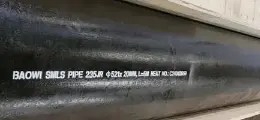
 Phone :
  Whatsapp :
  Email :


