The ASME B36.19M stainless steel pipe size chart provides dimensional information for designated stainless steel pipe sizes, including
nominal pipe size (NPS), outside diameter (OD), and wall thickness for specified pipe schedules. It is widely used by piping engineers, procurement teams, and industrial buyers to identify the correct dimensions before specifying or purchasing
stainless steel pipe.
ASME B36.19M covers designated stainless steel pipe dimensions using schedules such as 5S, 10S, 40S, and 80S. Although stainless steel pipe and carbon steel pipe generally share the same nominal outside diameter series, their wall thicknesses can differ depending on the schedule and pipe size.
This guide provides an ASME B36.19 stainless steel pipe size chart in millimeters, explains how to calculate inside diameter (ID), compares Schedule 5S, 10S, 40S, and 80S, and clarifies the differences between ASME B36.19M and ASME B36.10M. It also covers pipe selection and purchasing considerations to help buyers specify the correct stainless steel pipe for industrial applications.
What Is ASME B36.19M?
ASME B36.19M is a dimensional standard published by the American Society of Mechanical Engineers (ASME) for designated stainless steel pipe sizes. It establishes standardized dimensions for applicable welded and seamless austenitic stainless steel pipe.
The standard helps engineers and buyers identify pipe dimensions consistently across suppliers and projects. Its dimensional information is used when preparing piping drawings, checking component compatibility, estimating material quantities, and creating purchase specifications.
ASME B36.19M covers key dimensional information, including:
Nominal Pipe Size (NPS)
Outside diameter (OD)
Nominal wall thickness
Designated stainless steel pipe schedules, including 5S, 10S,
40S, and 80S
It is important to distinguish dimensional standards from material specifications. For example,
ASTM A312 covers requirements for specified seamless, welded, and heavily cold-worked austenitic stainless steel pipe, while ASME B36.19M addresses pipe dimensions. A pipe order may need to reference both documents, depending on the application.
ASME B36.19 Stainless Steel Pipe Size Chart
The following stainless steel pipe dimensions chart summarizes commonly used NPS sizes from 1/2 inch to 12 inches. It lists the nominal outside diameter and wall thicknesses for Schedule 5S, 10S, 40S, and 80S.
Inside diameter is calculated from the nominal dimensions using the formula explained below. The chart is intended for preliminary reference; verify the complete dimensional requirements against the applicable edition of ASME B36.19M before finalizing an engineering design or purchase order.
Stainless Steel Pipe Dimensions Chart in mm
ASME B36.19M — stainless steel pipe wall thickness (mm)
|
|
NPS
|
DN
|
OD
|
5S
|
10S
|
40S
|
80S
|
|
1/2"
|
DN 15
|
21.3
|
1.65
|
2.11
|
2.77
|
3.73
|
|
3/4"
|
DN 20
|
26.7
|
1.65
|
2.11
|
2.87
|
3.91
|
|
1"
|
DN 25
|
33.4
|
1.65
|
2.77
|
3.38
|
4.55
|
|
1 1/4"
|
DN 32
|
42.2
|
1.65
|
2.77
|
3.56
|
4.85
|
|
1 1/2"
|
DN 40
|
48.3
|
1.65
|
2.77
|
3.68
|
5.08
|
|
2"
|
DN 50
|
60.3
|
1.65
|
2.77
|
3.91
|
5.54
|
|
2 1/2"
|
DN 65
|
73
|
2.11
|
3.05
|
5.16
|
7.01
|
|
3"
|
DN 80
|
88.9
|
2.11
|
3.05
|
5.49
|
7.62
|
|
4"
|
DN 100
|
114.3
|
2.11
|
3.05
|
6.02
|
8.56
|
|
6"
|
DN 150
|
168.3
|
2.77
|
3.4
|
7.11
|
10.97
|
|
8"
|
DN 200
|
219.1
|
2.77
|
3.76
|
8.18
|
12.7
|
|
10"
|
DN 250
|
273
|
3.4
|
4.19
|
9.27
|
12.7
|
|
12"
|
DN 300
|
323.8
|
3.96
|
4.57
|
9.53
|
12.7
|
|
14"
|
DN 350
|
355.6
|
3.96
|
4.78
|
9.53
|
—
|
|
16"
|
DN 400
|
406.4
|
4.19
|
4.78
|
9.53
|
—
|
|
18"
|
DN 450
|
457
|
4.19
|
4.78
|
9.53
|
—
|
|
20"
|
DN 500
|
508
|
4.78
|
5.54
|
9.53
|
—
|
|
24"
|
DN 600
|
610
|
5.54
|
6.35
|
9.53
|
—
|
Notes: NPS is the nominal pipe size, and DN is a nominal metric designation rather than an exact measured diameter.
OD means outside diameter. Wall thickness values are nominal dimensions in millimeters. The chart is a selected-size reference, not a substitute for the full standard.
How to Calculate Stainless Steel Pipe Inside Diameter ?
Inside diameter (ID) is an important measurement because it determines the approximate internal flow area of a pipe. It can be calculated from the nominal outside diameter and wall thickness.
Formula:
ID = OD − (2 × Wall Thickness)
For example, consider NPS 4 Schedule 40S stainless steel pipe:
Outside diameter: 114.3 mm
Nominal wall thickness: 6.02 mm
Calculated inside diameter: 114.3 − (2 × 6.02) = 102.26 mm
The nominal calculated ID is approximately 102.26 mm. The actual measured inside diameter may vary because of manufacturing tolerances and the actual wall thickness.
For procurement, engineers should verify both OD and wall thickness rather than relying on a calculated ID alone. This is particularly important when the pipe must connect to existing equipment or meet a specified flow requirement.
Stainless Steel Pipe Dimensions
The following examples show how the nominal inside diameter changes when the schedule changes while the NPS and OD remain constant.
|
NPS
|
OD (mm)
|
Schedule
|
Wall Thickness (mm)
|
Calculated ID (mm)
|
|
2"
|
60.3
|
10S
|
2.77
|
54.76
|
|
2"
|
60.3
|
40S
|
3.91
|
52.48
|
|
2"
|
60.3
|
80S
|
5.54
|
49.22
|
|
4"
|
114.3
|
10S
|
3.05
|
108.2
|
|
4"
|
114.3
|
40S
|
6.02
|
102.26
|
|
4"
|
114.3
|
80S
|
8.56
|
97.18
|
|
6"
|
168.3
|
10S
|
3.4
|
161.5
|
|
6"
|
168.3
|
40S
|
7.11
|
154.08
|
|
6"
|
168.3
|
80S
|
10.97
|
146.36
|
These are nominal calculated dimensions. As the wall thickness increases, the available inside diameter decreases. The impact on flow velocity and pressure drop should be evaluated using the project's flow rate and fluid properties.
How to Use This Chart?
To determine the wall thickness of a stainless steel pipe, select the required NPS (Nominal Pipe Size) and schedule. The chart provides the corresponding outside diameter, nominal wall thickness, and plain-end weight to help you compare pipe dimensions.
Stainless steel pipe schedule designations include:
5S — A thin-wall option for applications where reduced weight and corrosion resistance are priorities, subject to pressure and design requirements.
10S — A light-wall option commonly used in general stainless steel piping systems.
40S — Shares the same nominal wall thickness as Schedule 40 for NPS 1/8 through NPS 12, except where the applicable dimensional standard specifies otherwise.
80S — Shares the same nominal wall thickness as Schedule 80 for NPS 1/8 through NPS 8, except where the applicable dimensional standard specifies otherwise. Thicker walls may be suitable for more demanding service conditions, depending on the design requirements.
Schedule 5S, 10S, 40S, and 80S Stainless Steel Pipe
The Schedule designation identifies a nominal wall-thickness series. For a given NPS, the outside diameter normally remains the same across schedules, while the wall thickness and inside diameter change.
The S suffix is important because it identifies the schedule series associated with ASME B36.19M. Buyers should not assume that a conventional schedule designation from another dimensional standard always gives the same wall thickness.
Schedule 5S Stainless Steel Pipe
Schedule 5S is a thin-wall stainless steel pipe series. It may be considered for applications where a lighter wall meets the engineering requirements.
When evaluating Schedule 5S, consider the design pressure, temperature, corrosion allowance, fabrication method, mechanical loading, and manufacturing tolerances. A thin wall should never be selected solely to reduce material cost or weight.
Schedule 10S Stainless Steel Pipe
Schedule 10S is another relatively thin-wall stainless steel pipe series. It is used in selected industrial process, water, and utility piping systems when its nominal dimensions meet the project requirements.
During procurement, specify Schedule 10S rather than simply writing “Schedule 10” when the dimensional requirement is ASME B36.19M. The distinction helps prevent confusion between stainless steel and conventional steel pipe schedules.
Schedule 40S Stainless Steel Pipe
Schedule 40S is a commonly specified stainless steel pipe schedule. It provides a greater nominal wall thickness than Schedule 10S for many sizes.
Typical applications include industrial process piping, water systems, and general plant services. However, whether Schedule 40S is appropriate depends on the required wall thickness and the applicable engineering design.
One important purchasing check is the pipe size. Schedule 40 and Schedule 40S have matching wall thicknesses in many sizes, but they are not interchangeable across the entire size range.
Schedule 80S Stainless Steel Pipe
Schedule 80S is a heavier-wall stainless steel pipe series in the sizes where it is specified. Compared with a lighter-wall pipe of the same NPS, it has a smaller nominal inside diameter.
It may be selected when a thicker wall is required by the project design. However, Schedule 80S does not automatically guarantee a particular pressure rating. Material grade, temperature, code requirements, and other design factors must also be considered.
For detailed dimensions, refer to the related guide: Schedule 80 Stainless Steel Pipe Dimensions.
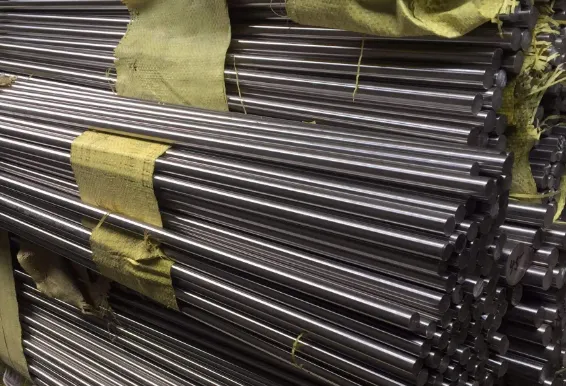
ASME B36.19M vs. ASME B36.10M
ASME B36.19M covers stainless steel pipe dimensions, while ASME B36.10M covers welded and seamless wrought steel pipe dimensions, primarily for carbon and alloy steel.
Although some Schedule 40 and Schedule 80 dimensions overlap, the standards are not interchangeable. The “S” suffix in designations such as 40S and 80S identifies schedules under ASME B36.19M. Always verify the applicable standard and nominal wall thickness before ordering.
Schedule 40 vs. 40S and Schedule 80 vs. 80S
One of the most common pipe specification errors is assuming that Schedule 40 and Schedule 40S, or Schedule 80 and Schedule 80S, are identical for every size.
The schedules may have matching nominal wall thicknesses in many smaller and medium sizes. However, differences occur at particular larger sizes, so the actual dimensions must be checked against the applicable standard.
Schedule 40 vs. Schedule 40S
For NPS 1/2 through NPS 10, Schedule 40 and Schedule 40S generally have the same nominal wall thicknesses in the corresponding dimensional series. At NPS 12, they differ:
|
NPS
|
OD (mm)
|
B36.10M Schedule 40 Wall (mm)
|
B36.19M Schedule 40S Wall (mm)
|
|
4"
|
114.3
|
6.02
|
6.02
|
|
6"
|
168.3
|
7.11
|
7.11
|
|
8"
|
219.1
|
8.18
|
8.18
|
|
10"
|
273.0–273.1*
|
9.27
|
9.27
|
|
12"
|
323.8–323.9*
|
10.31
|
9.53
|
The exact OD value shown depends on the dimensional table and standard edition being referenced; verify the applicable standard when preparing a controlled engineering document.
At NPS 12, the 40S wall is thinner than the conventional Schedule 40 wall. Ordering the wrong designation can affect the specified wall thickness, calculated inside diameter, material weight, and engineering assessment.
Schedule 80 vs. Schedule 80S
Schedule 80 and Schedule 80S also match in many sizes but should not be assumed to be interchangeable in all cases.
For example, NPS 10 Schedule 80 and Schedule 80S have different nominal wall thicknesses in the corresponding dimensional series:
|
NPS
|
B36.10M Schedule 80 Wall (mm)
|
B36.19M Schedule 80S Wall (mm)
|
|
2"
|
5.54
|
5.54
|
|
4"
|
8.56
|
8.56
|
|
6"
|
10.97
|
10.97
|
|
8"
|
12.7
|
12.7
|
|
10"
|
15.09
|
12.7
|
|
12"
|
17.48
|
12.7
|
The table illustrates why the exact schedule and standard must be specified. A Schedule 80S pipe cannot automatically be substituted for a Schedule 80 pipe when the design requires the thicker conventional wall.
For a project-specific order, always check the full standard dimensions, material grade, design code, and required minimum wall thickness.
Stainless Steel Pipe Purchasing Checklist
Before submitting a request for quotation, confirm the following details:
Size: NPS and required outside diameter
Dimensional standard: ASME B36.19M or another specified standard
Schedule: 5S, 10S, 40S, 80S, or another explicitly required series
Material: ASTM or other applicable material specification and grade
Manufacturing method: Seamless or welded, as required
Quantity and length: Required quantities and specified pipe lengths
Inspection: Testing, inspection, and documentation requirements
Delivery: Packaging, marking, and delivery requirements
From a procurement perspective, the most useful practice is to check the dimensional standard and schedule together. A quotation that lists only NPS and material grade may not contain enough information to confirm the correct pipe wall thickness.
Frequently Asked Questions
What is the difference between ASME B36.19M and ASME B36.10M?
ASME B36.19M covers designated stainless steel pipe dimensions and S-series schedules, while ASME B36.10M covers welded and seamless wrought steel pipe dimensions and conventional schedule designations. Both use an NPS-based OD system, but their wall thicknesses can differ at particular sizes.
Does ASME B36.19M apply to all stainless steel pipe?
No. ASME B36.19M covers designated dimensions for the stainless steel pipe within its scope. It should not be assumed to cover every stainless steel tubular product, tubing product, material grade, or specialty product. Confirm the applicable dimensional standard and material specification for the product being ordered.
What is the difference between Schedule 40 and Schedule 40S?
Schedule 40 belongs to the conventional schedule series associated with ASME B36.10M, while Schedule 40S belongs to the S-series associated with ASME B36.19M. Their wall thicknesses match in many sizes but differ at certain larger sizes, including NPS 12. Always verify the exact nominal wall thickness.
Is Schedule 80 the same as Schedule 80S?
Not for every size. Schedule 80 and Schedule 80S may have the same wall thickness in some sizes, but they differ in others. For example, NPS 10 Schedule 80 is thicker than NPS 10 Schedule 80S in the applicable dimensional series.
How do you calculate stainless steel pipe inside diameter?
Calculate nominal ID by subtracting twice the nominal wall thickness from the outside diameter: ID = OD − (2 × wall thickness). This gives a nominal calculated value; actual measured ID may vary because of manufacturing tolerances and actual wall thickness.
Does a higher pipe schedule mean a higher pressure rating?
A higher schedule generally indicates a thicker nominal wall within the relevant dimensional series. However, allowable pressure is not determined by schedule number alone. Material properties, design temperature, the applicable code, manufacturing tolerances, and other engineering factors must be considered.
Which stainless steel grades are commonly used for pipe?
Grades such as
304/304L and
316/316L are commonly specified for many austenitic stainless steel pipe applications. The appropriate grade depends on the corrosion environment, operating temperature, mechanical requirements, and applicable material specification.
What information should be included in a stainless steel pipe order?
A purchase order should identify the NPS, dimensional standard, schedule, material specification and grade, manufacturing method, quantity, length, inspection requirements, and any project-specific requirements. These details help suppliers quote the correct product.
Conclusion
The ASME B36.19 stainless steel pipe size chart helps engineers and buyers identify nominal pipe sizes, outside diameters, and wall thicknesses for designated stainless steel pipe schedules. Understanding Schedule 5S, 10S, 40S, and 80S makes it easier to compare dimensions and prepare accurate purchase specifications.
The most important distinction is between ASME B36.19M and ASME B36.10M. Although the standards generally share the same NPS-based outside diameter series, their wall thicknesses are not interchangeable at every size. In particular, Schedule 40 and 40S, as well as Schedule 80 and 80S, must be checked against the applicable dimensional standard.
Related References
ASME B36.10 Steel Pipe Dimensions and Schedule Chart
Schedule 80 Stainless Steel Pipe Dimensions
Schedule 40 Pipe Pressure Rating Chart and Guide

 English
 Español
 بالعربية





 Phone :
  Whatsapp :
  Email :